Mid Century Dining Room Decor for Renters Who Can’t Touch the Wiring
Every mid-century dining room mood board eventually centers on the same hero piece: a striking pendant or chandelier hanging low over the table, doing more visual work than almost anything else in the room. It’s also the one element most renters can’t actually install — swapping a hardwired ceiling fixture usually means an electrician, a landlord’s sign-off, and a lease clause that says no to exactly this kind of project. That leaves a real gap between the rooms on Pinterest and what’s actually achievable in a rental.
The good news is that lighting is only one piece of what makes a dining room read as mid-century, and it’s not even the piece carrying the most weight. Furniture silhouette, wood tone, and textiles do more of the actual work — which means a renter-friendly version of the style is entirely possible, you just have to build it in a different order than the mood board suggests.
What Mid-Century Dining Rooms Actually Rely On Besides the Light Fixture
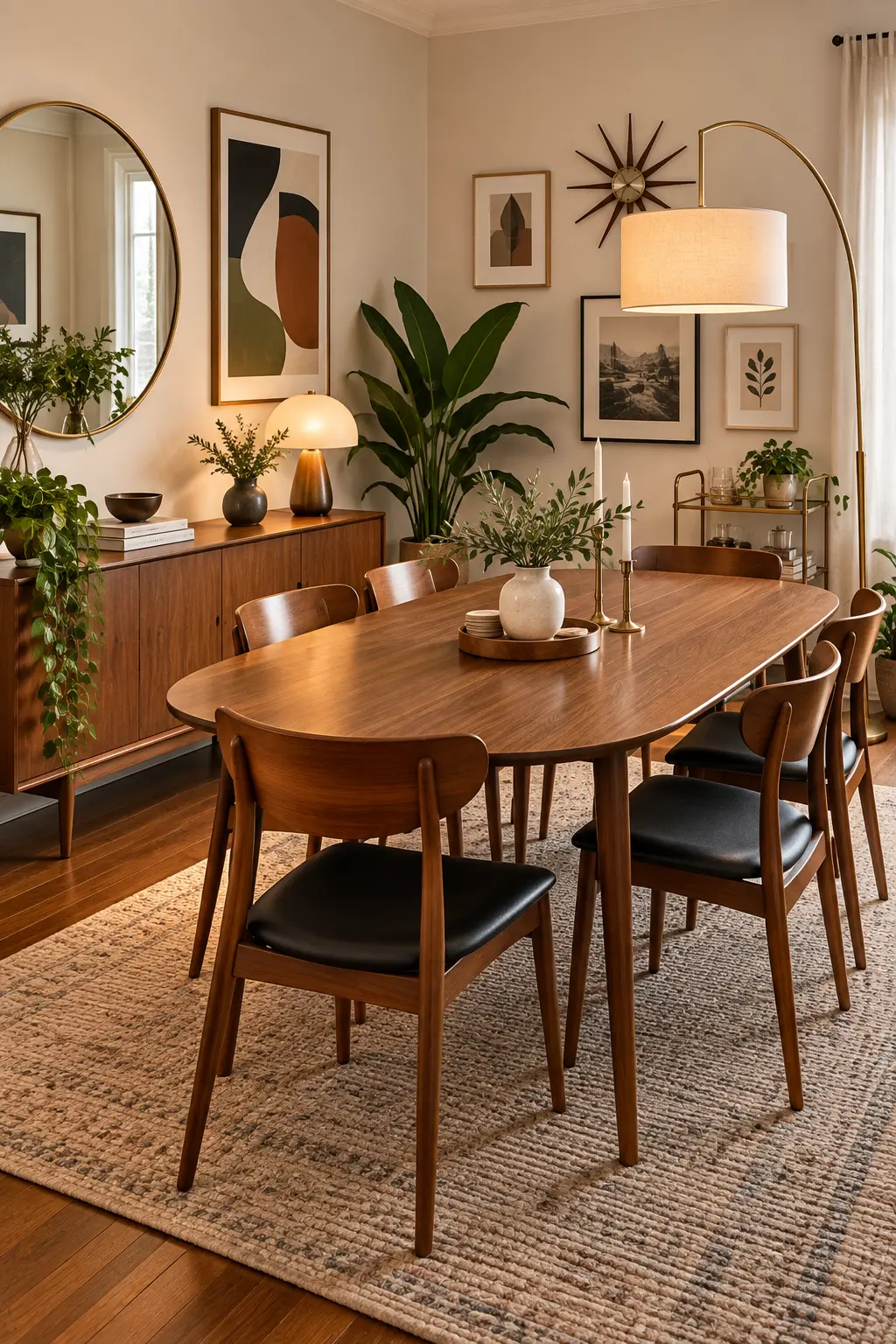
Strip away the pendant and a well-built mid-century dining room still has tapered wood legs, organic curves in the chairs, warm teak or walnut tones, and a restrained, purposeful use of color in one or two accents. None of that requires permission from a landlord or an electrician. The fixture gets disproportionate credit because it’s the most photogenic single element, but a room built entirely around wood tone, silhouette, and textiles will still read clearly as mid-century even with a plain builder-grade light left untouched overhead.
Pro Tip: Photograph your dining area with the existing overhead fixture on, at the time of day you actually use the room most, before assuming it “ruins” the look — a plain fixture is far less noticeable once there’s a strong wood tone and considered chair silhouette drawing the eye downward instead.

Plug-In Pendant Swaps That Mimic a Hardwired Statement Light
If you do want a fixture moment, a plug-in pendant is the renter-safe route: these hang from a hook screwed into the ceiling (a single small screw hole, not a wiring change) with the cord run along the ceiling and down the wall to a nearby outlet, concealed with an adhesive cord channel in a matching paint color. This gives you the low-hung, warm-toned pendant that reads as classically mid-century without any electrical work at all, and it comes down entirely intact when you move.

Choosing Furniture That Carries the Style Without Any Fixture at All
Because you can’t rely on a statement light to anchor the room’s identity, your table and chairs need to do more of that work than they would in a room with a hardwired chandelier drawing initial attention. Prioritize visible, tapered legs and a warm wood tone over a bulkier, more neutral silhouette — a pedestal-base table in a pale finish reads as generically “wood furniture,” while splayed, angled legs in walnut or teak reads unmistakably as mid-century even photographed without any fixture in frame at all.
Pro Tip: If you’re renting furniture-forward pieces rather than buying, prioritize the chairs over the table for authenticity — chair silhouette (an open, sculptural back versus a plain rectangular one) reads as period-specific from across a room far more instantly than table shape does.

Wood Tone and Table Choice: The Biggest Lever You Fully Control
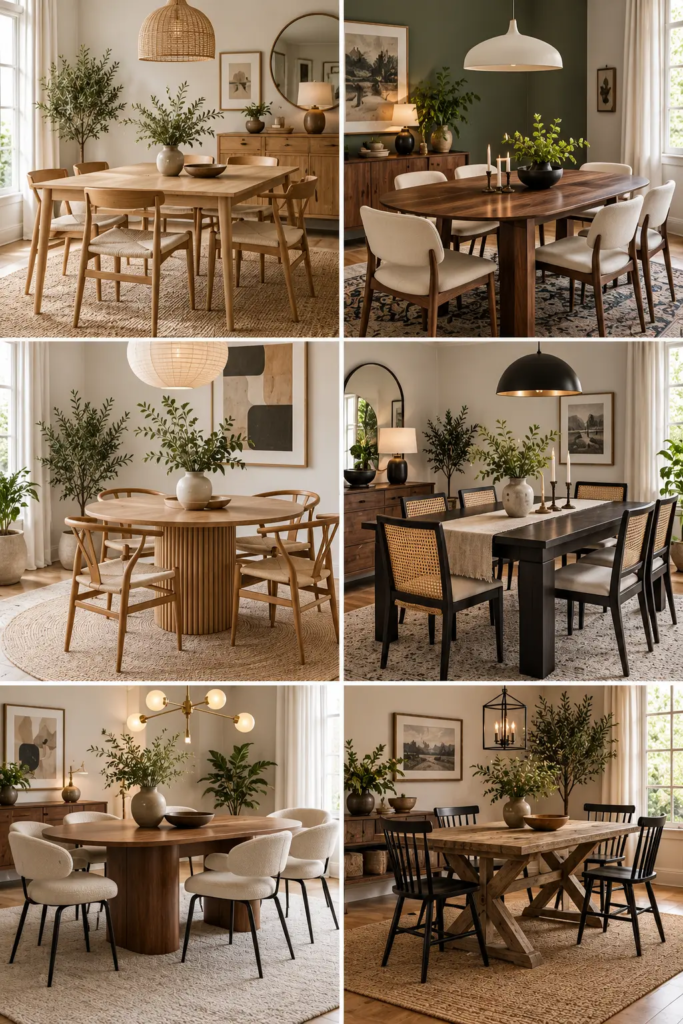
Wood tone is one of the few elements of a mid-century dining room that’s entirely within a renter’s control, unlike wall color or fixed lighting, and it’s worth treating as the room’s primary style decision rather than an afterthought. Warm teak and walnut tones carry the era’s identity on their own; a grey-washed or heavily whitewashed wood finish pulls the room toward a different, cooler-toned style even if the leg shape and proportions are otherwise correct. When shopping secondhand or browsing rental-friendly furniture options, the wood’s actual tone matters more to the overall effect than almost any other single decision you’ll make.
Layering Warmth Through Textiles Since You Can’t Paint
Without a wall color to set the room’s temperature, textiles have to carry more of that warmth than they would in a room where you controlled the paint. A rust or mustard-toned table runner, patterned ceramic dinnerware left out on open shelving, or seat cushions in a warm wool or boucle fabric all add the saturated, purposeful color mid-century rooms rely on, without touching a single wall. These are also the easiest elements to change seasonally or swap entirely when you move, which is a genuine advantage over a painted wall you’d have to prime and repaint at lease-end anyway.

Floor and Table Lighting as Backup Layers
A plug-in pendant handles the overhead moment, but a floor lamp near a sideboard or a table lamp on an adjacent console adds the layered, warm lighting mid-century rooms are known for, entirely independent of anything hardwired. This is useful even if you do install a plug-in pendant, since a single overhead source — plug-in or hardwired — still leaves a room feeling flatter than one with two or three light sources at different heights working together in the evening.

Renter-Safe Ways to Add a Fixture Moment Without a Pendant
If a plug-in pendant isn’t practical for your outlet layout, a battery-operated or plug-in wall sconce mounted with adhesive strips near the dining area can add a similar warm, intentional light source without needing to hang anything from the ceiling at all. Positioned at roughly the same height a mid-century sconce would have originally sat, this gives the room a secondary light source with real period character, and adhesive mounts remove cleanly at lease-end without patching or painting.

Common Mistakes to Avoid
The most common mistake is assuming the room can’t read as mid-century at all without a proper hardwired fixture, and either giving up on the style or attempting an unsafe DIY wiring project that risks the security deposit and, more importantly, actual safety. A second mistake is over-investing in a plug-in pendant while neglecting wood tone and chair silhouette, when those two things do more of the room’s identity work than the light fixture ever did on its own. Third, forgetting to check the cord length and outlet placement before buying a plug-in pendant — a beautiful fixture that can’t reach an outlet without an ugly, exposed extension cord undercuts the whole effect.
Pro Tip: Before buying a plug-in pendant, measure the distance from your ceiling hook point to the nearest usable outlet and add at least two extra feet — cord channels need some slack to route cleanly around a ceiling-to-wall corner rather than pulling taut in a straight, visibly stretched line.
Budget-Friendly Renter Mid Century Dining Decor
On a lower budget (under $150), start with textiles — a table runner, seat cushions, and a set of patterned ceramic dishware do real color and warmth work for very little money and pack up easily at move-out. At a mid budget ($150–$500), a plug-in pendant or a set of adhesive-mount sconces adds the fixture moment without any electrical work, and both come down cleanly when your lease ends. At a higher budget ($500+), prioritize the dining table and chairs themselves, since wood tone and silhouette carry more of the room’s overall identity than any single decor layer and will travel with you to your next place regardless of what that space allows.
[IMAGE: Three-tier budget flat-lay for a renter mid-century dining room — a rust table runner and ceramic dishware, then a plug-in pendant, then a walnut table and chair set]
FAQ
Can a mid-century dining room actually look complete without a statement light fixture? Yes — wood tone, chair silhouette, and textile color do most of the identifying work, and a room built well around those elements reads clearly as mid-century even with a plain or unchanged overhead fixture. The pendant adds a strong finishing touch, but it’s not the element carrying the style on its own.
Are plug-in pendant lights actually safe and effective, or do they look obviously fake? A well-chosen plug-in pendant with a properly concealed cord channel is genuinely hard to distinguish from a hardwired fixture at a glance, since the visible parts — the shade, the drop height, the finish — are identical to a hardwired version. The cord routing is the only real giveaway, which is exactly why concealing it in a matching cord channel matters.
Will my landlord allow a ceiling hook for a plug-in pendant? Most leases that prohibit electrical work still allow a single small screw hook, since it’s a minor, easily patched hole rather than a wiring change, but it’s worth checking your specific lease or asking directly before installing one. If hooks aren’t allowed either, a floor lamp and table lamp combination can substitute for the overhead lighting layer instead.
What’s the single most impactful change for a renter trying to get this look? Wood tone on the table and chairs has the most influence on whether a room reads as mid-century, more than any decor layer or lighting choice, since it’s the largest visual surface in the room and the one most directly tied to the era’s material identity. If only one budget line item is available, it’s worth putting it there.
Does this approach work for a dining nook or open-plan dining area, not just a separate dining room? Yes, and arguably it matters even more in an open layout, since there’s no doorway or wall separating the style from the rest of a shared space — the wood tone and furniture silhouette need to read clearly on their own to establish the style, which is exactly what this renter-friendly approach already prioritizes over a fixture-dependent look.
The Real Takeaway
Mid century dining room decor doesn’t actually depend on the hardwired fixture most renters assume they need permission for — wood tone, chair silhouette, and layered textiles carry most of the style’s identity, and a plug-in pendant or adhesive sconce can fill in the lighting moment without touching a single wire. Start with the table and chairs, since they’re doing the heaviest lifting, and treat lighting as the finishing layer rather than the foundation the rest of the room depends on.