7 Kids Bedroom Ideas That Actually Hold Up Day to Day
A kids bedroom has to do more work than almost any other room in the house. It’s a sleep space, a play space, a homework spot, and a place a child’s taste changes in every six months, and most styling advice ignores at least one of those. The result is a room that photographs beautifully on move-in day and looks completely different — scuffed, outgrown, or just plain messy — a year later.
These 7 kids bedroom ideas are built around that reality. Each one still looks good, but the reasoning behind it accounts for how the room actually gets used: touched, climbed on, drawn on, and outgrown faster than any adult space in the house. The goal is a room that still looks intentional after the first scraped wall and the first “I don’t like dinosaurs anymore.”
Choose a Palette the Room Can Outgrow Gracefully
The biggest recurring cost in kids bedroom decor isn’t furniture — it’s repainting or re-theming a room every time a child’s interests shift. A fully character-themed room (a specific show, a specific color scheme tied to one obsession) looks charming for exactly as long as that interest lasts, which for most kids is measured in months, not years.
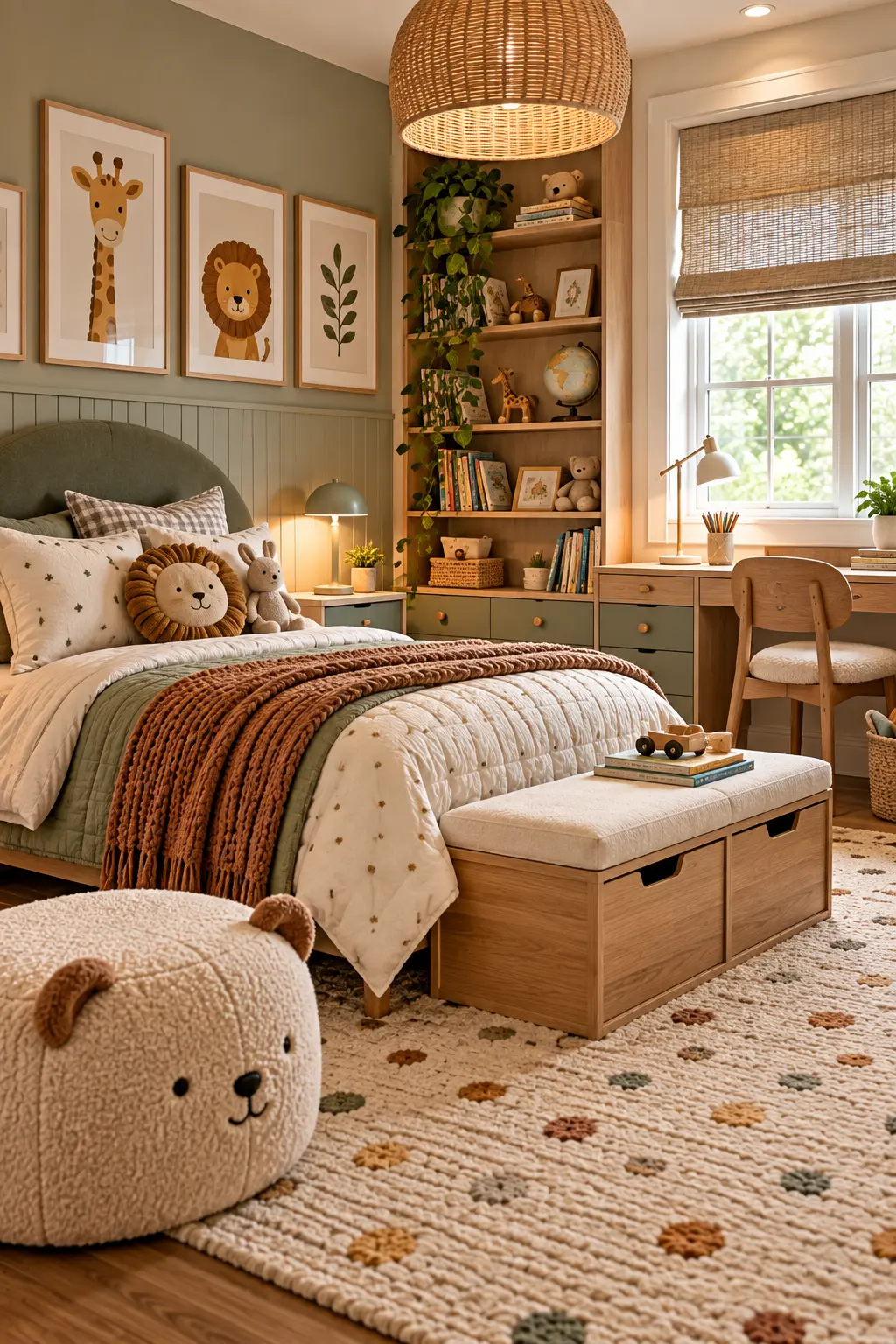
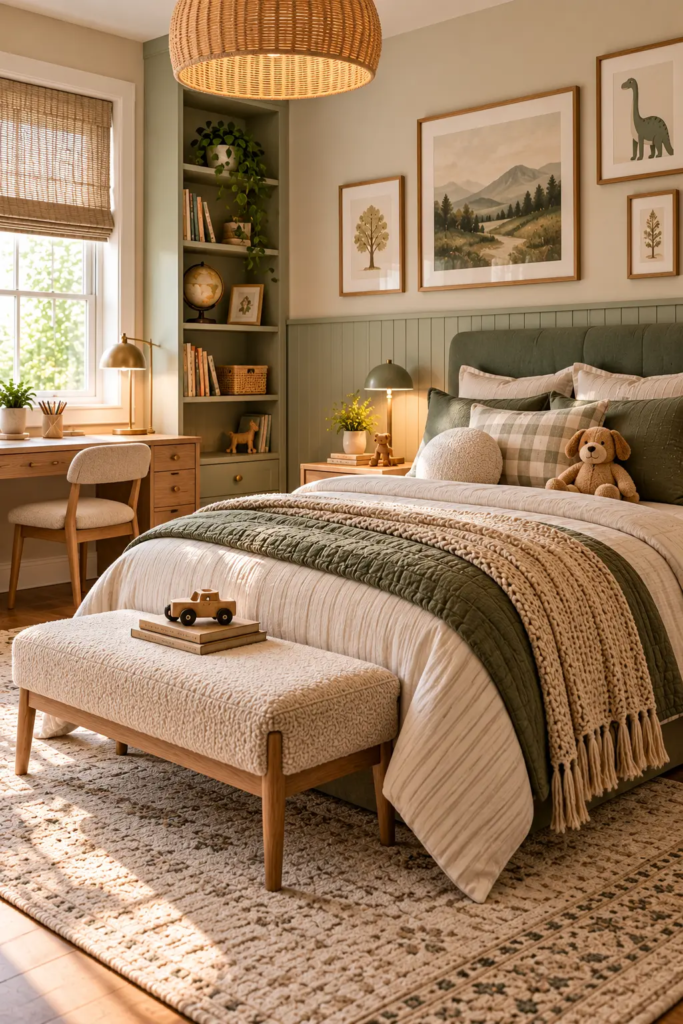
A more durable approach is to keep walls and large furniture in a neutral or muted base — soft gray, warm white, a pale sage — and let personality live in swappable layers: bedding, a rug, wall art, or a gallery of prints. When the interest changes, you’re replacing a $30 print or a duvet cover instead of repainting a wall or replacing a themed bed frame.
Pro Tip: If your child insists on a bold, specific color, apply it to one accent wall or a piece of furniture that’s easy to replace or repaint later — not all four walls. A single painted dresser is a weekend project to redo; four walls in a saturated color is a much bigger undertaking once the phase passes.
Build Storage Around How Kids Actually Put Things Away
Most kids, especially younger ones, won’t sort toys into small labeled bins or fold clothes into narrow drawers — not because they’re being careless, but because the system asks for more precision than the task warrants to a 5-year-old moving fast between activities. Storage that assumes adult-level sorting habits tends to fail within a week, leaving toys on the floor instead of in the bins meant for them.
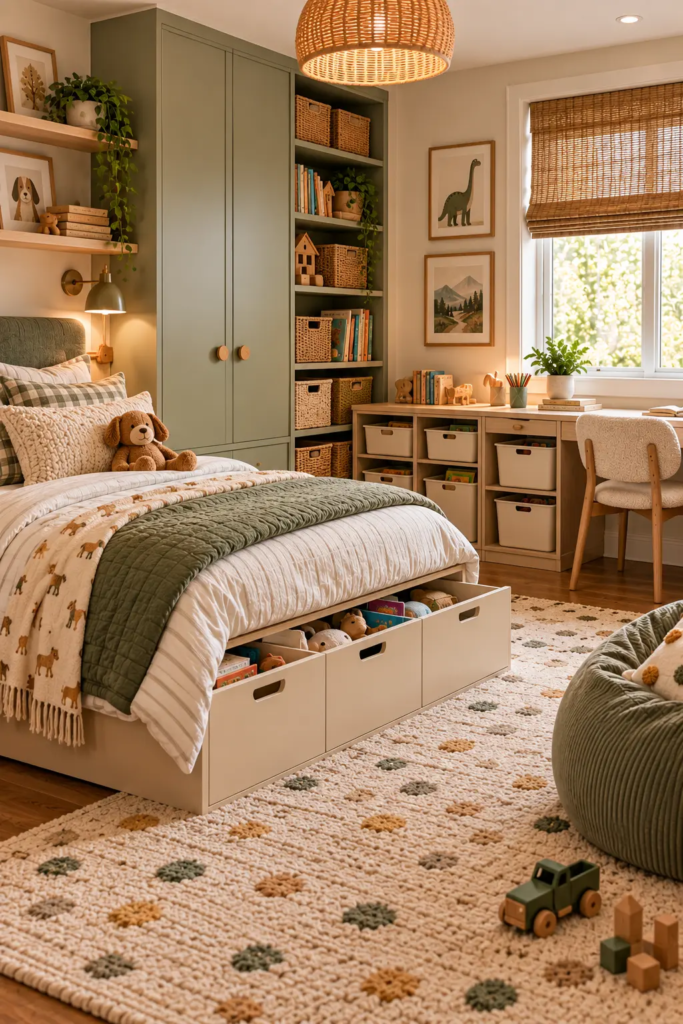
Open, large-capacity storage — big baskets, low open shelving, a toy chest with a soft-close lid — tends to get used because the barrier to putting something away is low: toss it in, roughly sorted, done. Save the smaller, labeled bins for things that genuinely need separating, like art supplies or small building blocks, and let broader categories (stuffed animals, larger toys) live in bigger, easier containers.
Zone the Room Even If It’s Small
A kids bedroom usually has to hold sleep, play, and sometimes homework in one space, and without some intentional zoning, those functions blur into each other — toys end up on the bed, and the desk becomes another surface for clutter. You don’t need a large room to create zones; you need a clear boundary between them, even a loose one.
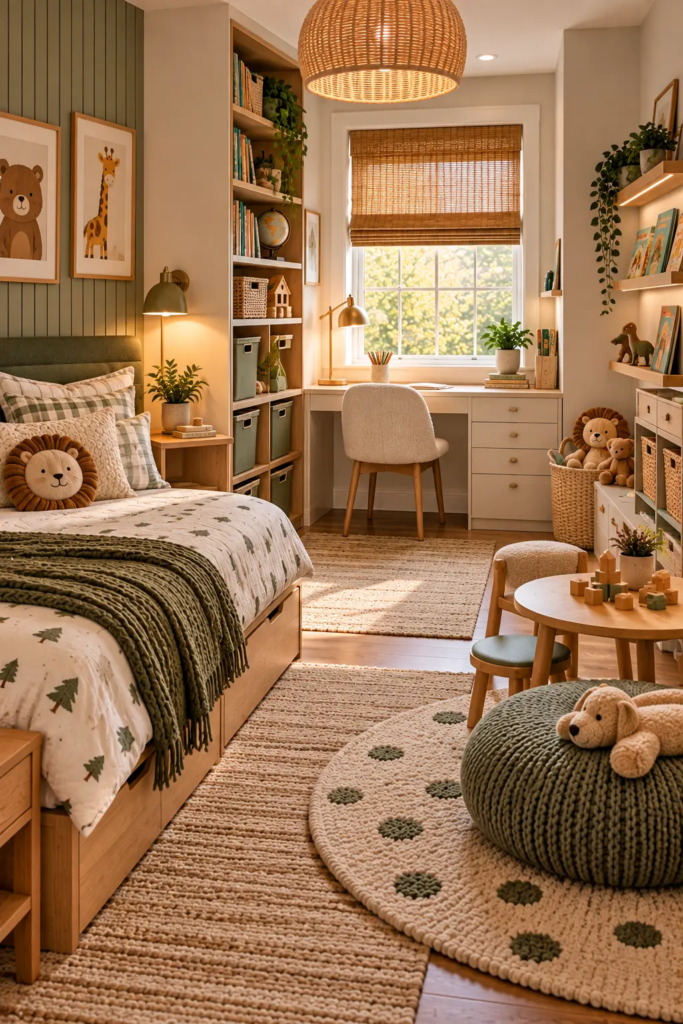
A rug under a play area, positioned away from the bed, does a lot of this work on its own — it visually marks “this is where the toys live” without needing a wall or furniture divider. If there’s a desk or reading nook, angling it away from the bed (rather than directly beside it) reinforces that it’s a separate activity, not an extension of the sleep space.
Pro Tip: Keep the area directly around the bed relatively toy-free, even if the rest of the room is more lived-in. A clear zone immediately surrounding the bed makes the room easier to wind down in at night, since the visual clutter of the play area isn’t right in the sightline from the pillow.
Choose Materials That Can Actually Take Daily Wear
A kids bedroom gets more physical contact than almost any adult room — climbing, jumping, crayon marks, spilled water. Furniture and surfaces chosen purely for how they photograph often show wear fast: a matte painted finish scuffs and shows marker more visibly than a slightly textured or semi-gloss one, and a light, unsealed wood surface stains more easily than a sealed or laminate one.
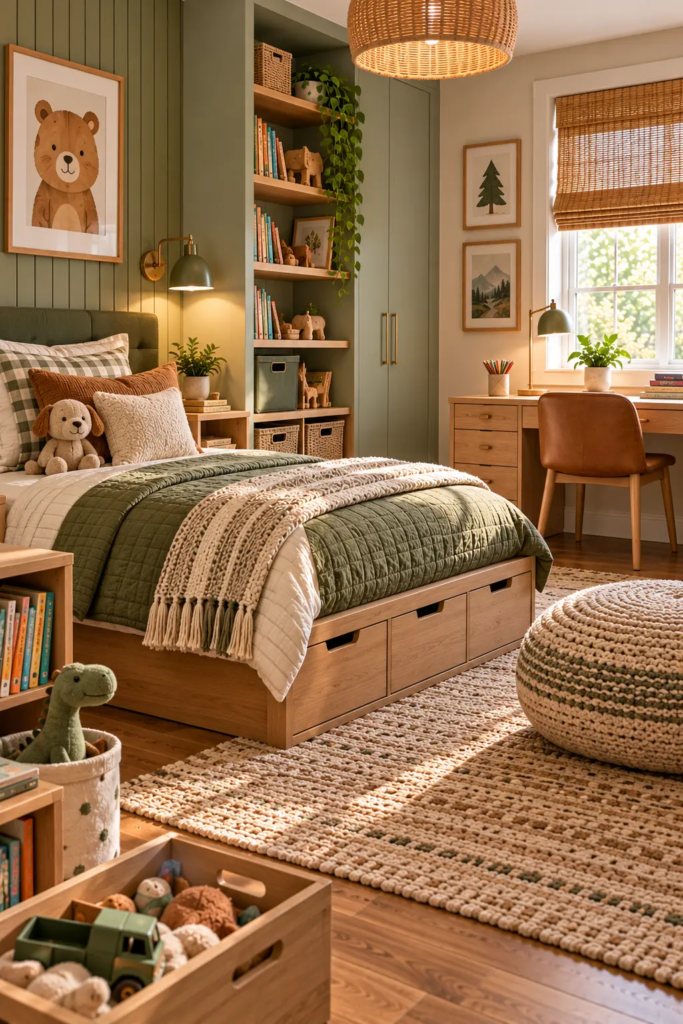
For anything at a child’s height and reach — a dresser front, a nightstand, a bed frame — a durable, wipeable finish will hold up noticeably better than a delicate or porous one. This doesn’t mean avoiding wood or natural materials altogether; it means checking the finish, not just the material, for how well it resists marks and moisture.
Layer Lighting for Both Play and Sleep
A single overhead light in a kids room usually has to serve two very different jobs — bright enough for daytime play and homework, dim and calming enough for winding down at night — and one fixture rarely does both well. Overhead light alone tends to stay too bright right up until the moment you switch it off, which can make the transition to sleep feel abrupt rather than gradual.
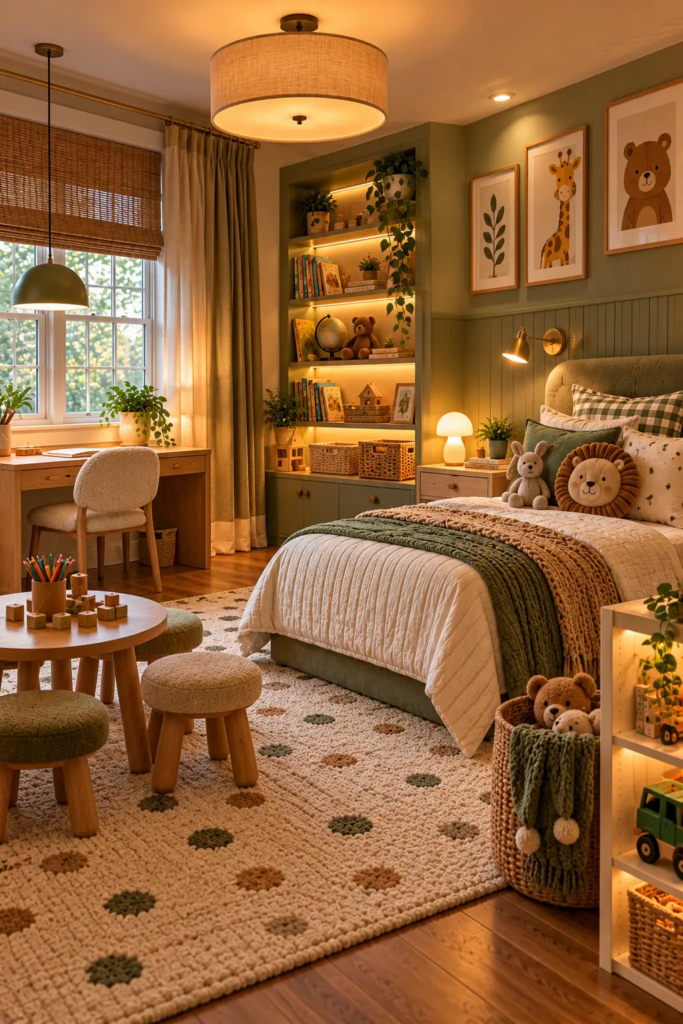
Adding a secondary, lower light source — a nightlight, a small table lamp, or a dimmable plug-in fixture — gives you a step between “fully lit” and “dark,” which makes bedtime transitions smoother. A warm-toned bulb in that secondary light source reads as more calming than a cool white one, the same way it does in an adult bedroom.
Pick Furniture That Adjusts as They Grow
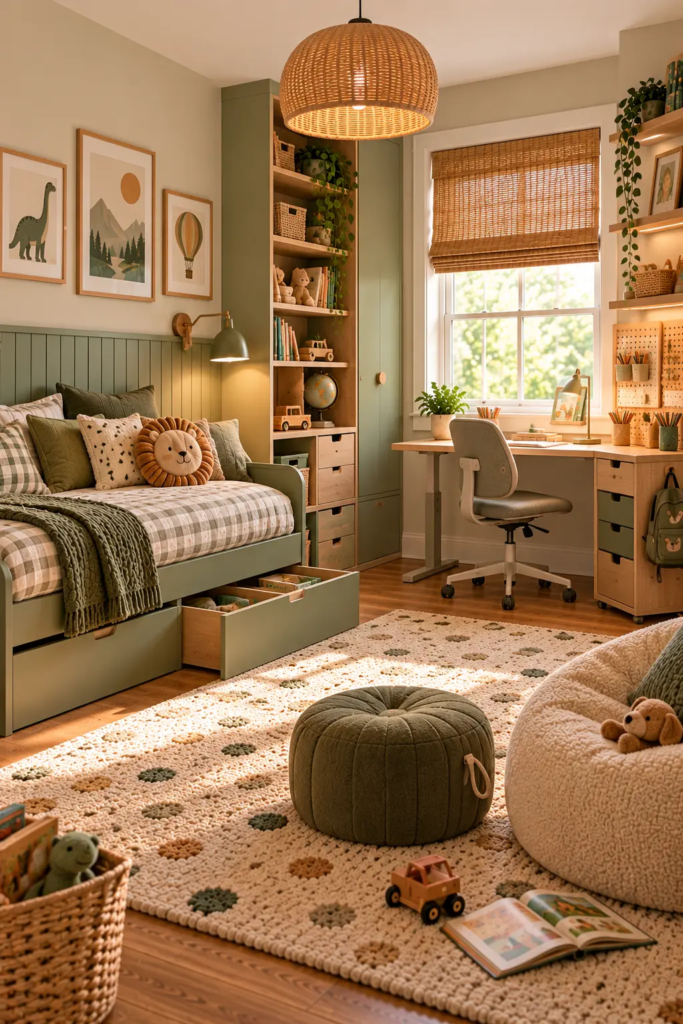
Furniture sized exactly for a toddler — a very low bed frame, a small fixed-height desk — often gets replaced within a couple of years as a child grows, which is a real cost most parents end up paying twice. Where possible, furniture with some built-in flexibility avoids that cycle: a crib that converts to a toddler bed and later a daybed, a desk and chair with adjustable height, shelving with movable shelf pegs rather than fixed shelf slots.
This costs somewhat more upfront in most cases, but it usually costs less over the full span of early childhood than replacing multiple fixed-size pieces as the child outgrows each one.
Pro Tip: When buying a dresser or bookshelf for a young child’s room, check that it’s rated for anti-tip anchoring and actually anchor it to the wall, even if it seems sturdy on its own — furniture tipping is a real risk when kids climb on drawers or shelves to reach something, and anchoring hardware is inexpensive relative to the furniture itself.
Give Them a Space That’s Genuinely Theirs to Change
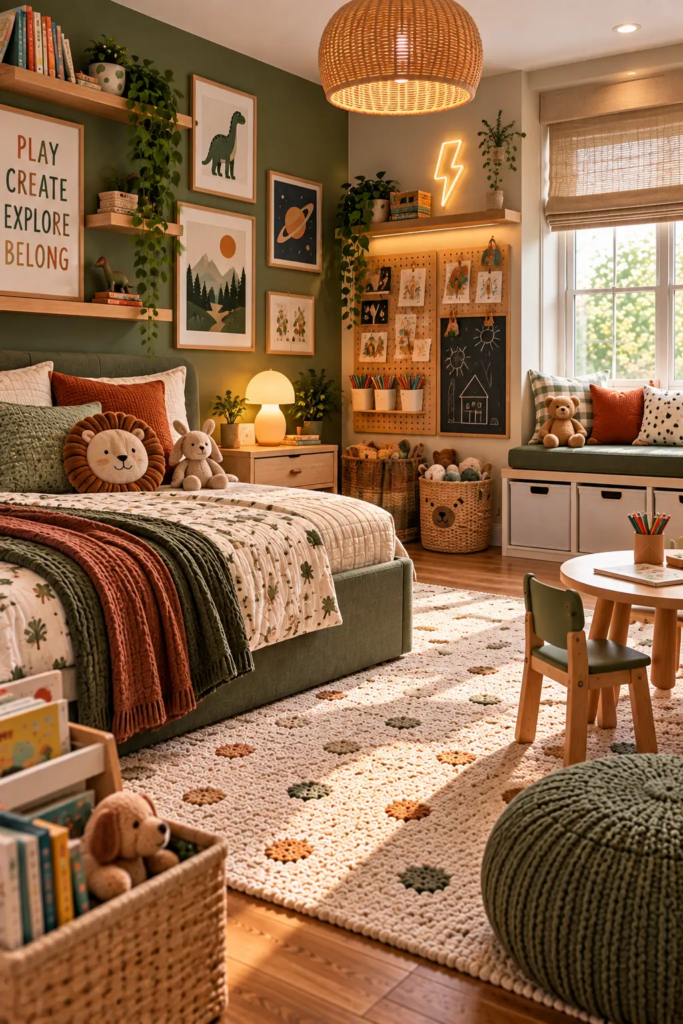
Kids bedrooms that feel too “designed” by an adult can end up feeling more like a showroom than a space a child actually wants to spend time in. Leaving one low-stakes area — a section of wall for taped-up art, a corkboard, a small shelf for whatever they’re collecting that month — gives a child room to personalize the space without it undermining the rest of the design.
This works especially well paired with the neutral-base approach from earlier: the walls and furniture stay durable and flexible, while one contained area absorbs the constantly rotating interests and artwork without requiring you to redecorate around them.
Common Mistakes to Avoid
- Fully theming the room around one specific interest. It dates faster than almost any other decor choice in the house.
- Using small, labeled storage bins as the primary system. They work for some categories, but as the main system, they tend to get bypassed in favor of the floor.
- Skipping anti-tip anchoring on dressers and shelves. It’s an easy step to overlook and an important one, especially in a room where climbing happens.
- Relying on one overhead light for both play and bedtime. It makes the wind-down transition feel abrupt instead of gradual.
- Choosing delicate finishes for high-touch surfaces. A beautiful matte paint job on a nightstand shows every mark within weeks.
Budget-Friendly Ways to Adapt These Ideas
Low budget: Repaint one accent piece instead of a whole wall, swap in a warm-toned nightlight or small lamp, and reorganize existing toys into larger, open bins you already have rather than buying a full new storage system.
Mid budget: Add a rug to define the play zone, anchor existing furniture to the wall if it isn’t already, and set up one dedicated art or display area (a corkboard or a taped-off wall section) for rotating kid-made decor.
Higher budget: Invest in adjustable or convertible furniture (a growing desk, a convertible bed frame) and durable, wipeable finishes on dressers and shelving that will hold up through several years of daily use.
FAQ
What colors work best for a kids bedroom that will last? Muted, neutral base tones — soft gray, warm white, pale sage — tend to hold up longest because they don’t lock the room into one specific phase or interest. Bright, saturated colors are still worth using, just in smaller, easily changeable doses like bedding or a single accent piece rather than across the whole room.
How do I stop toys from taking over the whole room? Zoning helps more than storage volume alone — a rug or furniture arrangement that visually separates the play area from the sleep area gives toys a defined “home” rather than letting them spread across the whole floor. Larger, open storage bins also tend to get used more consistently than small labeled ones, especially with younger kids.
Should I buy furniture sized for a toddler or furniture that grows with them? Adjustable or convertible furniture — a crib that converts to a toddler bed, a height-adjustable desk — usually costs more upfront but avoids replacing multiple fixed-size pieces as your child grows, which tends to be the more expensive path over several years.
Is it safe to have shelving or a dresser in a young child’s room? Yes, as long as it’s anchored to the wall with anti-tip hardware, which most furniture is rated for even if it isn’t installed by default. This matters more in a kids room than almost anywhere else in the house, since climbing on furniture is common at younger ages.
How do I let my kid personalize the room without it looking chaotic? Contain the personalization to one defined area — a corkboard, a section of wall, a shelf — while keeping the rest of the room’s palette and furniture neutral. That way rotating interests and artwork have a place to live without requiring the whole room to be redecorated around them.
The Takeaway
A kids bedroom that still looks good a year from now isn’t the one styled most precisely for a single photo — it’s the one built with a neutral, flexible base, storage that matches how kids actually put things away, and materials that can take daily wear. These 7 kids bedroom ideas hold up specifically because each one accounts for real use, not just how the room looks on move-in day.