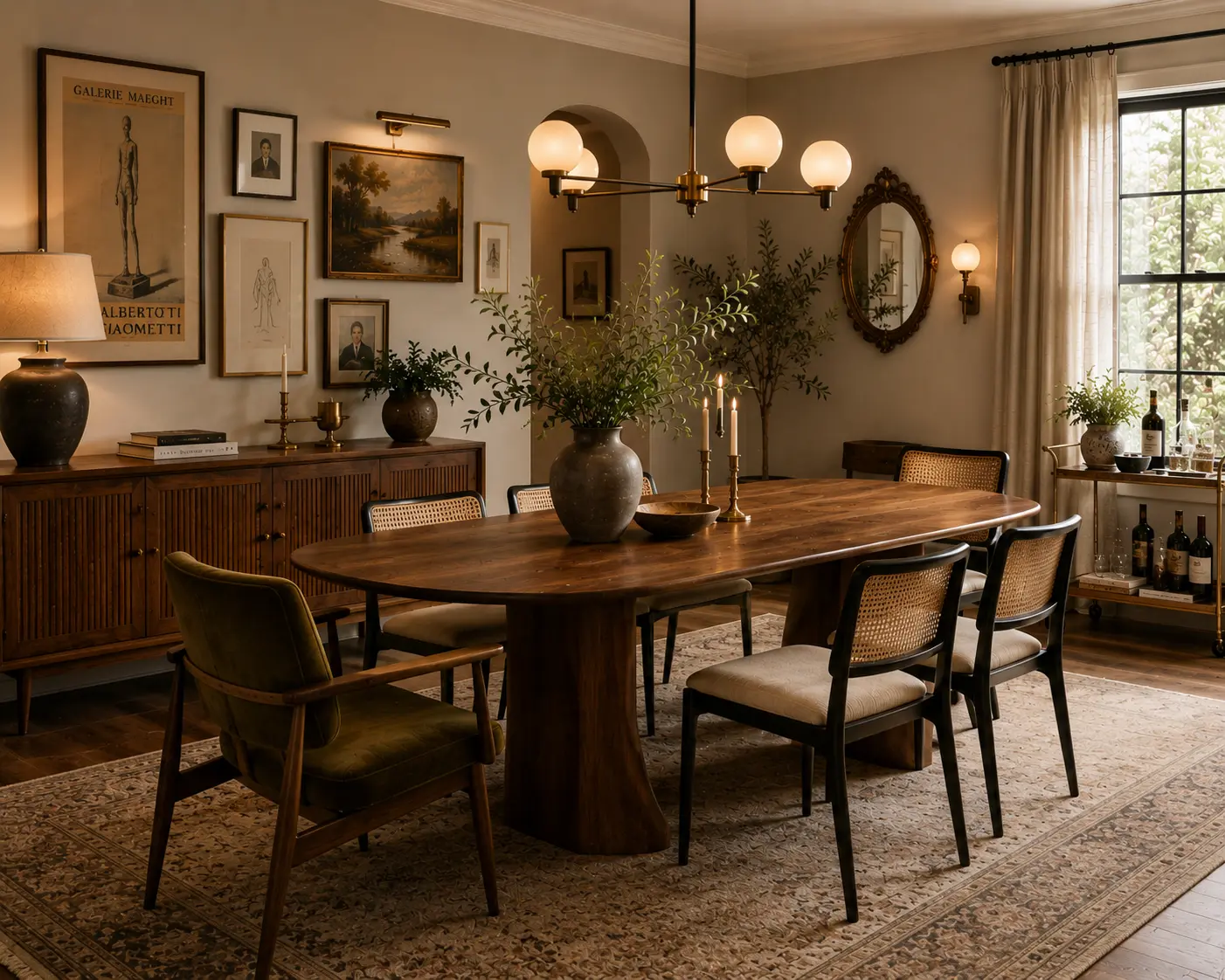
Vintage Modern Dining Room Ideas That Actually Blend
A vintage modern dining room usually goes wrong one of two ways. Either every piece is its own standalone “statement,” so the room feels like a showroom floor with no relationship between the objects, or one vintage piece gets dropped into an otherwise brand-new room and looks like it wandered in from a different house. Both versions have good individual pieces. Neither one reads as a room.
The fix isn’t finding more “in-between” furniture that splits the difference stylistically — that usually produces beige, forgettable pieces that aren’t quite vintage and aren’t quite modern. It’s deciding which era leads and which one supports, then choosing specific connector pieces that make the mix look intentional. Here’s how to actually do that in a dining room.
Pick a Lead Era, Then Let the Other One Support It
Before you buy or place anything, decide roughly what split you’re working with: is this a modern room with vintage accents, or a vintage room updated with a few modern pieces? A working ratio is about 70/30 — 70 percent of the visual weight (table, flooring, wall color) in one era, and 30 percent (a light fixture, a rug, an accent chair) in the other.
A true 50/50 split is the hardest version to pull off and the easiest to get wrong — it reads as indecisive rather than curated, because nothing in the room clearly sets the tone. Once you’ve picked a lead, every other decision gets easier.
Pro Tip: Walk the room and sort every piece into “this decade” or “not this decade.” If you can’t get a clear 70/30 split without forcing it, the room has too many competing statement pieces, and one needs to become simpler or leave.
Pair a Vintage Table With Modern Chairs (or the Reverse)
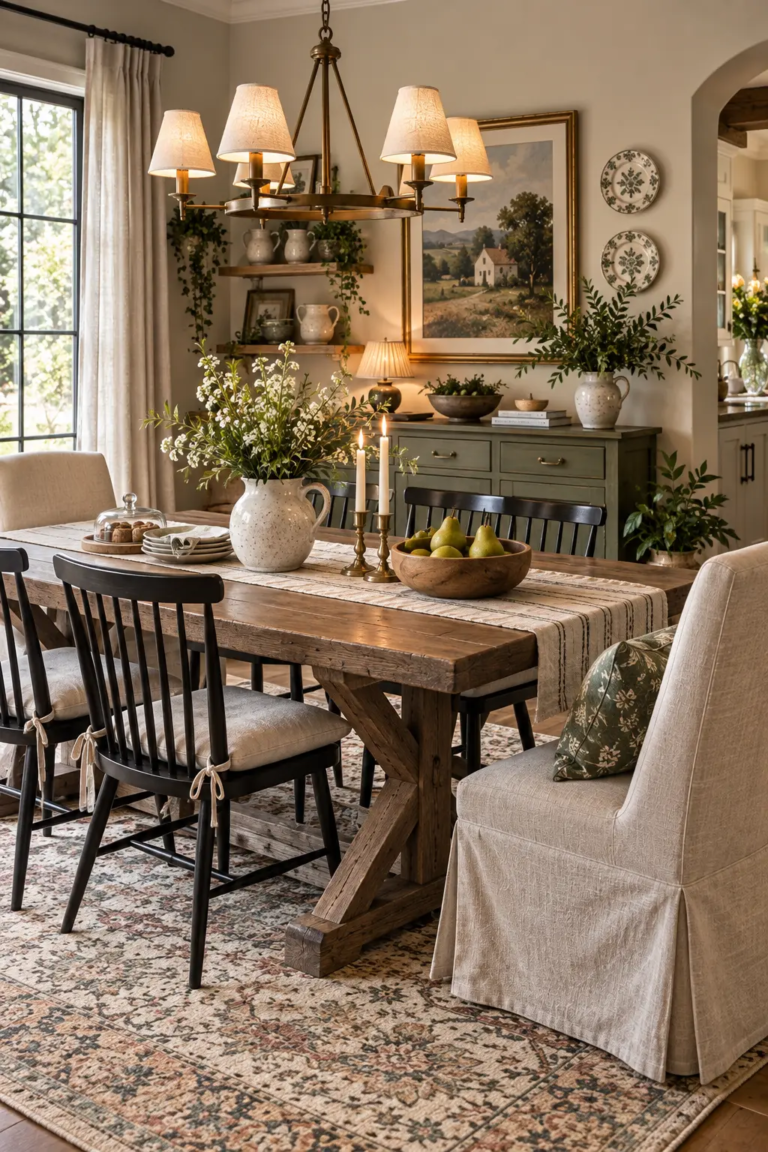
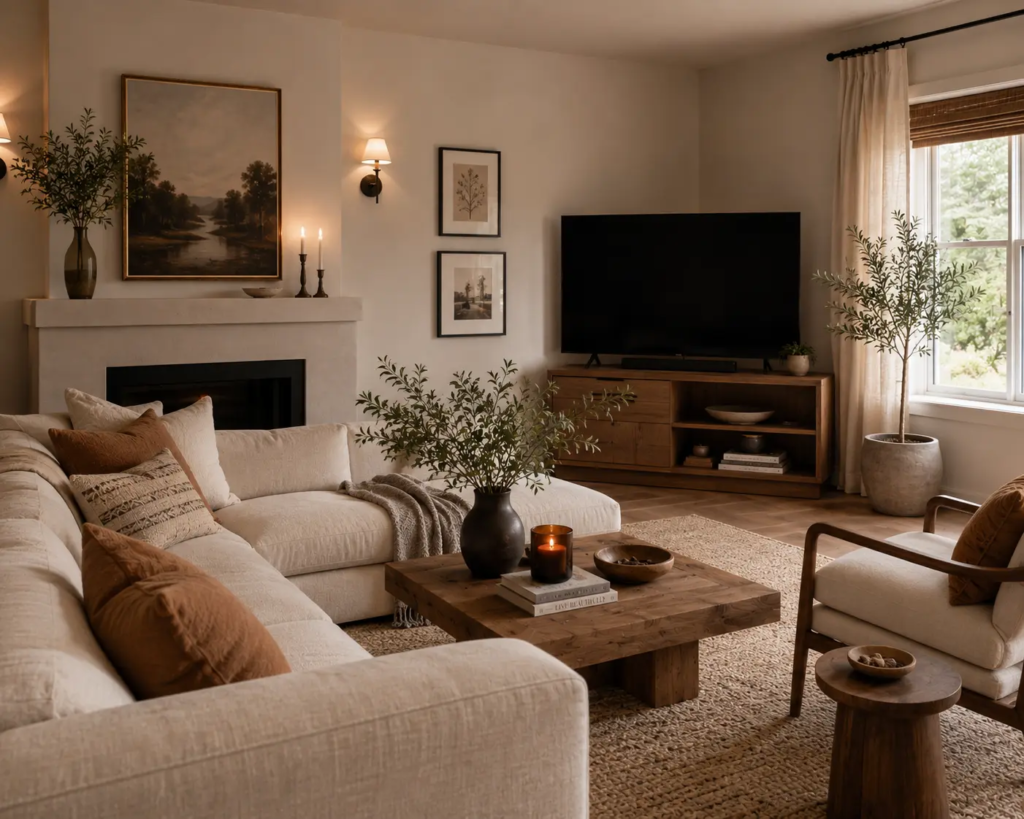
The single most reliable move is mismatching the table and chairs by era rather than matching them. A solid walnut or mahogany vintage table — turned legs, a pedestal base, visible tool marks from age — grounds the room in warmth and history. Modern chairs in a simple silhouette keep the setup from reading as a period piece.
The reverse works too: a clean modern table paired with vintage chairs that have real character, like cane-back or bentwood. The chairs become the “vintage moment” instead of the whole set doing that job together, which reads as curated rather than matched from a catalog page.
What doesn’t work is a vintage table with vintage-style reproduction chairs — reproductions tend to have slightly wrong proportions or too-perfect finishes next to a genuinely old piece, making both look worse by comparison.
Let the Light Fixture Bridge the Two Eras
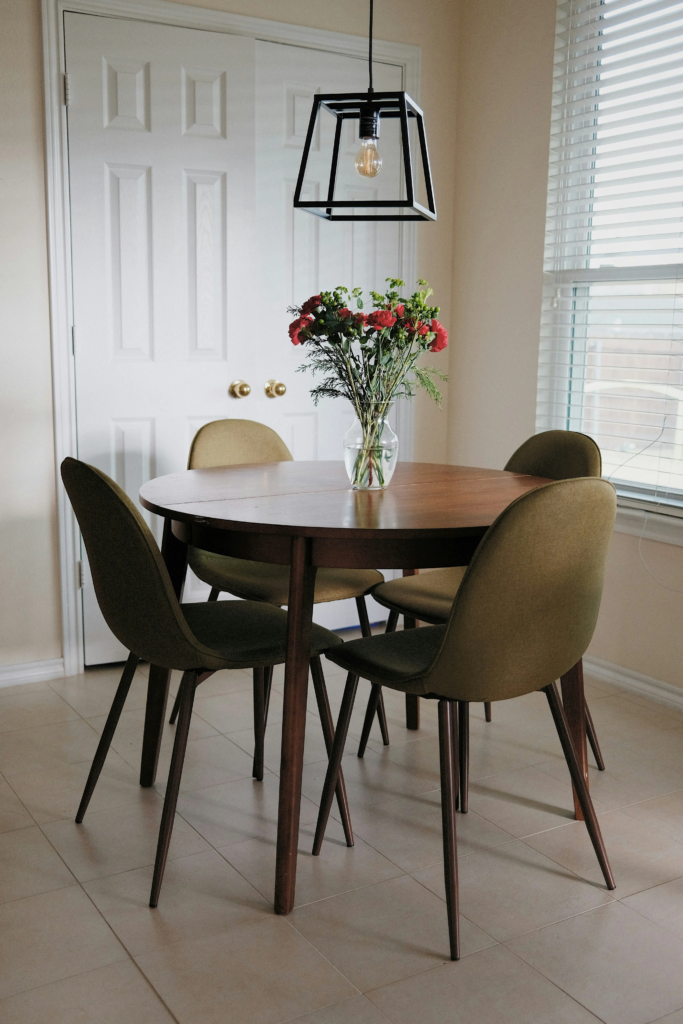
A pendant or chandelier is one of the easiest pieces to use as a deliberate connector, because it sits above everything else and visually ties the table below to the wall and ceiling around it. A brass or unlacquered-brass fixture with a vintage-leaning silhouette reads as period-appropriate, but paired with a clean modern shade or an exposed-bulb design, it stops feeling strictly antique.
Size it to the table: for a rectangular table, the fixture should span roughly two-thirds of the table’s length, with the bottom sitting about 30 to 34 inches above the tabletop. A fixture that’s too small over a large vintage table reads as an afterthought rather than a considered choice.
Pro Tip: If your vintage table has a warm, reddish wood tone, an unlacquered brass fixture will patina and shift color slightly — which helps it age alongside the table instead of staying frozen at “new” while the wood keeps deepening.
Use One Vintage Case Piece as the Room’s Anchor
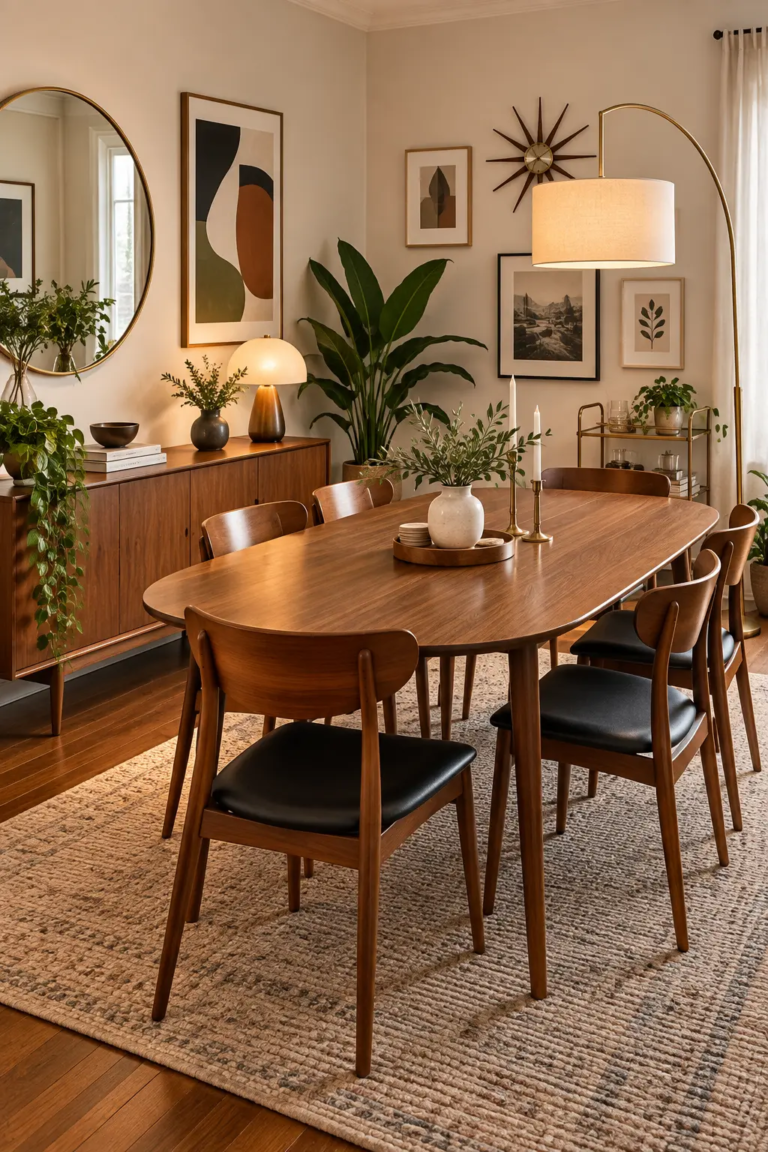
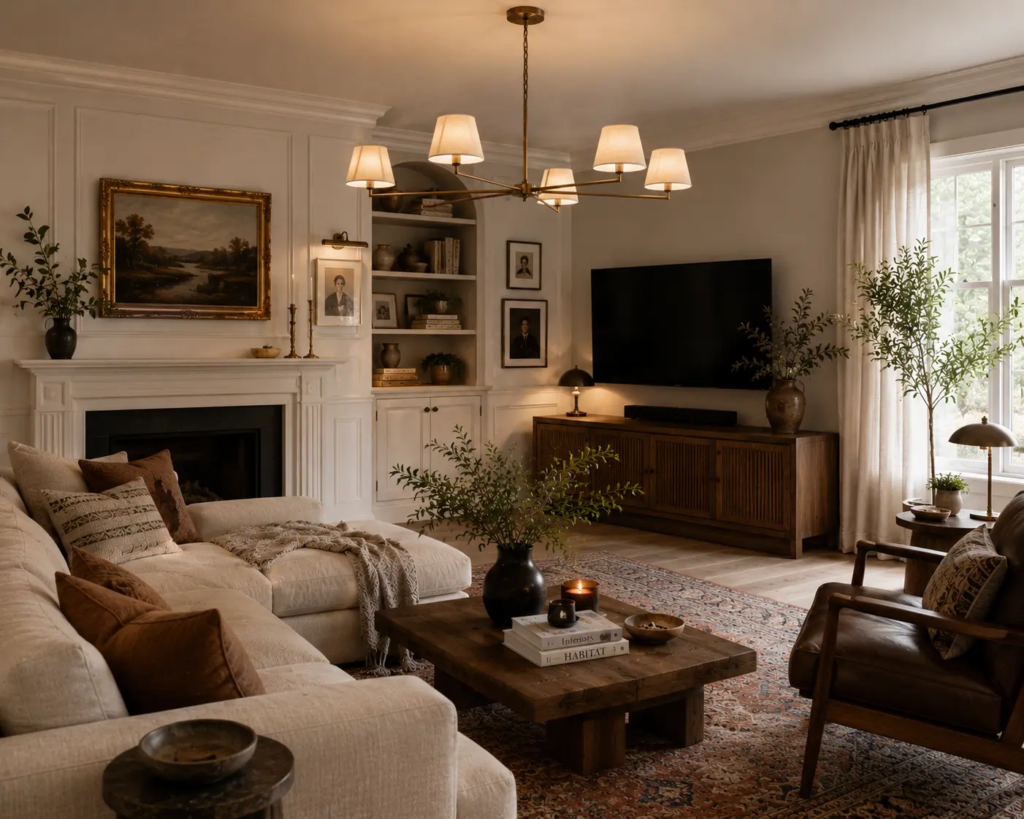
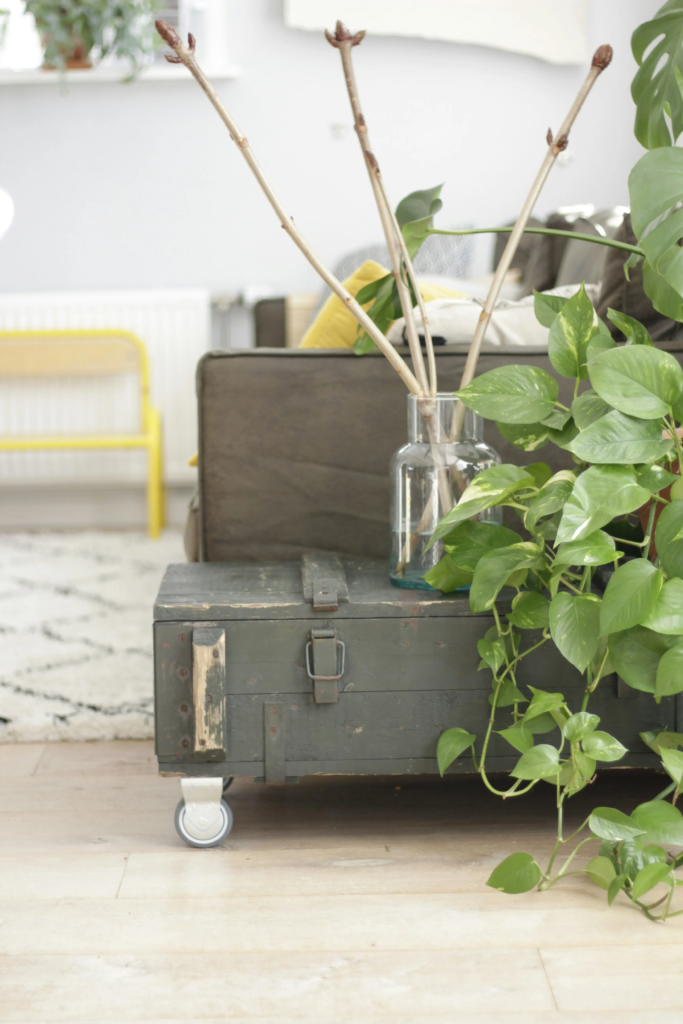
A single vintage sideboard, credenza, or hutch does more to establish the “vintage modern” identity than several smaller vintage accessories scattered around. Look for clean, simple lines rather than heavy ornamentation — mid-century credenzas with tapered legs and flat fronts sit more comfortably next to modern furniture than a heavily carved antique buffet would.
Keep everything else simpler once you’ve committed to this piece. A statement sideboard next to a statement rug next to a statement light fixture starts to compete with itself; let the case piece be the one loud vintage voice and dial the rest back.
Choose Art and Frames From the Opposite Era of the Piece They’re Near
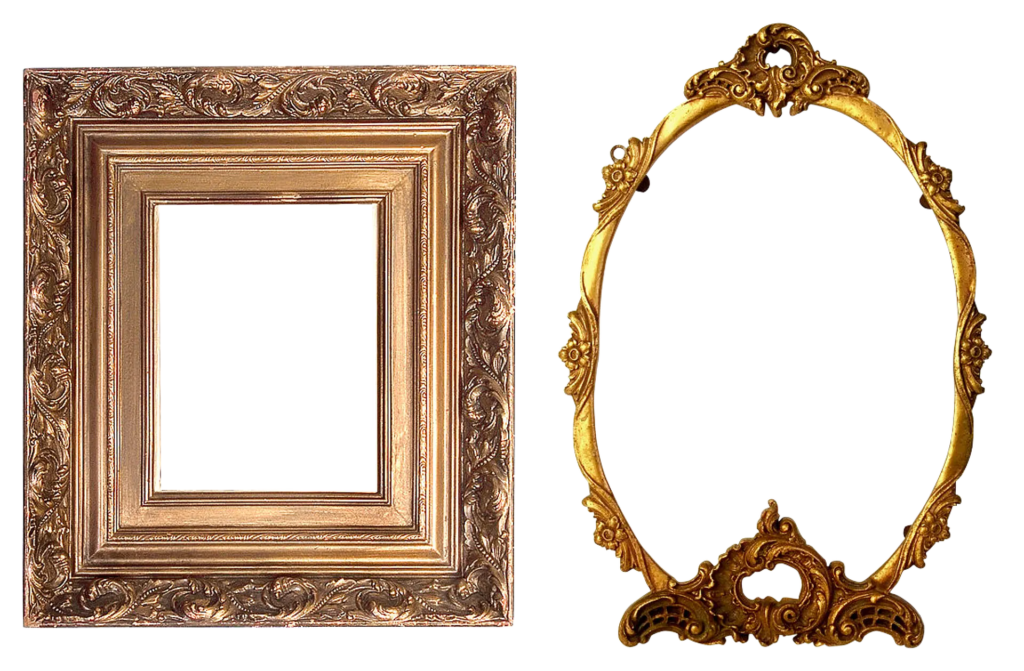
Wall art is a low-cost way to reinforce the mix. If your dominant pieces are modern, hang vintage or vintage-style art — botanical prints, old maps, an aged mirror — in simple, thin modern frames so the frame doesn’t compete for “most vintage thing in the room.” If dominant pieces are vintage, the reverse works: contemporary art in a heavier, more sculptural frame reads as intentional rather than mismatched.
Group two or three pieces rather than one large statement piece alone; a small cluster ties the wall to the room’s mixed-era feel better than a single frame does.
Anchor the Floor With a Rug That Reads as Neutral Ground
The rug is one of the few elements both eras can share equally, making it a useful unifier. A flatwoven or low-pile rug in a muted, warm tone — rust, faded blue, oatmeal — works under both a vintage and a modern table without pulling focus toward either. Avoid a strongly modern geometric print or an obviously antique medallion pattern, since either nudges the room toward one era.
Size the rug so it extends at least 24 inches past the table’s edge on all sides, letting chairs stay on it when pulled out. A rug that’s too small under a large vintage table is a fast way to make an otherwise well-mixed room look unfinished.
Pro Tip: If you’re layering a smaller vintage rug on top of a larger neutral one, keep its pattern loose and faded rather than crisp and saturated — a faded pattern reads as “found,” while a bold, high-contrast one can tip the room toward feeling themed rather than mixed.
Handle Mixed Metal Finishes on Purpose
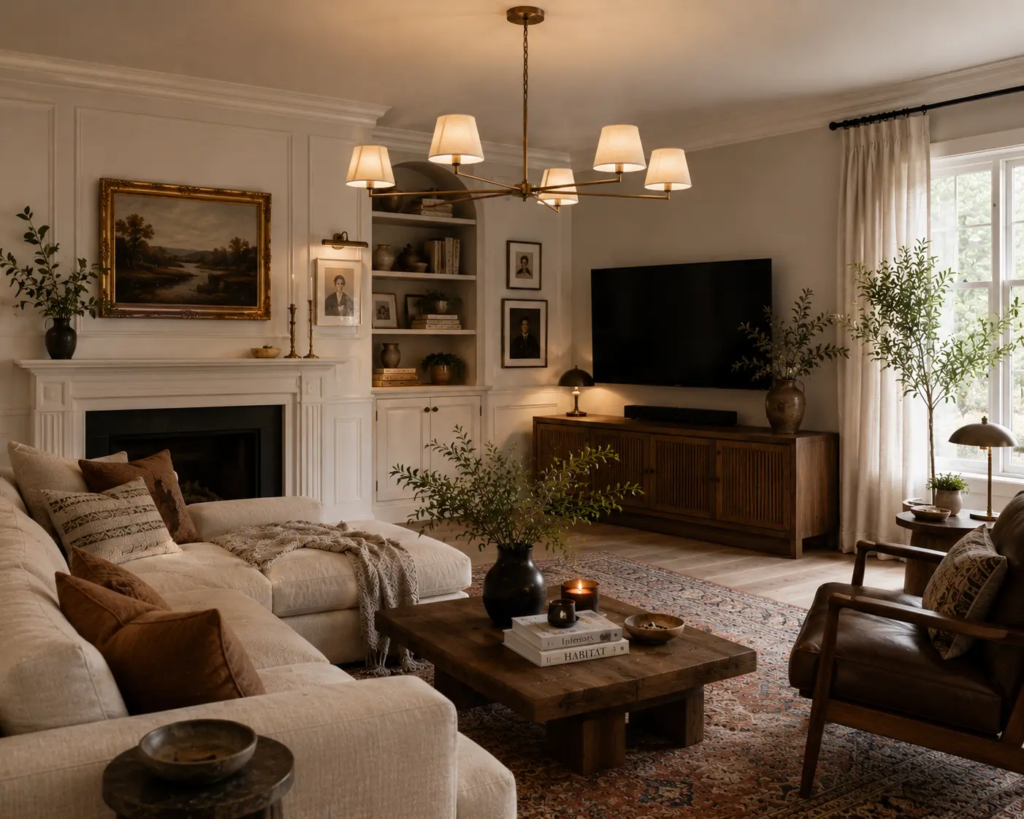
Vintage modern dining rooms often end up with several metal finishes by default — brass on an old fixture, chrome on modern chairs, black iron on a console. Left unplanned, this reads as clutter. Pick two finishes maximum as your intentional pair — brass and matte black is reliable — and phase out any extras rather than planning around them.
Common Mistakes That Undercut a Vintage Modern Dining Room
Splitting every decision 50/50. A true even split is harder to pull off than a clear 70/30 lead, and usually reads as indecisive.
Buying reproduction “vintage-style” furniture instead of the real thing. Reproductions next to genuinely old or new pieces tend to look slightly off in proportion and finish.
Refinishing every vintage piece to look brand new. Stripping a vintage table to factory-fresh removes the texture that made it worth mixing in as vintage. Light cleaning and a fresh coat of wax usually serves it better.
Treating every piece as a standalone statement. A room where the table, chairs, light, rug, and sideboard are all individually striking ends up fighting itself.
Budget-Friendly Ways to Build the Look
You don’t need to buy a genuine antique piece for every element to get a convincing mix:
- Table: A solid wood secondhand table, even a plain one, gains most of its “vintage” character from patina and wear rather than an ornate design — a $150 estate-sale find often reads better than an expensive reproduction.
- Chairs: New, simple modern chairs are widely available across price points, and since they’re playing a supporting role next to a vintage table, you don’t need a splurge piece here.
- Lighting: A single well-chosen fixture matters more than several cheaper ones — worth spending a bit more, since it does so much visual bridging work.
- Rug: A flatwoven or vintage-style printed rug in a muted tone costs considerably less than an actual antique rug and does nearly the same unifying job underfoot.
Pro Tip: Estate sales and local auction sites tend to have better prices on solid wood case pieces than vintage furniture marketplaces, since local sellers price for a quick sale rather than resale value — more legwork, but the savings on a sideboard can be substantial.