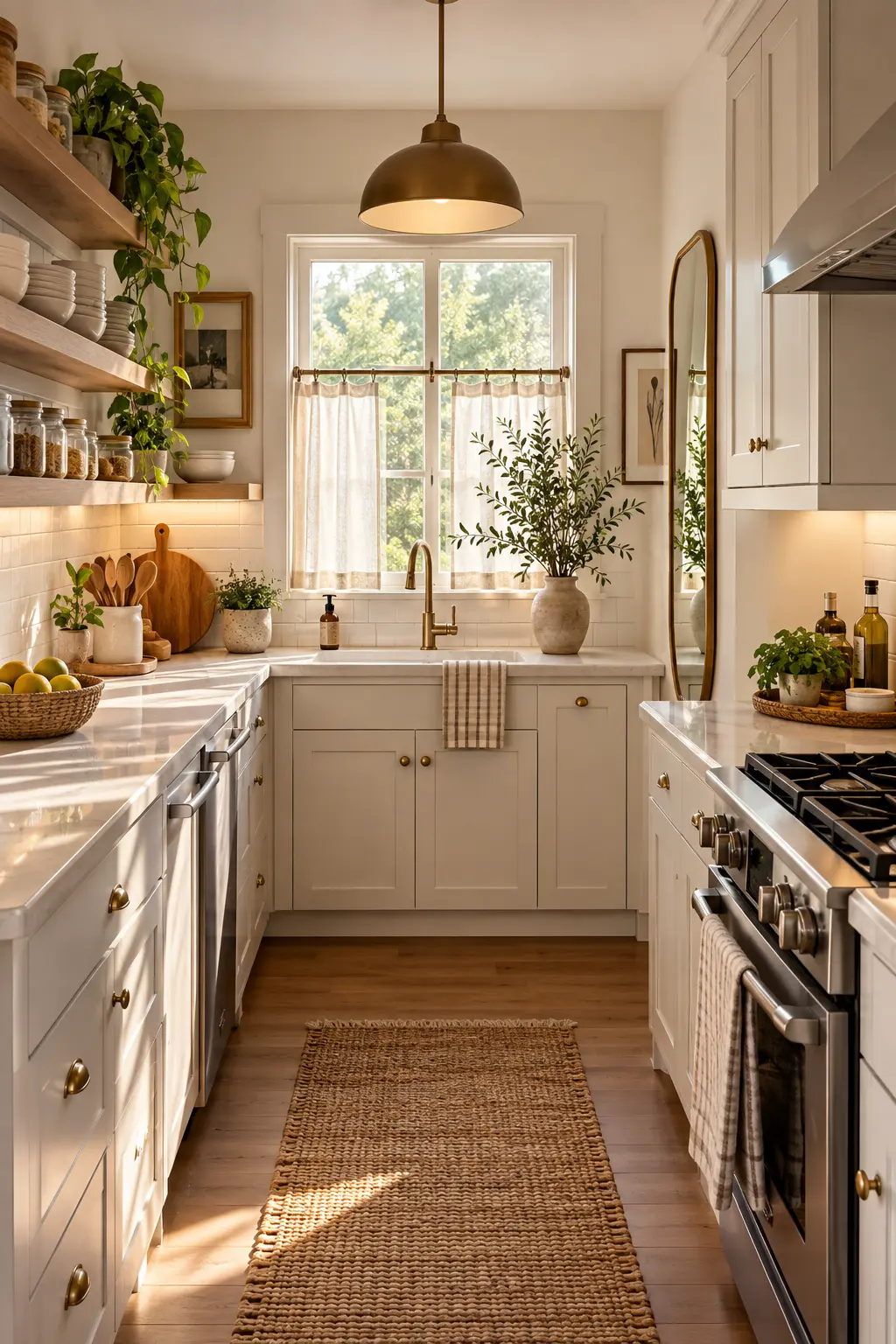
7 Small Kitchen Decor Ideas That Don’t Need a Remodel
Most advice for a small kitchen jumps straight to renovation: knock out a wall, swap the cabinets, add an island. That’s not useful if you’re renting, or if you own the place but aren’t ready for a full remodel this year. The good news is that a small kitchen’s biggest complaints — it feels cramped, cluttered, dark, or just visually busy — are largely decor problems, not structural ones.
These 7 small kitchen decor ideas work within the layout you already have. None of them require a contractor, and each one is aimed at the specific thing that makes a small kitchen feel smaller than it needs to: clutter, poor light, visual noise, or a palette that adds weight instead of openness.
Start With a Palette That Opens the Room Up
Color does more work in a small kitchen than almost anywhere else in the house, because there’s so little visual “breathing room” for a busy palette to get lost in. Dark or highly saturated colors on visible surfaces — open shelving, a rug, curtains, a backsplash you can’t change but can visually soften — tend to read as heavier and can make an already tight space feel more closed in.
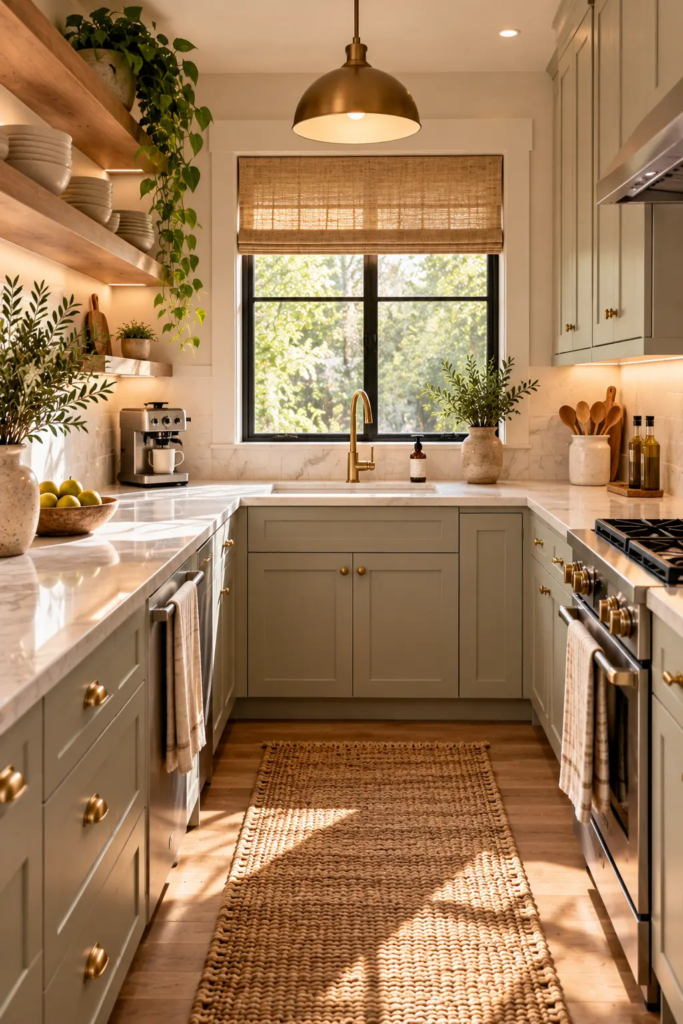
This doesn’t mean everything has to be white. A soft, light-toned palette — warm white, pale sage, soft oat — keeps the room feeling open while still having personality, especially if you save a slightly bolder color for one contained element, like a runner rug or a set of open-shelf dishware, rather than spreading it across the whole room.
Pro Tip: If your cabinets are a color you can’t change (a rental, or not ready to repaint), keep your removable decor — curtains, a rug, dish towels — in a lighter tone than the cabinets rather than matching them. Contrast between a darker cabinet and lighter surrounding decor tends to make the cabinets read as intentional rather than like they’re closing the room in.

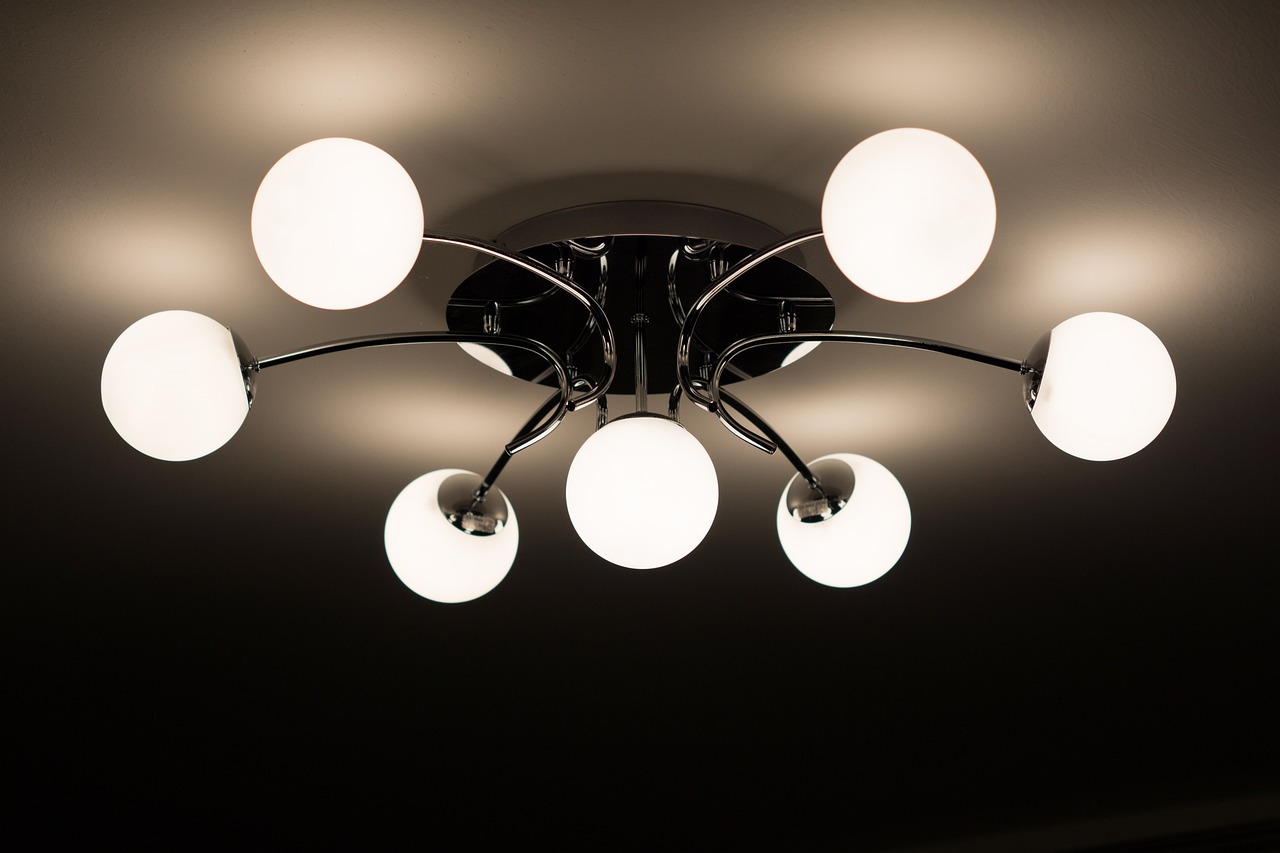
Layer Lighting Instead of Relying on One Overhead Fixture
A single overhead light is one of the most common reasons a small kitchen feels flat and slightly gloomy, even during the day. Overhead light alone creates shadows directly under upper cabinets and along countertops — exactly where you’re working — while leaving the rest of the room in comparatively dim, uneven light.
Adding a secondary light source changes this more than almost any other decor move on this list. Battery-operated or plug-in under-cabinet LED strips light the counter directly, removing the shadow line that makes a small kitchen feel dim even with the overhead light on. If you have room for one, a small pendant or a warm-toned lamp on an open shelf adds a second layer that makes the whole room feel less single-source and flat.
Use Open Shelving as Negative Space, Not Storage Overflow
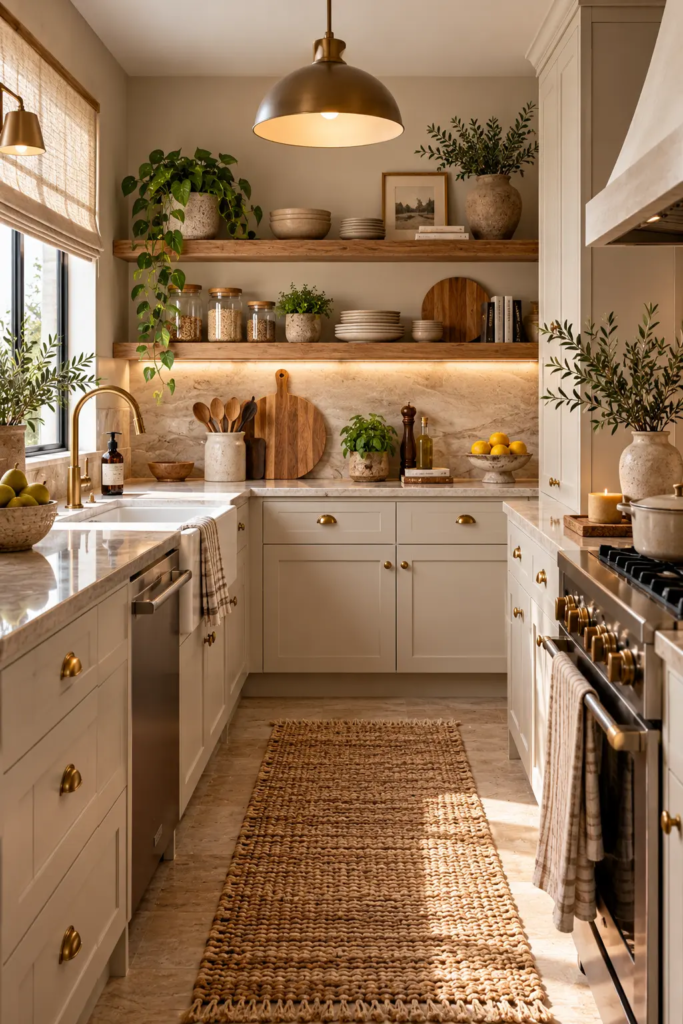
Open shelving gets recommended constantly for small kitchens, but it only helps if the shelves themselves stay relatively uncluttered — a shelf packed edge-to-edge with mismatched dishware adds visual noise instead of removing it, which defeats the purpose. The value of open shelving in a small kitchen isn’t more storage; it’s the sense of openness that comes from seeing past the counter line instead of a wall of closed cabinet doors.
Keep open shelves to about two-thirds full at most, and group items by color or material rather than by pure function, so the eye reads a shelf as one cohesive grouping instead of a jumble. Anything you don’t want on visual display — mismatched Tupperware, odd appliance parts — is usually better off in a closed cabinet, even if that means the open shelf holds less than it technically could.
Pro Tip: If your dishware doesn’t match and you’re not ready to replace it, turn plates and bowls so the more uniform back or rim faces out on open shelves, rather than the patterned front. It’s a small styling trick that makes a mismatched set read as more intentional without spending anything.

Add a Rug to Warm the Floor Without Shrinking the Walkway
A bare floor in a small kitchen can feel utilitarian, but a rug that’s poorly sized can make the walkway feel tighter than it already is. A runner rug sized to leave at least 6 to 8 inches of visible floor on either side, positioned along the main work path rather than covering the full floor edge to edge, adds warmth and texture without visually narrowing the space.
A low-pile, flat-weave rug is also more practical here than a plush one — it’s easier to keep clean near a cooking area and doesn’t create a tripping hazard where the floor transitions from tile or hardwood.

Bring In Texture Through Materials, Not Just Color
A small kitchen’s hard surfaces — countertop, tile, cabinet fronts — are often smooth and similar in finish, which can make the whole room feel visually flat even if the color palette is nice. Introducing a few natural or textured materials breaks that up: a wood cutting board displayed upright rather than stored away, a woven basket for produce or towels, a linen or waffle-weave dish towel instead of a smooth cotton one.
These are small, low-cost additions individually, but together they add the kind of visual depth that a purely color-based approach to styling can’t achieve on its own.
Use a Mirror or Reflective Surface to Bounce Available Light
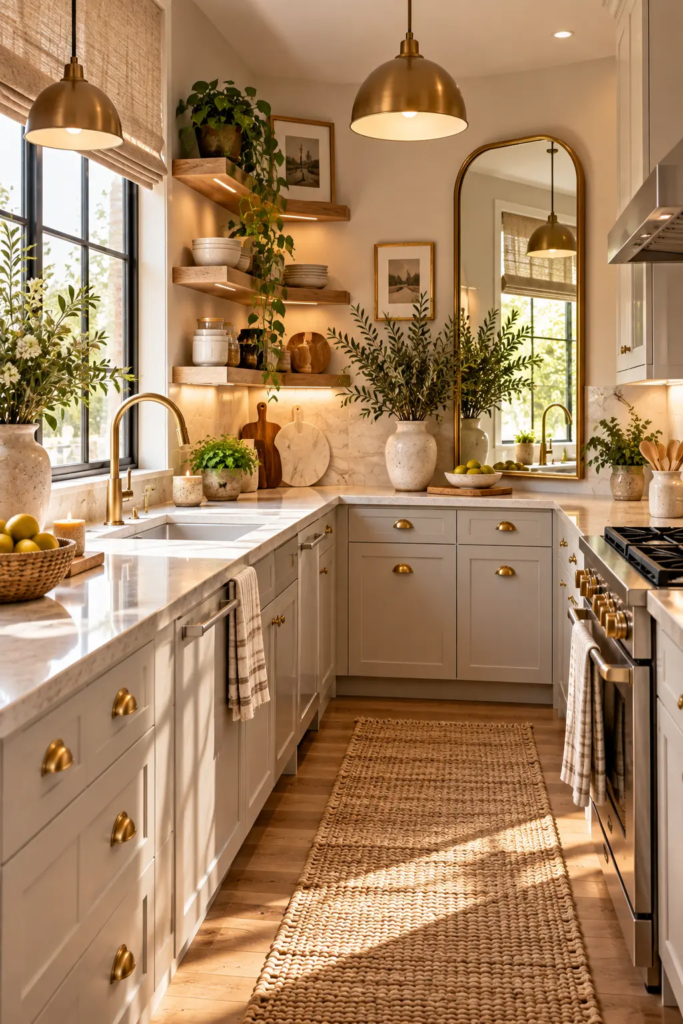
Small kitchens, especially ones without much natural light, benefit from the same trick used in small bathrooms and entryways: a mirror or reflective surface positioned to catch and bounce existing light rather than absorb it. A small mirror on an open wall segment, or even glass-front upper cabinets in place of solid doors, reflects light back into the room instead of letting it dead-end at a flat surface.
This works especially well positioned across from a window, where it can bounce daylight further into the room than the window alone would reach.
Pro Tip: If you don’t have wall space for a mirror, a simple swap to glossy or metallic hardware (cabinet pulls, a faucet finish) does a smaller version of the same job — glossy surfaces catch and scatter light in a way that matte finishes absorb, which adds up across several small fixtures in a tight kitchen.
Edit the Counter Down to What You Actually Use Daily
Counter space in a small kitchen is one of the most valuable and most commonly over-filled surfaces in the house. A coffee maker, a stand mixer, a utensil crock, a fruit bowl, a paper towel holder, and a few decorative items can add up fast, and each additional object on the counter reduces both usable workspace and the sense of visual openness.
Keep only what you use daily out on the counter, and store the rest — even things you use weekly — in a cabinet or drawer. This is less about minimalism as an aesthetic and more about the fact that a clear counter reads as more spacious than almost any other single change you can make in a small kitchen, because it’s the surface your eye lands on first.
Common Mistakes to Avoid
- Choosing dark, heavy colors for removable decor. They add visual weight exactly where a small kitchen has the least room to spare.
- Overfilling open shelves. Past about two-thirds full, open shelving starts adding clutter instead of removing it.
- Sizing a rug too large or too small for the walkway. Either extreme either shrinks the usable path or looks like an afterthought.
- Leaving daily-use items uncontained. A counter with several loose small items reads as far more cluttered than the same items stored in one basket or tray.
- Relying on a single overhead light. It’s one of the most common, and most fixable, reasons a small kitchen feels dim.
Budget-Friendly Ways to Adapt These Ideas
Low budget: Edit your counter down to daily-use items only, add a battery-powered under-cabinet light strip, and swap in lighter-colored dish towels or a runner rug if your current ones are dark.
Mid budget: Add a small mirror across from a window, introduce two or three textured elements (a wood board, a woven basket), and reorganize open shelving by color and category.
Higher budget: Swap cabinet hardware for a glossy or metallic finish, add plug-in pendant lighting for a second light layer, or replace a couple of solid upper cabinet doors with glass-front ones for extra light bounce.
FAQ
How do I make a small kitchen look bigger without renovating? Focus on light, color, and clutter, in that order — layering in a secondary light source, keeping the palette light on removable elements like decor and rugs, and editing counter clutter down to daily-use items tend to have the biggest visual impact without any structural changes.
Is open shelving actually a good idea in a small kitchen? Yes, but only if the shelves stay relatively uncluttered — open shelving’s benefit is the sense of openness it creates, which disappears if the shelves are packed edge to edge. Keeping shelves around two-thirds full and grouped by color tends to work better than maximizing storage on them.
What color should I use in a small kitchen if I can’t repaint? Focus on your removable decor instead of the walls — light-toned rugs, curtains, and dish towels can visually balance darker cabinets or tile you can’t change, since contrast between a darker fixed element and lighter surrounding decor tends to read as intentional rather than heavy.
Do rugs work in a small kitchen, or do they make it feel smaller? A properly sized runner rug — leaving several inches of visible floor on either side — adds warmth without shrinking the walkway. The issue usually isn’t rugs themselves but sizing one that’s too large for the space or placing it where it interrupts the main work path.
What’s the single most impactful change for a small, dim kitchen? Adding a secondary light source, like an under-cabinet LED strip, tends to make the biggest visible difference of anything on this list, because it removes the shadow line that a single overhead fixture creates right where you’re working and looking most often.
The Takeaway
A small kitchen doesn’t need new cabinets or knocked-down walls to stop feeling cramped — it usually needs better light, a lighter palette on the elements you can change, and less visual clutter on the surfaces you see every day. These 7 small kitchen decor ideas work because they solve those specific problems directly, without requiring a renovation budget or a landlord’s permission.