Living Room Mirror Placement That Actually Works
Most living room mirror advice stops at “hang one across from a window to bounce light around the room,” which is true but incomplete. A mirror doesn’t just reflect light — it reflects whatever’s in front of it, and that’s the part most guides skip. Hang a beautiful mirror across from a cluttered bookshelf, a hallway closet door, or the back of the TV, and you’ve doubled the part of the room you didn’t want to look at in the first place.
A living room mirror earns its spot on the wall when it’s sized, placed, and angled around what it’s going to show, not just where there happens to be empty wall space. Here’s how to actually make that decision, plus the sizing and hanging details that keep a mirror from looking like an afterthought.
What the Mirror Reflects Matters More Than the Mirror Itself
Before deciding on size or frame style, stand where you’d actually sit or walk past the mirror and look at what’s directly across from where you’re planning to hang it. A window, a piece of art, or an open sightline into a well-styled part of the room is a good sign. A cluttered closet, the back of a bookshelf, or a hallway that always has shoes piled up means you should either rethink the placement or plan to keep that area tidier than you might otherwise bother with.
This shift — treating the mirror as a second view into the room rather than just an object on the wall — is the difference between a mirror that makes a room feel bigger and brighter and one that just makes the clutter twice as visible.
Pro Tip: Take a phone photo from your main seating spot before you hang anything. A photo flattens the room the way a mirror does, and it’s easier to spot an unflattering reflection angle in a photo than by eye, since we tend to visually “edit out” clutter we’re used to seeing in person.
Size the Mirror to What’s Below It
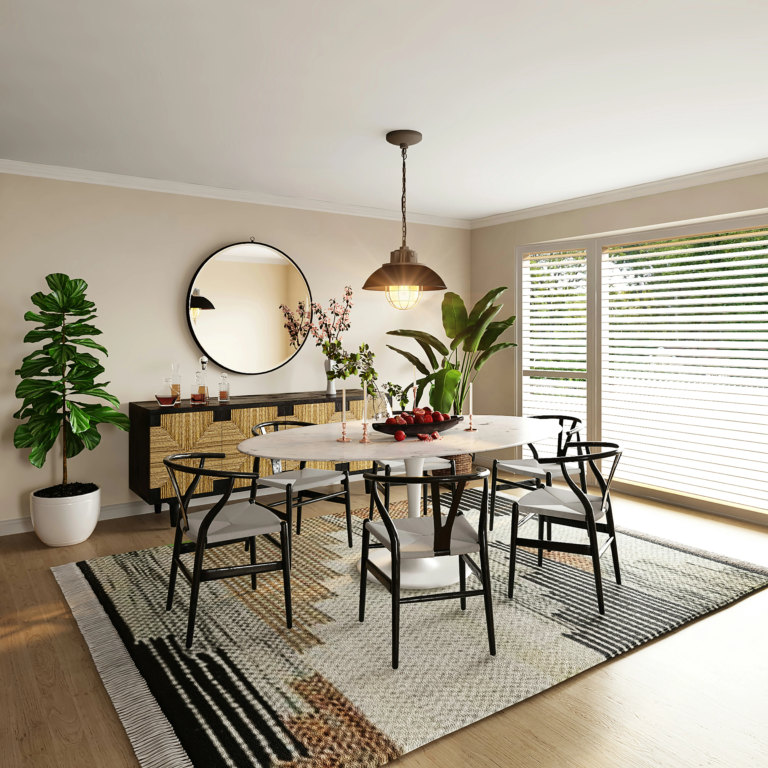
A mirror hung above a console, sofa, or mantel should generally span about two-thirds to three-quarters of that piece’s width — smaller, and it reads as undersized and floating; larger, and it can overwhelm the furniture it’s meant to complement. For a 60-inch console, that puts you in the 40- to 45-inch range for the mirror’s width.
Height matters just as much. Leave about 6 to 8 inches of breathing room between the top of the console or sofa and the bottom edge of the mirror. Less and the two pieces feel stacked and cramped; more and the mirror can look disconnected from the furniture below it, like it wandered up the wall on its own.
Position It to Bounce Light, Not Just Sit on a Wall
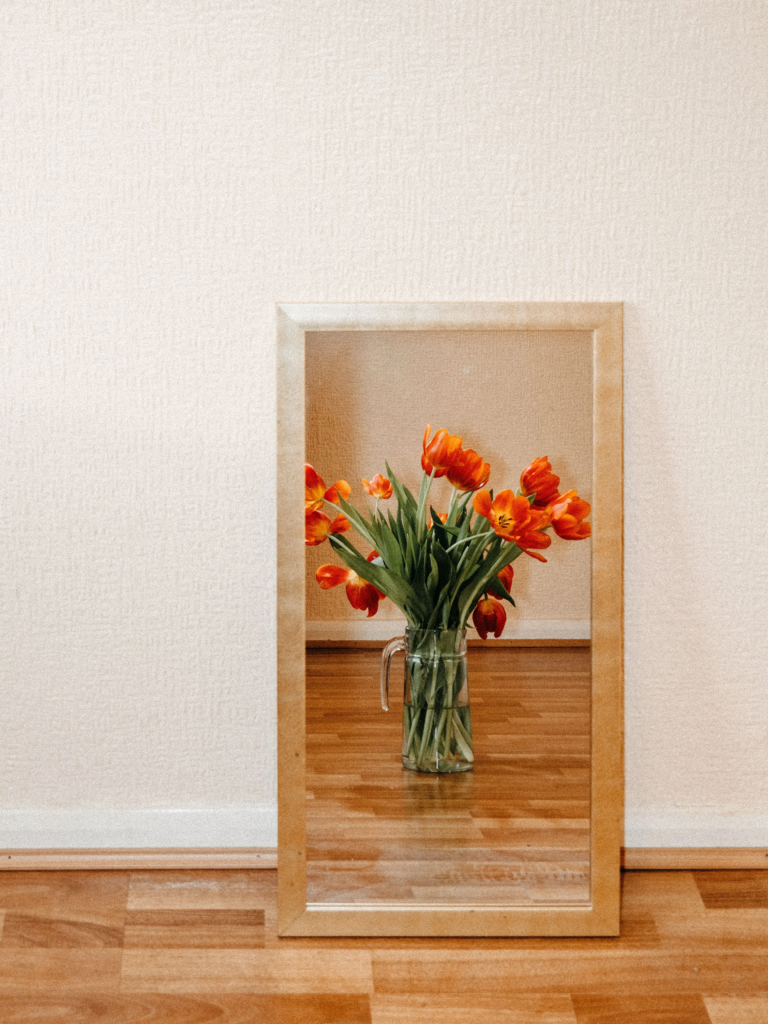
A mirror placed perpendicular to a window — on a side wall rather than directly across from it — tends to scatter light more evenly through a rPhoto by Lisa Fotios: than one hung dead-on opposite the window, which mostly just reflects a bright rectangle back at itself. Perpendicular placement catches light as it moves across the room throughout the day rather than bouncing one fixed beam.
If your living room only has one realistic wall for a large mirror and it happens to be opposite the window, that still works — you’ll get a strong, direct reflection of the outdoor view, which reads well as long as the view itself is worth doubling (trees and sky, not a neighboring wall or a parking lot). If you’re weighing this against a bolder wall color instead, it’s worth looking at a few living room wall color choices before deciding between the two, since a dark or saturated wall changes how much a mirror can realistically brighten the room.
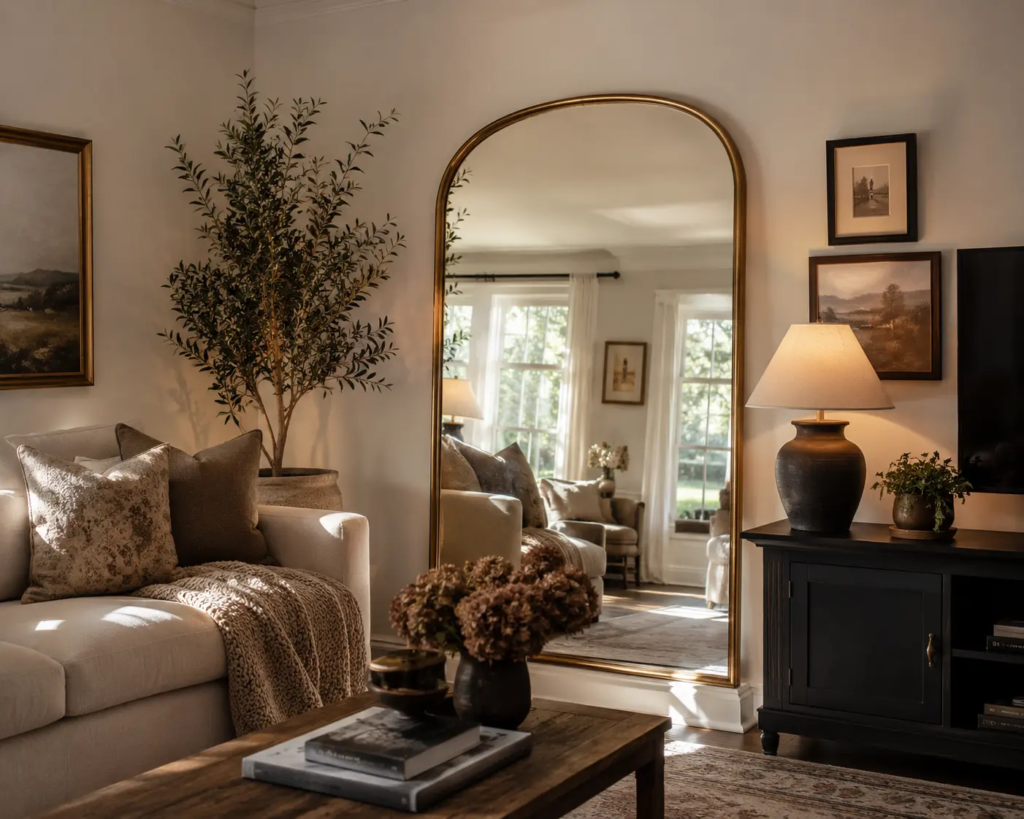
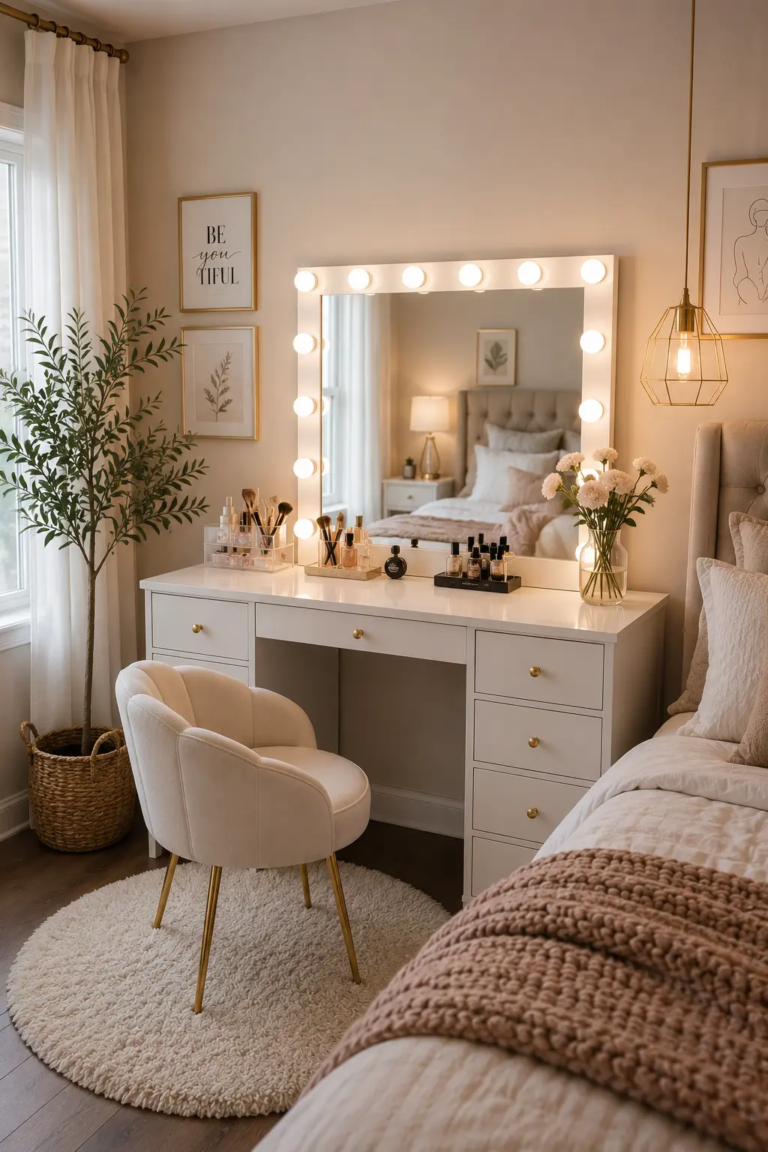
Pro Tip: A mirror doesn’t have to face a window to help with light — hanging one across from a lamp or sconce does something similar after dark, roughly doubling the perceived light output of that fixture once the sun goes down.
Choose a Frame Finish That Matches Your Other Metals
A mirror’s frame is one of the easiest places to accidentally introduce a third or fourth metal finish into a room that’s otherwise coordinated. If your lighting and hardware are brass, a chrome or brushed-nickel frame will stand out as inconsistent rather than intentional, even if the mirror is a great piece on its own.
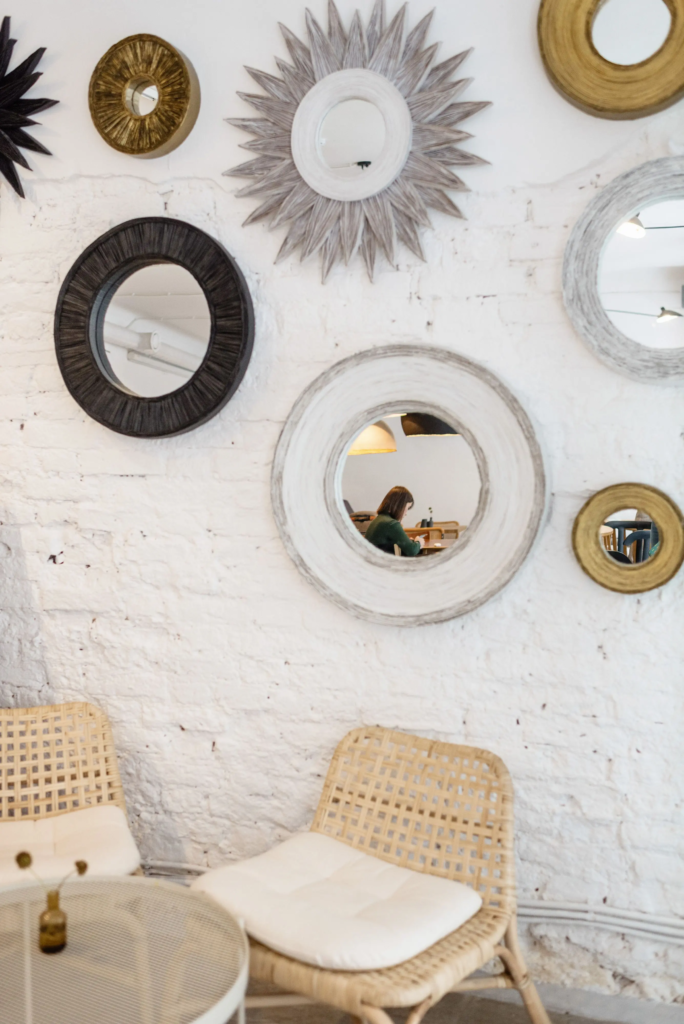
Wood-framed and rattan-framed mirrors sidestep this problem entirely, since they read as material rather than metal and sit comfortably next to almost any hardware combination. If you already have a strong metal finish elsewhere, matching the mirror to it (or choosing an unfinished material instead) keeps the room from showing off three different eras of hardware trends at once.
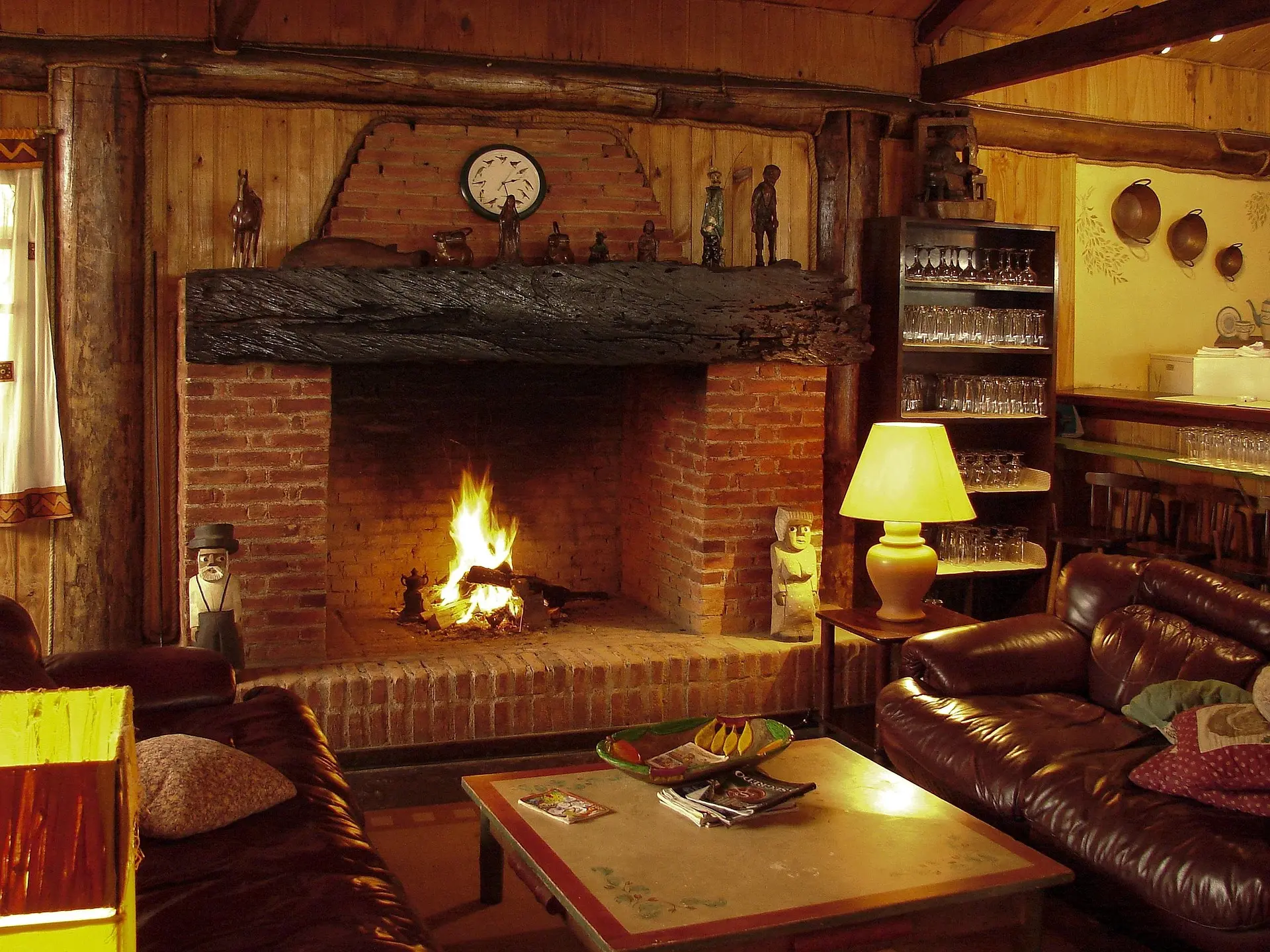
Pro Tip: In a room prone to humidity or temperature swings — near an entryway, fireplace, or large uncovered window — a solid wood frame holds up better than a veneer or MDF frame, which can warp at the joints. It’s a small cost difference upfront that avoids a frame that no longer sits flush a few years in.

Hang It Lower Than Most People Expect
Art gets hung with its center around 57 to 60 inches from the floor, the museum standard for eye level. A mirror over furniture should sit lower — it needs to relate to the piece below it, not an abstract rule that ignores the console or sofa entirely.
For a mirror above a console, center the bottom third with typical seated or standing eye level, which usually puts the whole mirror lower on the wall than art would sit in the same spot. Hanging it at pure “gallery height” above a console often leaves an awkward gap that makes the wall look unfinished.
Match the Shape to the Room’s Existing Lines
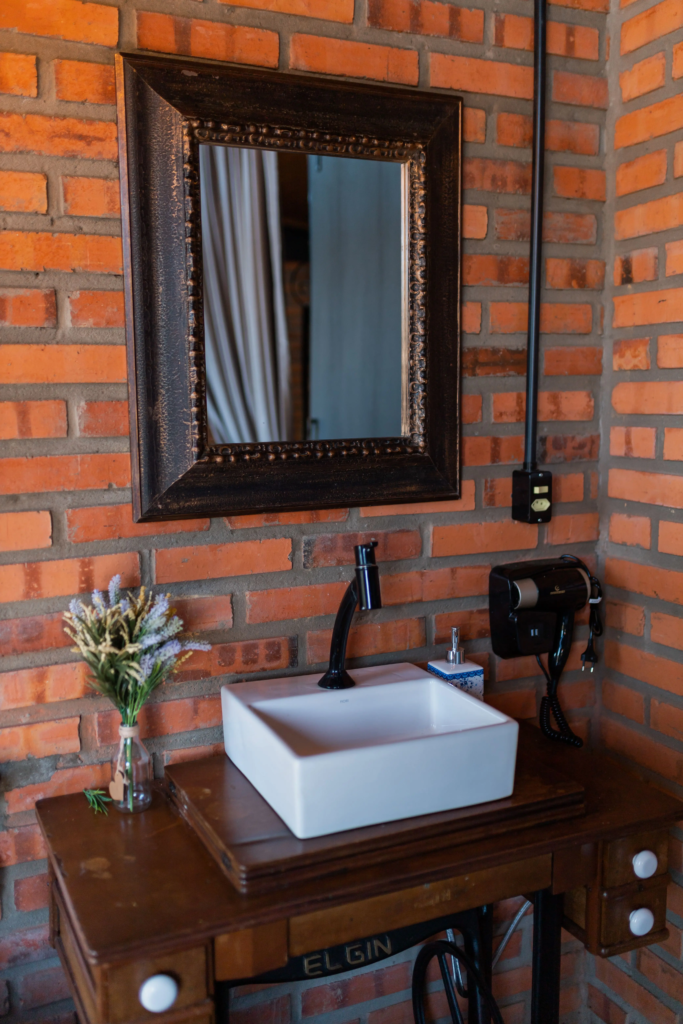
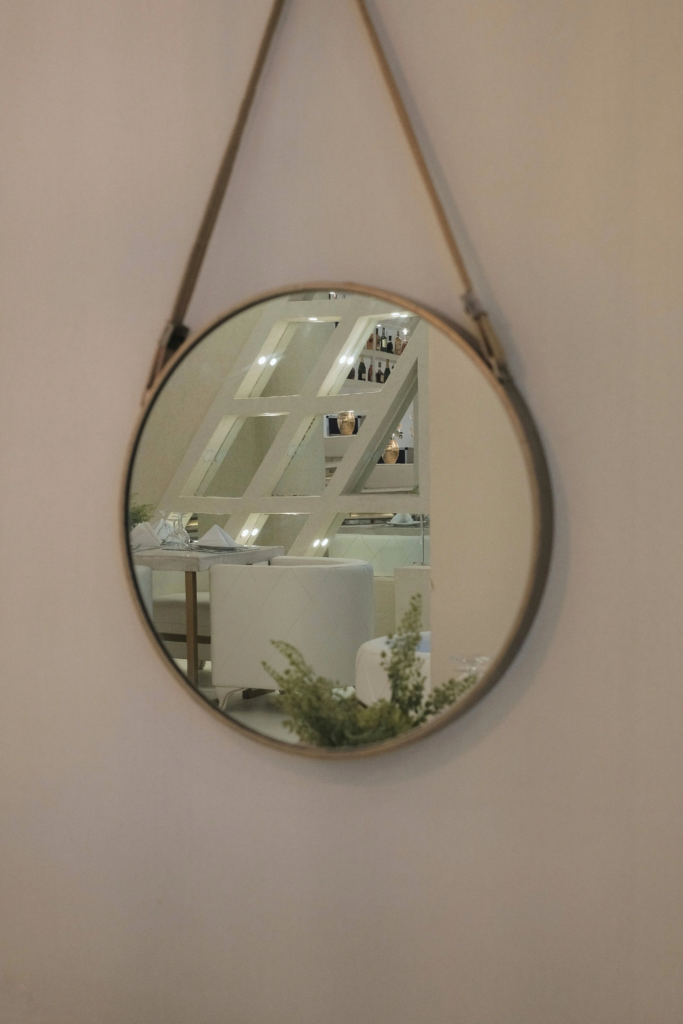
Round Mirrors Soften Rooms With a Lot of Straight Edges
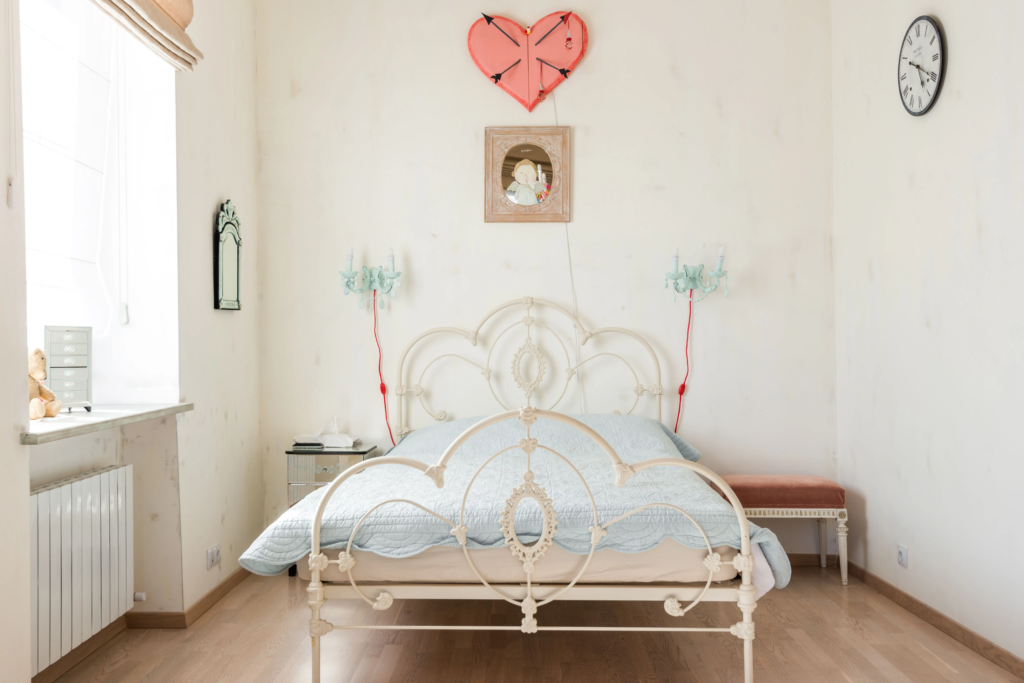
A room with rectangular furniture, straight-line shelving, and a grid of window panes benefits from a round or oval mirror as a visual break — the curve reads as a relief from the right angles rather than another repetition of them.
Arched Mirrors Add Height Without Adding Bulk
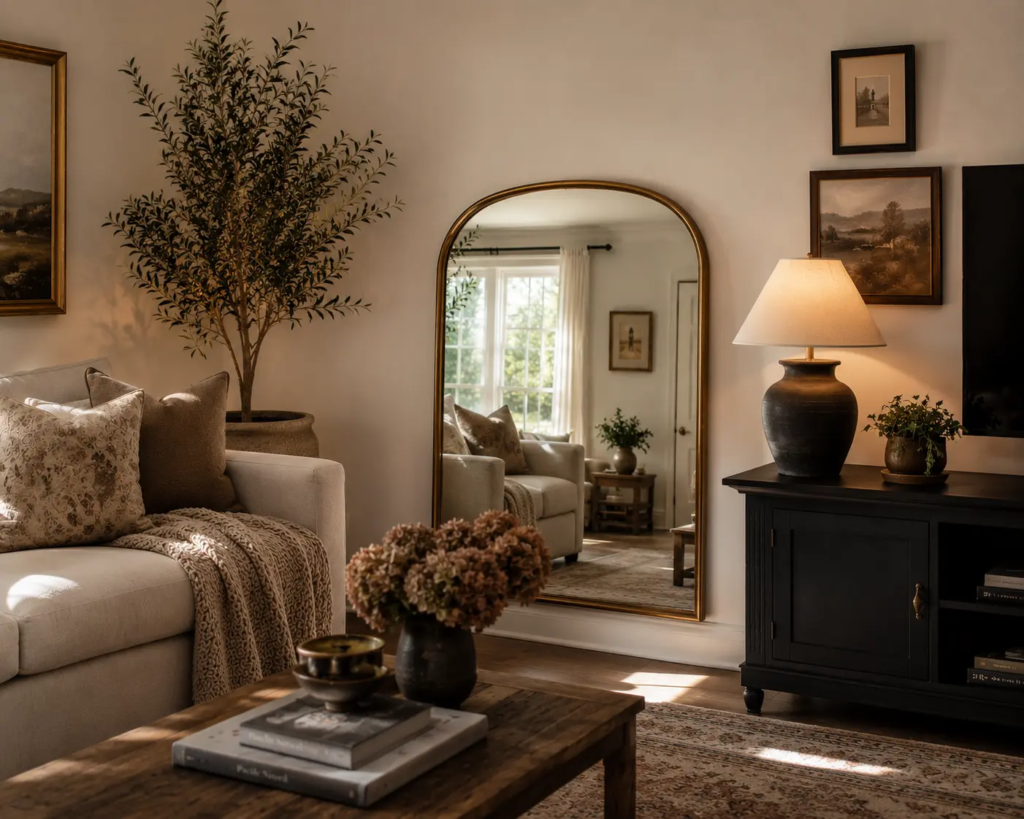
An arched or cathedral-shaped mirror draws the eye upward more than a rectangular one of the same size, useful in a room with lower ceilings where you want height without the visual weight of a taller piece of furniture.
Rectangular Mirrors Work Best Over Wide, Low Furniture
A long, rectangular mirror suits a wide or low console better than a round one, since it echoes the horizontal line of the furniture instead of interrupting it. It’s also the most forgiving shape if you’re unsure which direction to go, since it reads as neutral rather than a deliberate style statement. If you’re weighing shape and frame choices against the room’s broader style, this is a good moment to look at a few elegant living room design ideas for how mirrors get used as part of a more formal, cohesive scheme.
Watch What Happens After Dark
A mirror that looks great by day can behave differently at night, especially across from a window. Once it’s dark outside, a large mirror facing an uncurtained window can reflect the room’s interior back at itself instead of the outdoor view — some people find that disorienting rather than expansive.
[IMAGE: A living room at dusk with lamps lit, a mirror on a side wall reflecting warm interior light rather than a dark window]
Positioning the mirror on a perpendicular wall (as covered above) avoids this entirely, since it catches light and movement from the side rather than a dark pane of glass.
Common Mistakes That Undercut a Living Room Mirror
Hanging it at pure “gallery height.” A mirror over furniture needs to relate to that furniture, not to a fixed measurement meant for art on a bare wall.
Choosing size based on available wall space instead of the furniture below it. A mirror technically right for an empty stretch of wall can look wrong once a console or sofa sits beneath it. Measure from the furniture, not the wall.
Ignoring the reflection until after it’s hung. This is the single most avoidable mistake on this list — check what’s across from the spot before committing to a mounting bracket.
Mixing too many frame finishes in one sightline. A brass mirror, a chrome floor lamp, and matte black shelving brackets all visible from the same seat reads as unplanned rather than eclectic. Keeping this in check is part of a bigger picture — it’s worth checking your overall living room aesthetic against the finishes you’re introducing with a new mirror before you commit to a frame.
Budget-Friendly Ways to Add a Living Room Mirror
- Frame finish: An unfinished or wood-framed mirror avoids the “wrong metal” problem entirely and is often less expensive than a statement metal frame.
- Size: A slightly smaller mirror, properly proportioned to the furniture below it, looks more intentional and costs less than an oversized one bought just to fill wall space.
- Placement: Rearranging an existing mirror to a better wall — perpendicular to a window instead of facing clutter — costs nothing and can solve half the problems on this list.
- Secondhand sourcing: Vintage mirrors are one of the more reliably good secondhand finds, since glass doesn’t wear the way fabric or wood finishes do, and older frames often have more character than new budget options.
A mirror is rarely the only thing you’re budgeting for at once — if you’re also rethinking seating nearby, it’s worth a look at a few sofa options for the living room before you split the budget between the two.
Pro Tip: If buying a large mirror secondhand, check the glass edges for black spotting (silvering degrading) before you commit. A little at the very edge is usually fine and even adds character, but spotting spread toward the center will only get worse over time.
Frequently Asked Questions
How big should a living room mirror be? Size it to whatever furniture sits below it — about two-thirds to three-quarters of that piece’s width is a reliable starting point. A mirror sized to the wall instead of the furniture often ends up looking wrong once the room is fully furnished.
Should a living room mirror face a window? Perpendicular usually spreads light more evenly than directly across from one, though a direct reflection can still work if the view itself is worth doubling. Either way, check what else is in that sightline first.
Can a mirror make a small living room feel bigger? Yes, but it depends on what it reflects. A mirror doubling an open, well-lit sightline makes a room feel more expansive; one doubling a cluttered corner can make it feel busier instead.
Is it okay to lean a large floor mirror instead of mounting it? Yes, and it’s often a better fit with limited wall space or in a rental where drilling isn’t ideal. Anchor it to the wall with a safety strap if there’s any chance of tipping, especially with kids or pets around.
A Living Room Mirror Should Earn Its Wall Space
A living room mirror works when it’s chosen and placed around what it’s actually going to reflect, not dropped into the first empty stretch of wall. Check the sightline before you hang anything, size it to the furniture underneath rather than the wall around it, and let the frame finish match the metals you already have. Do that, and the mirror does the job people buy one for in the first place — more light, more depth, and a room that feels a little bigger than it actually is.