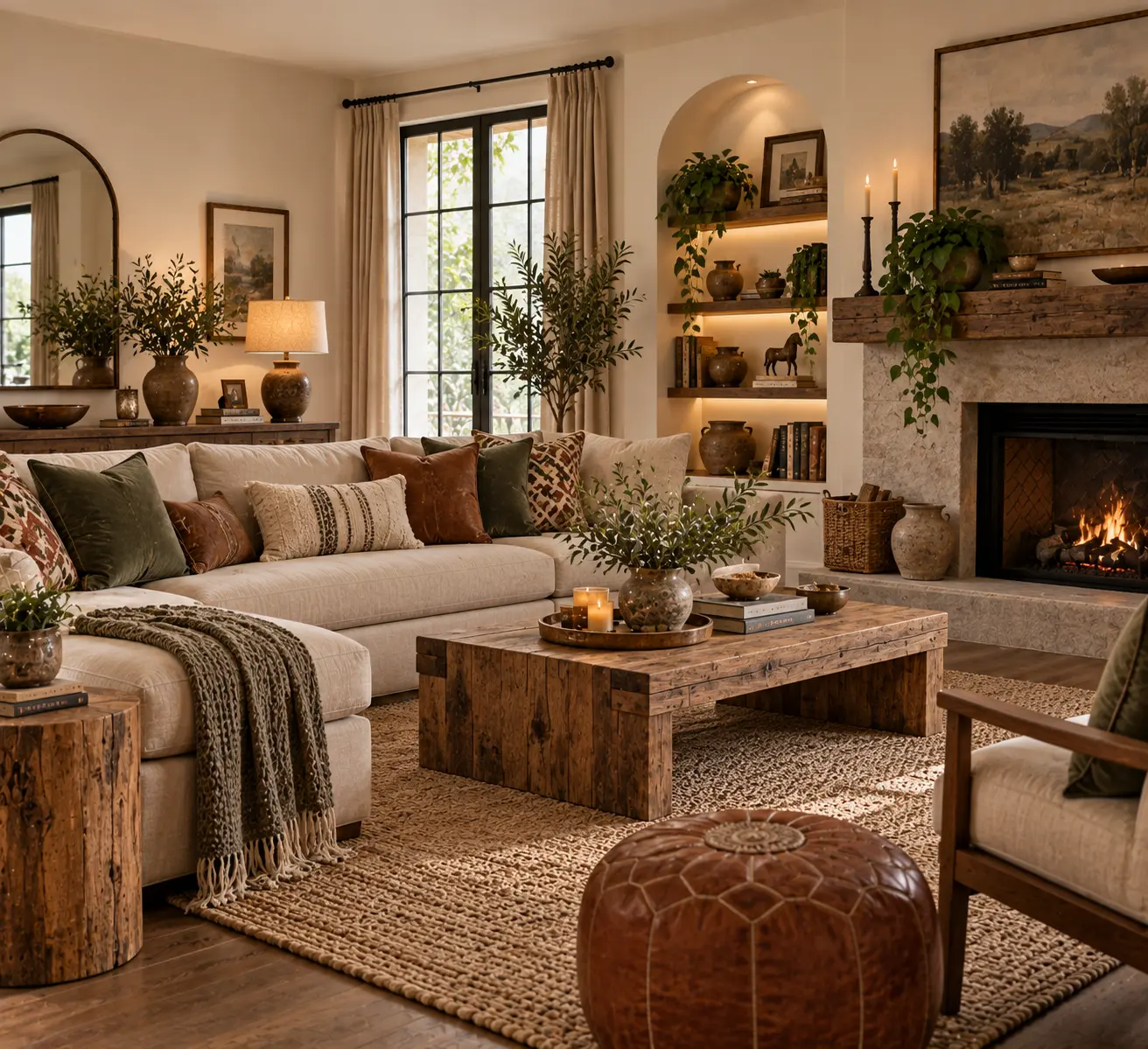
Rustic Living Room Decor for a Home Without Exposed Beams
Most rustic living room inspiration comes from homes that already have the bones for it — exposed timber beams, a stone fireplace, wide-plank original flooring. That’s not most homes. Most living rooms have flat drywall, builder-grade window trim, and wall-to-wall carpet or laminate flooring, and none of that disappears just because you bring in a plaid throw and some antlers.
Rustic decor that actually works in a standard room comes from material choices, not architecture you don’t have. The right wood grain, the right metal finish, and the right texture layering can do almost all the work exposed beams would, without a renovation. Here’s how to build that in a room that was never going to look like a cabin on its own.
Rustic Is a Material Language, Not a Log Cabin

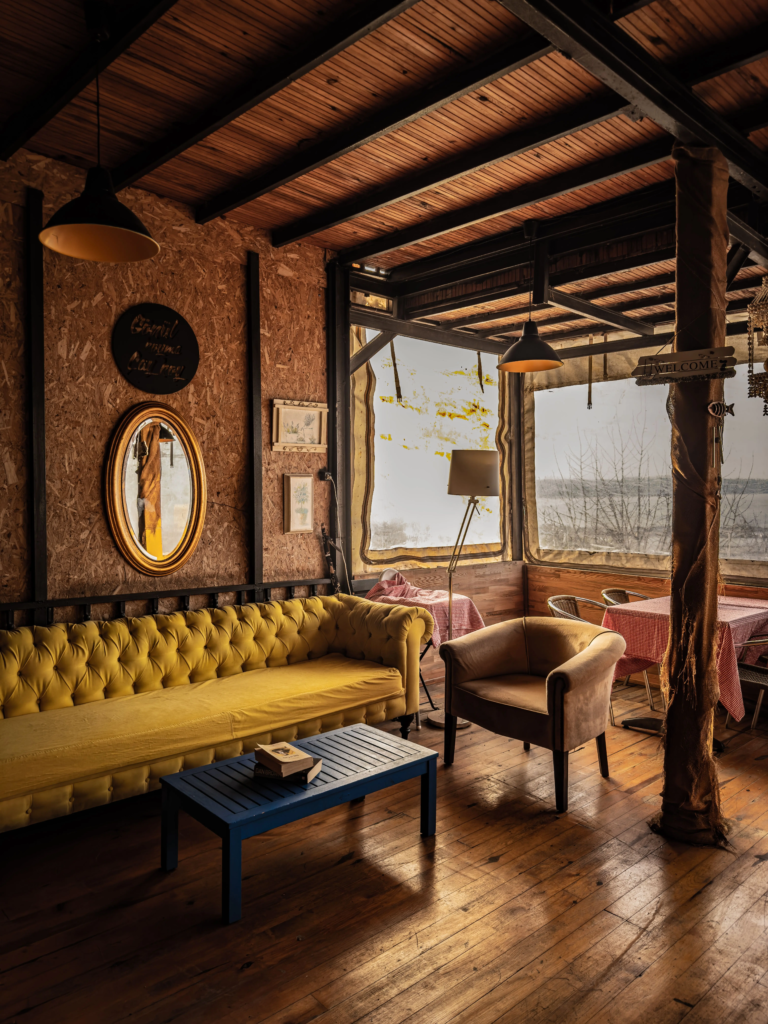
Before buying anything, it helps to separate what rustic decor actually depends on from what it’s often confused with. The style isn’t about owning reclaimed architecture — it’s about material behavior: visible wood grain, raw or slightly uneven edges, natural imperfection, and finishes that show wear rather than hide it. A smooth, lacquered wood table reads as traditional even in a rustic-styled room; a table with visible saw marks or a live edge reads as rustic even against plain white walls.
Once you’re choosing pieces based on how the material behaves rather than whether it matches a “rustic” catalog category, it’s much easier to build the look convincingly in a room with none of the original architecture the style usually leans on.
Pro Tip: Run your hand across a piece before buying it, not just look at it. A truly rustic material should have some texture you can feel — visible grain, a slightly uneven surface, or a raw edge — rather than a smooth finish that’s simply been painted or printed to look aged.
Rustic Is a Material Language, Not a Log Cabin
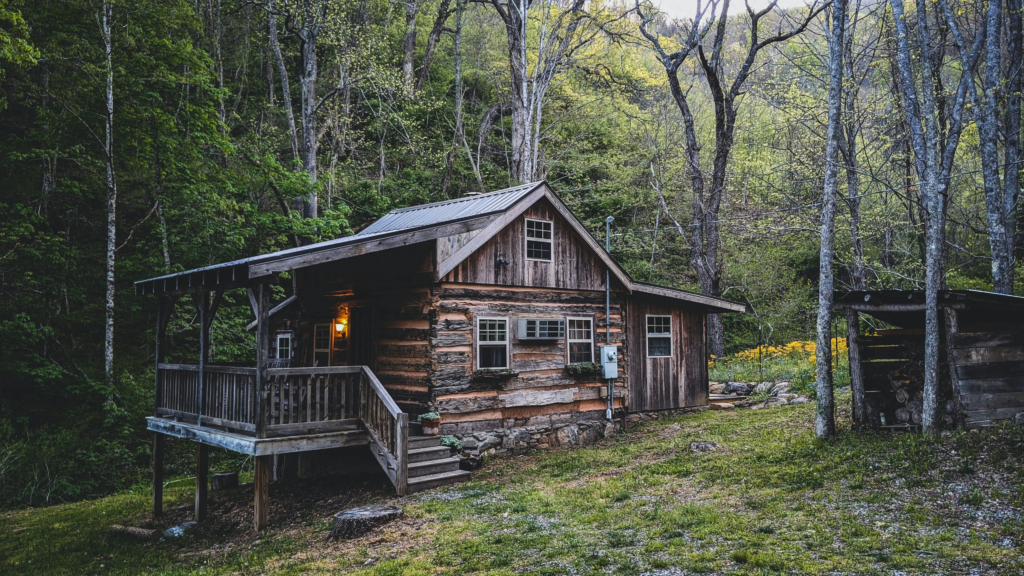
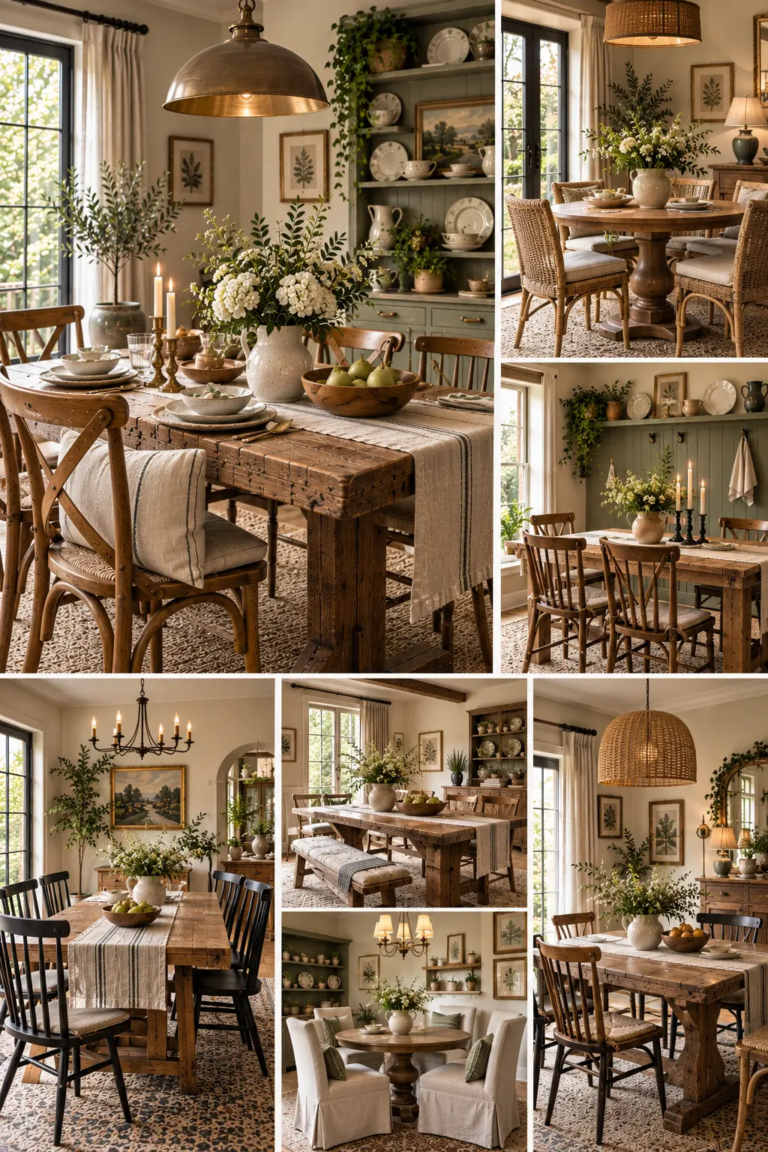
One substantial wood piece with real presence — a coffee table, a console, or a media stand — does more to establish rustic character than several smaller wood accents scattered around. Look for solid wood with visible grain and, ideally, a live edge or slightly irregular shape rather than a perfectly rectangular, uniformly finished piece. Acacia, walnut, and reclaimed pine are common choices, since they show grain clearly and take a matte or lightly oiled finish well.
Keep the rest of the room’s furniture simpler once you’ve committed to this piece. A statement coffee table next to a statement media console next to a statement side table starts to compete with itself rather than reading as one grounded anchor.
Layer Natural Textures Instead of One “Rustic” Material
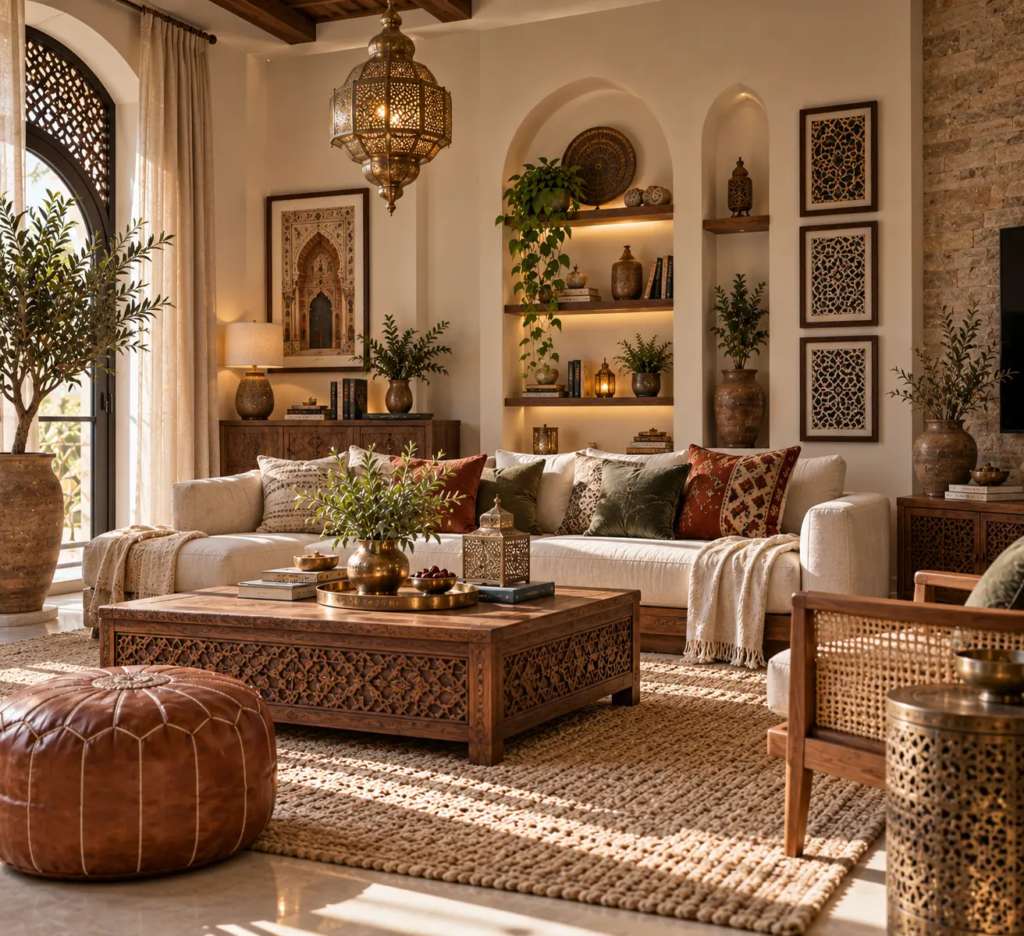
A single wood tone with nothing else supporting it can read as a furniture choice rather than a full design language. Rustic decor holds together through repeated but varied natural textures — wood alongside raw linen, wool, jute, and unglazed ceramic — rather than a room that’s entirely wood-toned or one material.
A wool or jute area rug grounds the seating area, but a flatwoven or slightly irregular weave reads more rustic than a plush, uniform pile. Linen or raw cotton slipcovers and throw pillows add softness without introducing the smooth, polished look that works against this style.
Pro Tip: Vary the texture’s scale as much as its material. A chunky, hand-knit throw next to a fine, tightly woven jute rug creates more visual depth than two textures of similar weight would, even if both are technically “natural materials.”
Choose a Muted, Earth-Toned Palette Over Saturated Browns
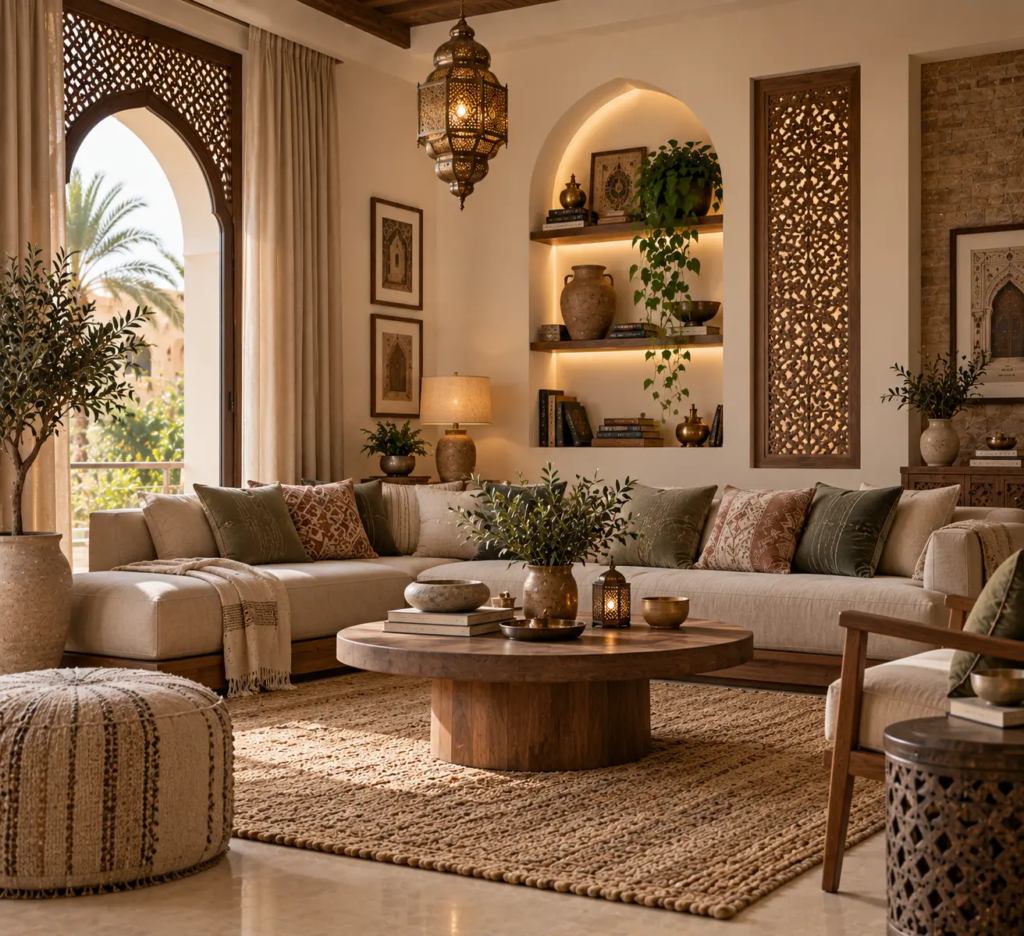
Rustic decor gets pushed toward heavy, saturated browns and oranges more often than it needs to be, which is part of why it can read dated or overly themed. A more muted palette — sage, clay, oatmeal, charcoal, warm off-white — lets the wood and texture carry the rustic feeling while keeping the room lighter and more livable than a fully saturated brown-on-brown scheme.
Save the deepest, richest wood tones for one or two anchor pieces rather than matching every wooden element to the same dark stain. Mixing in a slightly lighter wood tone, even in a small accent like a picture frame or bowl, keeps the space from reading as one monolithic block of dark brown.
Add Blackened Iron or Matte Metal as the Contrast Material

Metal finishes matter more in rustic decor than people expect, since the wrong one can push a room toward industrial or farmhouse instead. Blackened iron, matte black, or aged bronze reads as rustic in a way polished brass or chrome doesn’t — those brighter, shinier metals tend to pull a room toward a more formal or industrial-modern direction.
A wrought-iron light fixture, matte black window hardware, or a simple iron-framed mirror introduces just enough contrast against the warm wood tones to keep the room from feeling flat. This is also one of the more affordable ways to shift a room’s character, since hardware and small fixtures cost far less than furniture.
Pro Tip: If your existing light fixtures are polished brass or chrome, swapping just the bulbs to a warmer color temperature (around 2700K) closes some of the gap until you can replace the fixture itself, since warm light softens a cool metal’s shine more than people expect.
Fake Architectural Character With Smaller Details
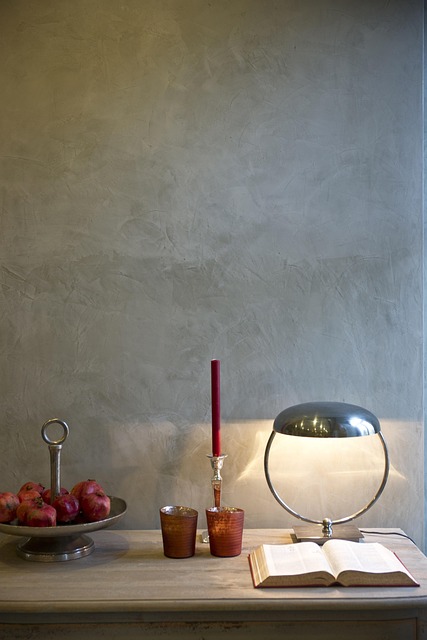
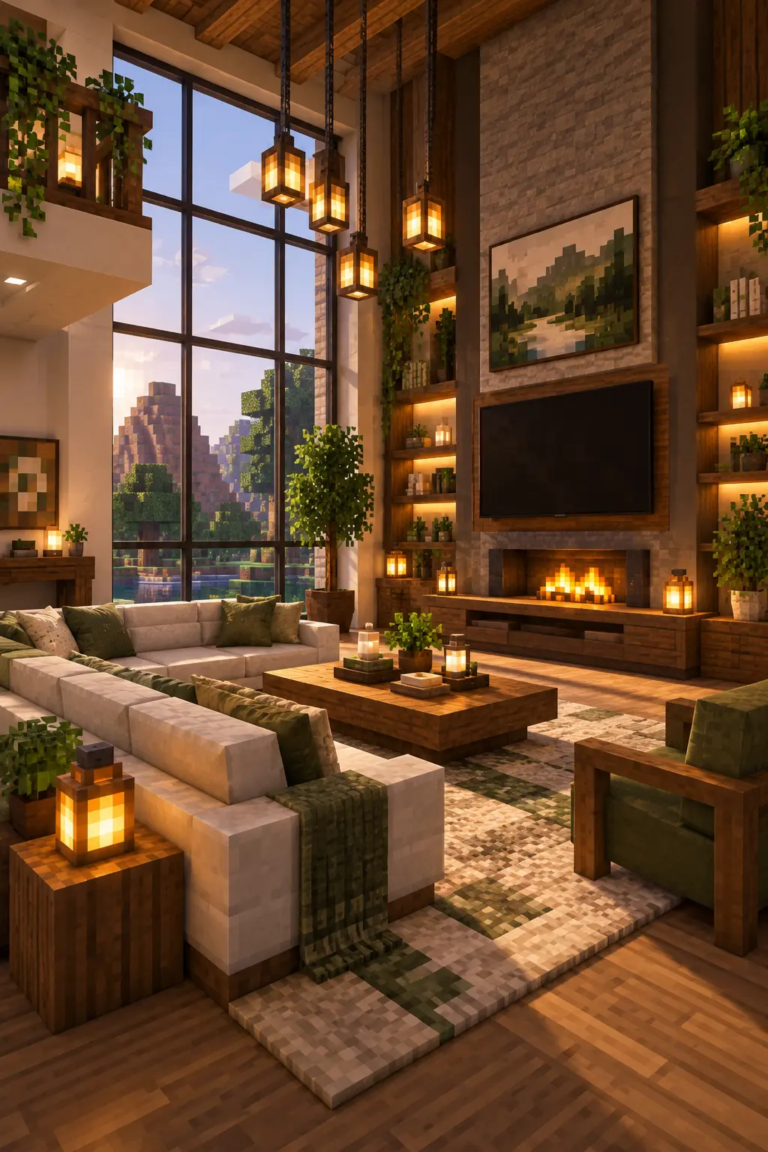
If your living room doesn’t have exposed beams, a stone fireplace, or original wide-plank flooring, a few smaller architectural gestures can suggest that character without a full renovation. A single reclaimed wood shelf, a wood-clad accent wall behind the sofa, or a stone-look tile surround on an existing fireplace introduces real material texture at a fraction of the cost of altering the room’s actual bones.
Ceiling beams are also available as lightweight faux-wood options that install without structural work. Purists may prefer the real thing, but a well-finished faux beam reads convincingly from normal living room sightlines, especially paired with the wood, texture, and metal choices already doing most of the work in the room.
Common Mistakes That Undercut Rustic Living Room Decor
Going too dark and too brown across every surface. A room where the floor, furniture, and walls are all deep brown reads heavy and dated rather than warm. Mixing in lighter neutrals keeps the space livable.
Relying on decorative objects instead of material choices. Antlers, wagon-wheel accents, and plaid throws read as theme decoration layered onto a room that hasn’t actually changed its materials. The wood, texture, and metal choices do more of the real work than any single accessory.
Choosing polished or glossy finishes. A high-gloss wood table or a chrome light fixture undercuts the raw, worn quality rustic decor depends on, even if the piece itself is otherwise a reasonable shape or size.
Skipping texture variety in favor of wood alone. A room with plenty of wood but no linen, wool, or jute layered in can read as a furniture showroom rather than a lived-in rustic space.
Budget-Friendly Ways to Build Rustic Living Room Decor
- Wood anchor piece: A secondhand solid wood coffee table or console, lightly sanded and refinished with matte oil, delivers most of the visible-grain effect of a new live-edge piece for considerably less.
- Metal accents: Spray-painting existing brass or chrome hardware in matte black is one of the cheapest ways to shift a room’s metal tone without replacing fixtures outright.
- Texture: A jute or wool-blend rug and a few linen or raw-cotton pillow covers cost far less than reupholstering furniture and still deliver most of the textural warmth.
- Architectural character: A single reclaimed wood shelf or a small section of shiplap behind a console is a lower-cost way to introduce material texture than a full accent wall or faux beams.
Pro Tip: Estate sales and local marketplace listings tend to have better prices on solid wood furniture than dedicated vintage or rustic-style retailers, since sellers price for a quick sale rather than resale value — worth the extra searching for a coffee table or console with real character.
Frequently Asked Questions
Can rustic decor work without any exposed architecture, like beams or a stone fireplace? Yes — the style depends more on material choices (wood grain, texture, metal finish) than architectural features. A room with flat drywall and standard flooring can still read as convincingly rustic through furniture, textiles, and finishes alone.
What wood tone works best for rustic living room decor? A mid-to-warm tone with visible grain, like acacia, walnut, or reclaimed pine, tends to read more rustic than a very light or very dark uniform stain. Keeping one or two pieces as the deepest tone in the room, rather than matching everything, adds more depth than a single matched finish would.
Is rustic decor the same as farmhouse style? They overlap but aren’t identical — farmhouse leans toward crisp whites, shiplap, and a lighter overall palette, while rustic decor tends toward warmer, earthier tones and rawer material finishes. A room can borrow from both, but leaning too far into farmhouse’s crisp white can undercut a rustic room’s warmth.
How do I keep rustic decor from feeling dark or heavy in a small living room? Favor a lighter wall color and keep the deepest wood tones to one or two anchor pieces rather than matching every wood element. A jute or lighter wool rug also helps keep a small rustic room from feeling closed in.
Do I need real reclaimed wood, or can I use a reclaimed-look material? A well-made reclaimed-look material can read convincingly from normal viewing distance, particularly for larger installations like a full accent wall or ceiling beams, where sourcing genuine reclaimed wood at scale gets expensive. For a smaller, closer-up piece like a coffee table, real solid wood shows its authenticity more clearly.
Rustic Living Room Decor Built From Materials, Not Architecture
Rustic living room decor doesn’t require a cabin’s worth of original architecture to work — it comes from the materials you choose and how they’re layered together. Ground the room with one real wood piece, layer in natural textures at varying scales, keep the palette a notch lighter than the classic saturated-brown version, and use blackened metal as the contrast note. Built that way, a standard living room can read as genuinely rustic instead of themed, beams or no beams.