Gray Couch Living Room Ideas That Don’t Look Generic
A gray couch is the safest sofa purchase most people make, and that’s exactly why so many gray couch living rooms end up looking the same: neutral walls, a gray sofa, a gray rug, and a room that photographs fine but feels a little flat to actually sit in. Gray was supposed to be the easy, goes-with-everything choice, and it can still end up feeling unfinished.
The sofa itself usually isn’t the problem. What’s missing is almost always undertone matching, texture, or a deliberate warm counterweight — the same things that keep any neutral room from reading as sterile. Here’s how to build a gray couch living room that feels considered instead of like the default option.
Understand Your Gray’s Undertone Before Building Anything Around It
Every gray sofa leans one of three ways — cool (a blue or blue-green undertone), warm (a slight brown or taupe undertone, sometimes called “greige”), or true neutral — and that undertone determines almost everything else you pair with it. A cool gray sofa against warm oak flooring can clash in a way that’s hard to name but easy to feel, while the same sofa against a cooler-toned floor reads as intentional.
Check your sofa’s undertone in natural daylight rather than under showroom lighting, since store lighting tends to neutralize undertones that become obvious once the piece is in your actual room. If you already own the sofa and aren’t sure which way it leans, hold a plain white sheet of paper next to the fabric — a cool gray will look slightly blue by comparison, a warm gray slightly tan.
Pro Tip: Photograph the sofa fabric next to your flooring in the room’s actual daylight, then check the photo in black and white. Undertone differences that are subtle in color often show up more clearly as a contrast in the grayscale version, which can help confirm a mismatch before you commit to paint or a rug.
Avoid the “Gray Box” by Warming Up With Wood and Brass
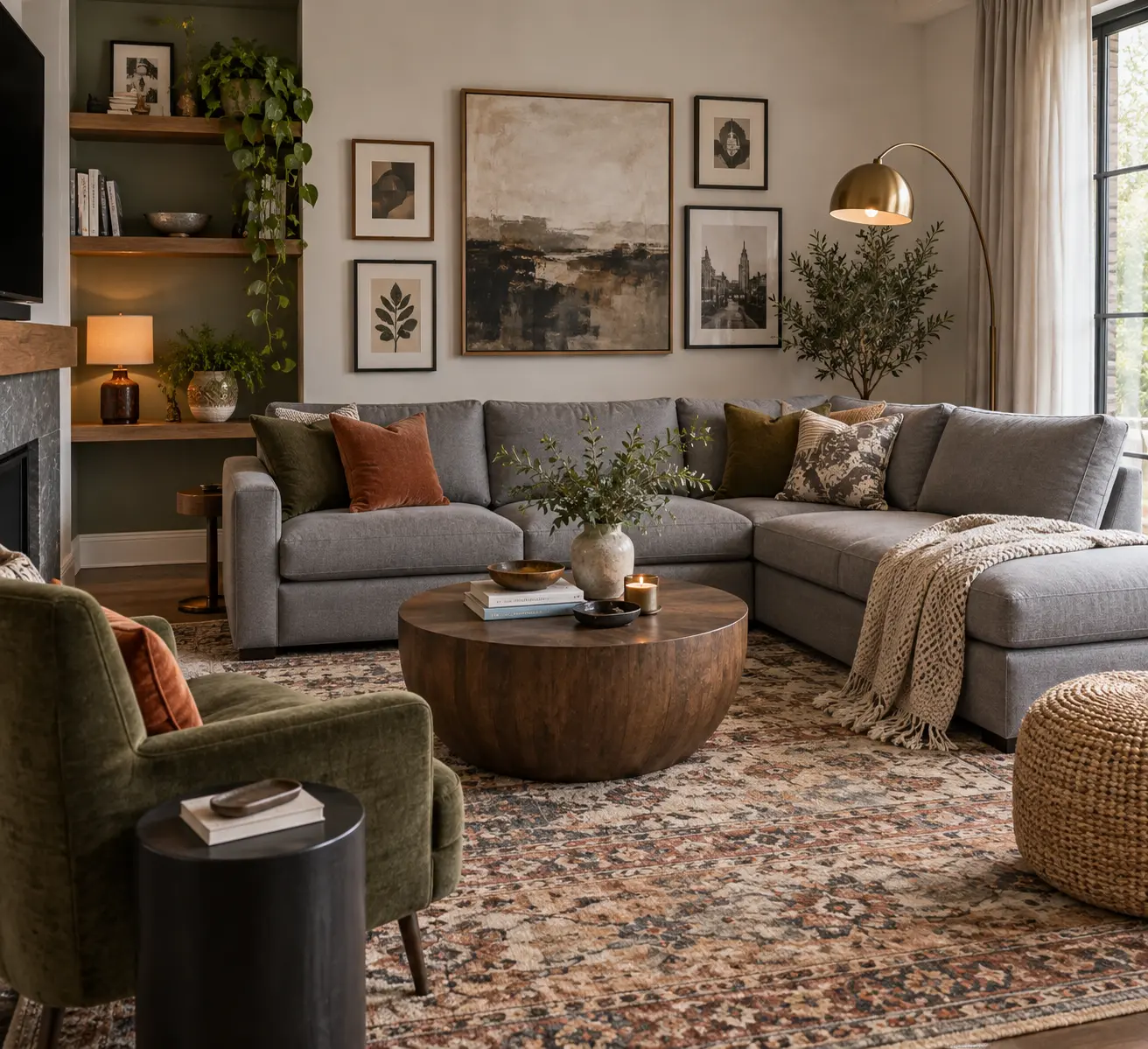
A gray sofa, gray walls, and a gray rug together create what’s sometimes called the “gray box” effect — technically coordinated, but flat and a little cold to actually spend time in. Warm wood tones counteract this more effectively than almost anything else: a walnut or oak coffee table, wood-framed art, or a wood media console all introduce the orange and red undertones gray lacks on its own.
Brass or warm brushed gold hardware and lighting do similar work at a smaller scale. A brass floor lamp or a set of brass picture frames against a gray sofa reads noticeably warmer than the same pieces in chrome or nickel, since cool metals reinforce gray’s coolness rather than balancing it.
Layer Textures So the Sofa Doesn’t Read Flat
A gray sofa in a single flat fabric can look one-dimensional regardless of how good the color itself is, especially under even lighting with nothing to catch the eye. Boucle, velvet, and chunky-knit textiles catch light differently than a smooth linen or performance fabric, adding visual depth to the sofa before you’ve added a single accessory.
If reupholstering isn’t an option, textured throw pillows and a chunky throw blanket do a smaller-scale version of the same job. A wool or boucle pillow against a smoother sofa fabric creates enough contrast to keep the seating area from reading as one flat gray block.
Pro Tip: Mix pillow textures rather than just pillow colors. Two pillows in different shades of the same gray but different textures — a smooth linen and a nubby boucle — add more visual interest than two pillows in different colors but the same flat fabric.

Use Color Accents to Keep Gray From Feeling Sterile
Gray is a genuinely flexible base, but a room that stays entirely gray-and-white can tip toward sterile fast. A single accent color — introduced through a rug, throw pillows, or art rather than a second piece of furniture — keeps the room from reading as unfinished neutral. Warmer accent colors (terracotta, mustard, deep green) counteract gray’s coolness more effectively than another cool tone like icy blue would.
Keep the accent color to two or three touch points rather than scattering it across every surface, since one clear accent thread reads as more intentional than color introduced piecemeal. A rug with warm accent tones and matching throw pillows ties the color together more convincingly than a rug in one accent color and pillows in an unrelated one.

Choose the Right Gray Depth for Your Room’s Light
A room with strong, consistent natural light can handle a deeper charcoal or slate gray sofa without feeling closed in, while a dimmer room with limited windows tends to look heavier and smaller with the same dark gray. A lighter dove or fog gray reflects more of the available light back into the room, which matters more in a north-facing living room or one with fewer or smaller windows.
If you’re set on a deeper gray in a dimmer room, balance it with lighter walls and warmer artificial lighting rather than trying to compensate with natural light you don’t have. A 2700K to 3000K warm bulb keeps a dark gray sofa from reading as heavy once the sun goes down, which is when most living rooms actually get used anyway.
Pro Tip: If you’re choosing between two grays and can’t decide, err toward the lighter option in a room with less natural light. It’s easier to add depth to a room that feels slightly too light with darker accents than to brighten a room that already feels heavy from a dark sofa.
Build the Rug and Walls Around the Sofa, Not the Other Way Around
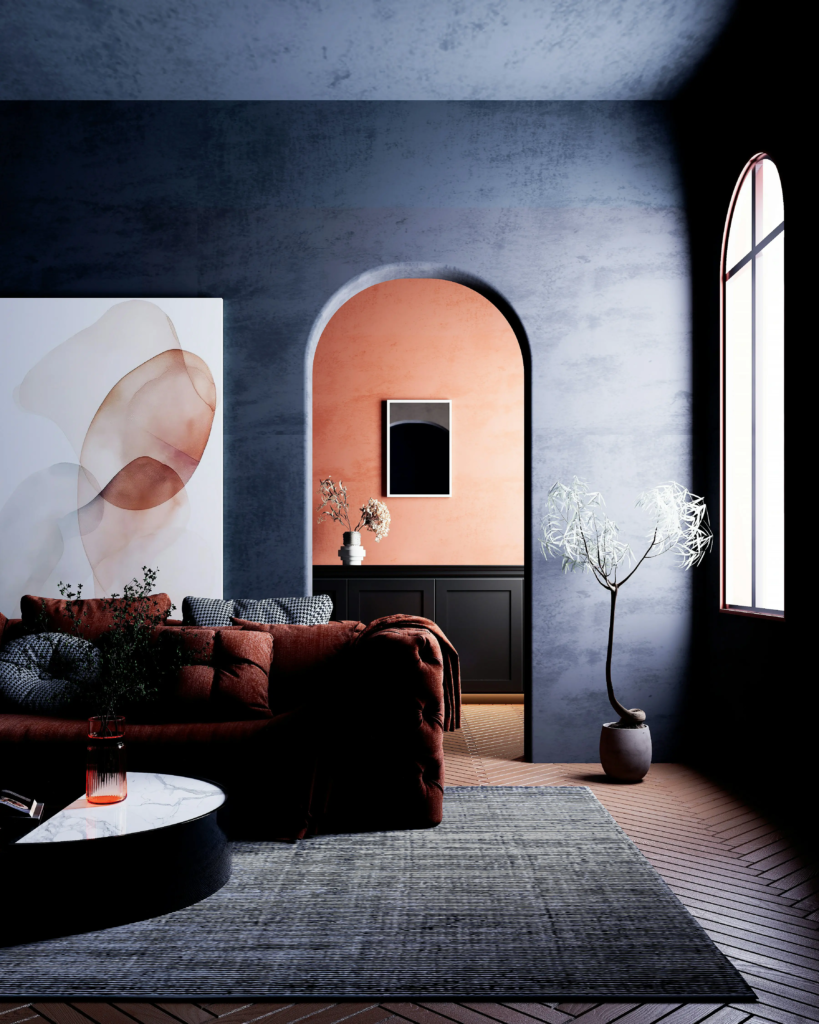
Choosing wall color and rug before the sofa is a common sequencing mistake, since it’s easier to match a wall or rug to an already-chosen gray sofa than to find a sofa that perfectly matches a wall color picked in isolation. A warm white or soft greige wall color pairs more easily with a range of gray undertones than a stark, cool white, which reads a little clinical next to most grays.
For the rug, a natural fiber like jute or a wool rug with texture variation grounds a gray sofa better than a flat, smooth synthetic rug, adding the same textural warmth covered earlier at floor level.
Common Mistakes That Make a Gray Couch Living Room Feel Flat
Matching every neutral in the room to the same gray. A sofa, rug, and walls in nearly identical gray tones removes the contrast that makes a neutral room feel layered rather than monochrome.
Ignoring undertone until after everything’s purchased. A cool gray sofa against warm flooring (or the reverse) is one of the most common and most fixable mismatches, but much easier to correct before buying than after.
Skipping texture entirely. A smooth gray sofa with smooth gray accessories and a smooth gray rug has nothing for the eye to catch on, even if every piece is well chosen.
Relying only on gray and white with no warm counterweight. Without wood, brass, or a warm accent color somewhere in the room, even a well-chosen gray sofa can end up reading as unfinished rather than intentionally minimal.

Budget-Friendly Ways to Warm Up a Gray Couch Living Room
- Throw pillows: A set of textured, warm-toned pillow covers is one of the cheapest ways to break up a flat gray sofa and test an accent color before committing to a rug or art.
- Lighting: Swapping cool-toned bulbs for warm 2700K to 3000K bulbs costs very little and noticeably softens a gray room without touching a single piece of furniture.
- Secondhand wood pieces: A secondhand coffee table or side table in a warm wood tone does most of the “warm up the gray box” work of a full furniture overhaul for a fraction of the price.
- A single rug: One well-chosen rug in a warm, textured natural fiber anchors the room’s warmth more effectively than several smaller accent pieces combined.
Pro Tip: If your budget only stretches to one upgrade, prioritize the rug over new pillows or art. It covers more visual real estate than almost anything else in the room and does more to shift the overall temperature of a gray-heavy space.
Frequently Asked Questions
What wall color goes best with a gray couch?
A warm white or soft greige generally pairs more easily than a stark, cool white, since it splits the difference between gray’s coolness and a genuinely warm tone. The exact best match still depends on your sofa’s specific undertone, so testing a sample against the actual fabric is worth the extra step.
Does a gray sofa make a living room look bigger or smaller?
A lighter gray tends to open a room up similarly to a light neutral in general, while a deep charcoal or slate can make a small or dim room feel more closed in. Room size and available natural light matter more here than the color itself.
What colors make a gray couch look less cold?
Warm accent colors — terracotta, mustard, rust, deep green — do more to counteract gray’s coolness than another cool tone would. Wood and brass accents work the same way at a material level rather than a color level.
Is a gray sofa a good choice for a small living room?
Yes, particularly in a lighter gray tone, since it tends to recede more than a bold color would and doesn’t compete with a small room’s other furniture for visual attention. Pair it with enough texture and a warm accent so it doesn’t read as flat in a space where it’s doing a lot of the room’s visual work.
A Gray Couch That Reads as Considered, Not Default
A gray couch living room stops feeling flat once undertone, texture, and warmth are treated as part of the plan rather than an afterthought. Match the sofa’s undertone to your flooring first, layer in real texture instead of relying on the color alone, and add wood, brass, or a warm accent color to keep the room from sliding into the “gray box” look. Handled that way, a gray couch reads as a deliberate, flexible base — not the safe default it’s often mistaken for.