Black Living Room Decor That Doesn’t Feel Like a Cave
The photos that come up when you search black living room decor almost always show the same thing: a bright, south-facing room with floor-to-ceiling windows, where black furniture and black walls read as moody and intentional because there’s so much daylight bouncing around to balance it out. That’s not most living rooms. Most living rooms get a few hours of decent light and a lot of hours of lamp-and-overhead-fixture light, and in that kind of room, black decor can genuinely tip into feeling dark and closed-in if you’re not deliberate about where it goes.
This is written for that second kind of room — the one with a north-facing window, a covered porch cutting the light, or just an average amount of daylight, not a design-magazine amount. Every idea here is chosen specifically because it lets you use black without depending on abundant natural light to keep the room feeling open, using reflectivity, placement, and contrast instead.
The Foundation: Reflectivity Does What Light Can’t
In a room with limited natural light, the single biggest factor in whether black decor reads as “moody and intentional” versus “dark and heavy” isn’t how much black you use — it’s how reflective the black surfaces are. A matte black wall absorbs light and can genuinely make a dim room feel smaller. The same wall in a satin or eggshell black finish bounces some of that available light back into the room, which is a meaningful difference when you don’t have much light to spare.
The same logic applies to furniture and accessories: a glossy black lacquer console reflects far more ambient light than a matte black one, and a black metal frame reads as sharp and defined rather than as a dark void, because the metal itself catches light along its edges. Before choosing where black goes in your room, it’s worth mentally sorting your options into “reflective black” and “matte black,” and leaning toward the reflective end wherever the room gets less natural light.
If you’re deciding on a specific wall color to pair with these choices, INTERNAL LINK: living room wall color walks through testing shades under different lighting conditions, which matters even more when black is part of the palette.
1. One Accent Wall, Not the Whole Room
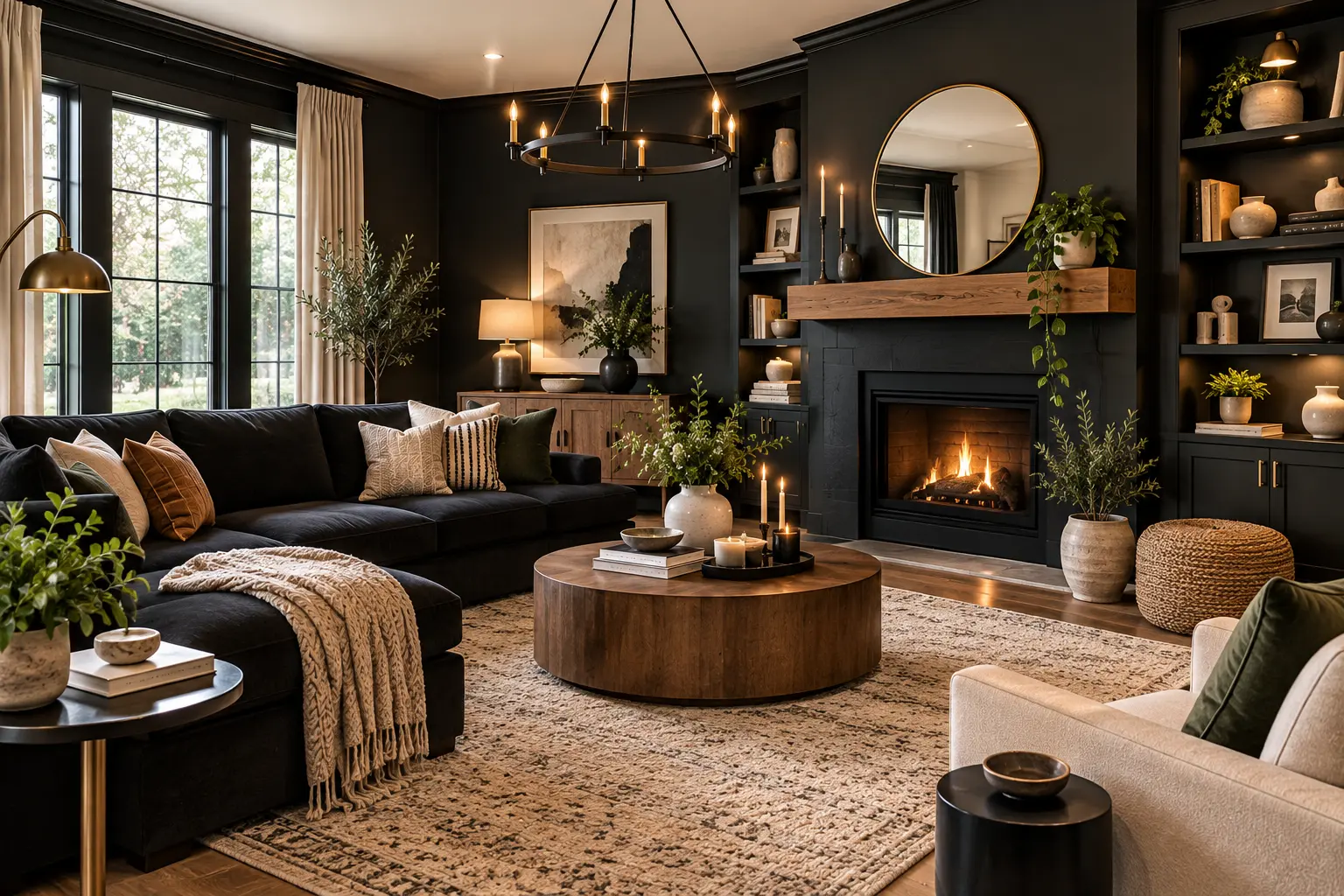
Painting a single wall black — ideally the one opposite or perpendicular to your main light source, not the one the window is on — gives you the visual depth of black decor while leaving the rest of the room’s surfaces free to bounce light around. Painting the wall the window is actually on tends to work against you, since you lose reflected light exactly where you need it most.
A satin or eggshell finish on that wall does real work here over a flat finish: it picks up ambient light from lamps and overhead fixtures in the evening, which keeps the wall from reading as a flat dark rectangle once the sun goes down and you’re relying on artificial light entirely.
Pro Tip: Paint the wall in full and let it dry completely before judging it — many blacks look distinctly blue, green, or brown once fully cured and viewed under your room’s actual lighting, which can be different enough from the wet-paint or swatch color that it changes whether the wall reads warm or cold.
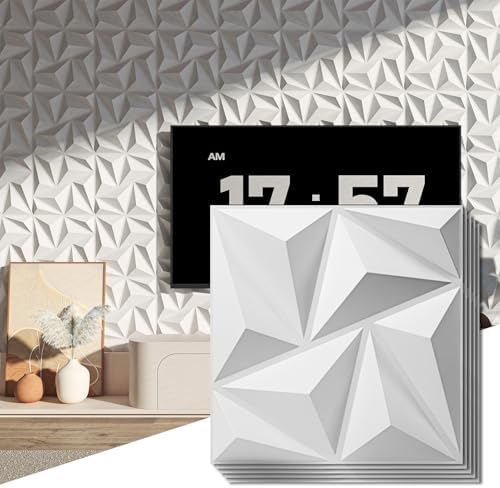
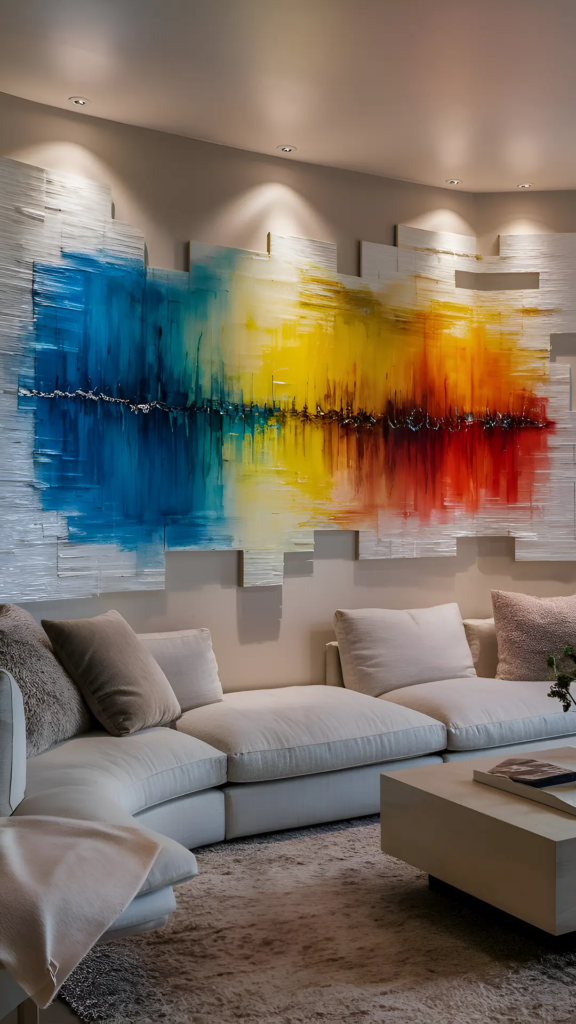
- 🎯Durable PVC Material: Lightweight panels and waterproof, suitable for interior wall applications.
- 🎯Modern 3D Wall Design: Textured patterns add visual depth to enhance walls in living rooms, bedrooms, or offices.
- 🎯Installation Method: For optimal results, use recommended wall adhesives (sold separately) to mount panels to clean, dr…
2. Black Furniture as the Room’s Anchor, Not Its Base
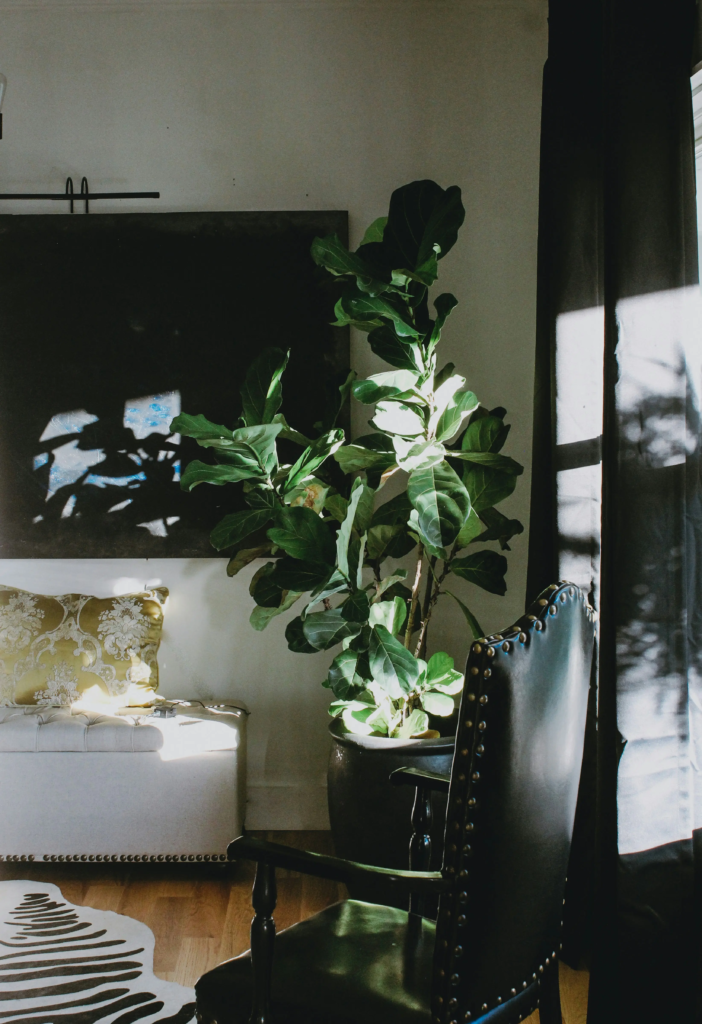
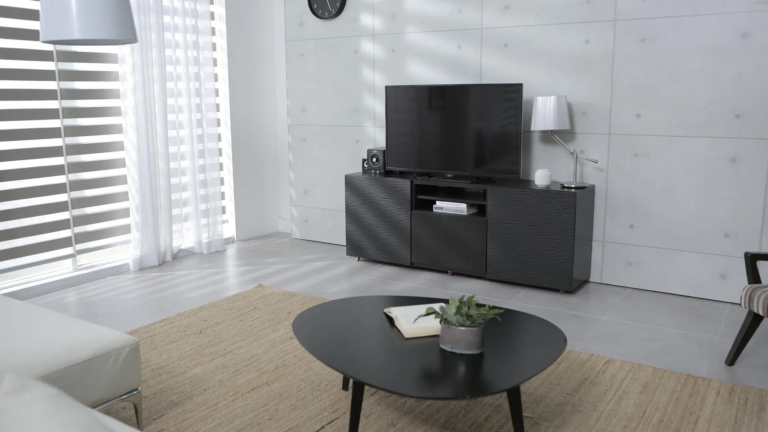
Rather than black walls, many rooms with average light do better making one furniture piece — a sofa, a media console, a pair of accent chairs — the black anchor, while keeping walls, ceiling, and flooring light. This puts the black at eye level and gives it a defined shape, rather than spreading it across a large flat surface where it reads as a void in dim light.
A black boucle or velvet sofa in particular tends to photograph and live better than a black leather one in lower-light rooms, since the texture of the fabric catches light unevenly and keeps the piece from looking like a flat black rectangle from across the room.
For more on choosing and placing an anchor piece that carries a room’s whole look, INTERNAL LINK: elegant living room design covers similar reasoning applied more broadly to furniture choices.

- Comfort Your Body – With breathable surface & well-padded soft seat and back, our accent chair is designed with both com…
- Solid and Durable Frame – RNKSFX midcentury modern accent chair is built with a solid wood frame that provides long-last…
- Please Your Eyes – Designed in a unique mid-century modern style, the curved armrests provide a unique and stylish look,…
3. Black Window Trim and Mullions
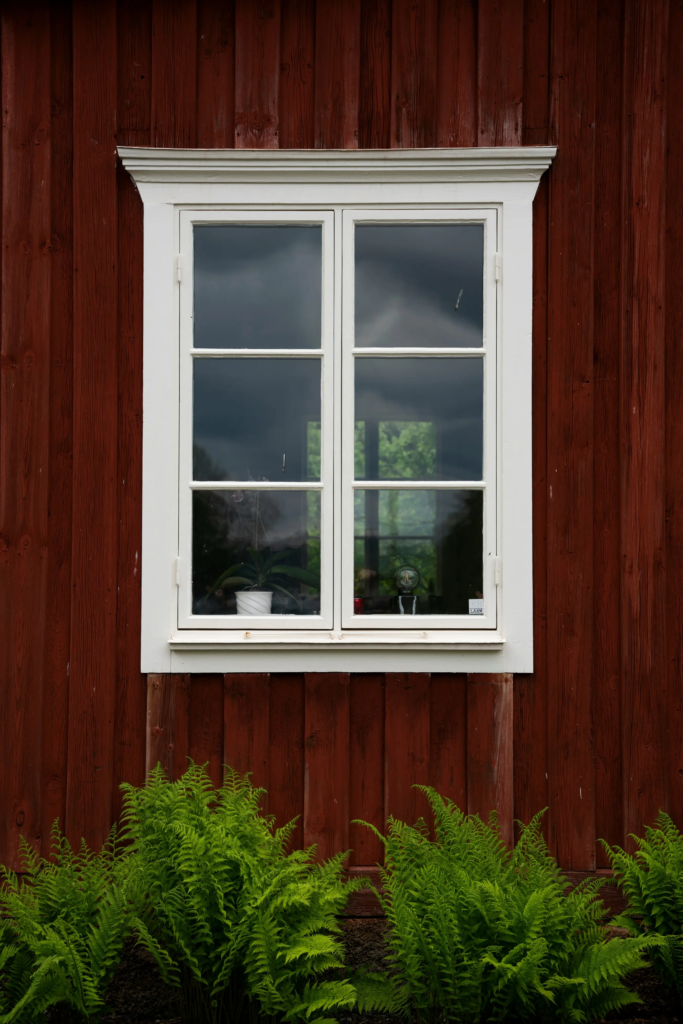
Painting window frames, mullions, or the surrounding trim black — rather than the walls or furniture — is one of the more counterintuitive ways to use black in a lower-light room, because it seems like it should block light. In practice, it does the opposite for perceived brightness: the black frame creates a strong contrast line that draws the eye to the window itself, making it read as a bigger, more defined light source than a white-framed window blending into a white wall.
This works best with genuine divided-light or paned windows, where the black has clean lines to follow. On a single large picture window, black trim usually looks better limited to the outer frame rather than added mullions that would darken the actual glass area.
If your window treatments need to work with a black frame, INTERNAL LINK: living room curtains ideas has guidance on pairing hardware and fabric weight without competing with a strong frame color.

- 【SUPERIOR MATERIAL】Peel and stick molding trim for walls is crafted from high-quality materials, When faced with wall co…
- 【PERFECT DESIGN】 Featuring the toe design this rubber baseboard trim can dust concealing blemishes and uneven surface. A…
- 【EASY INSTALLATION】The wall trim comes with adhesive, just peel and stick,No drills. before install Begin by cleaning th…
4. Black Metal Lighting and Hardware
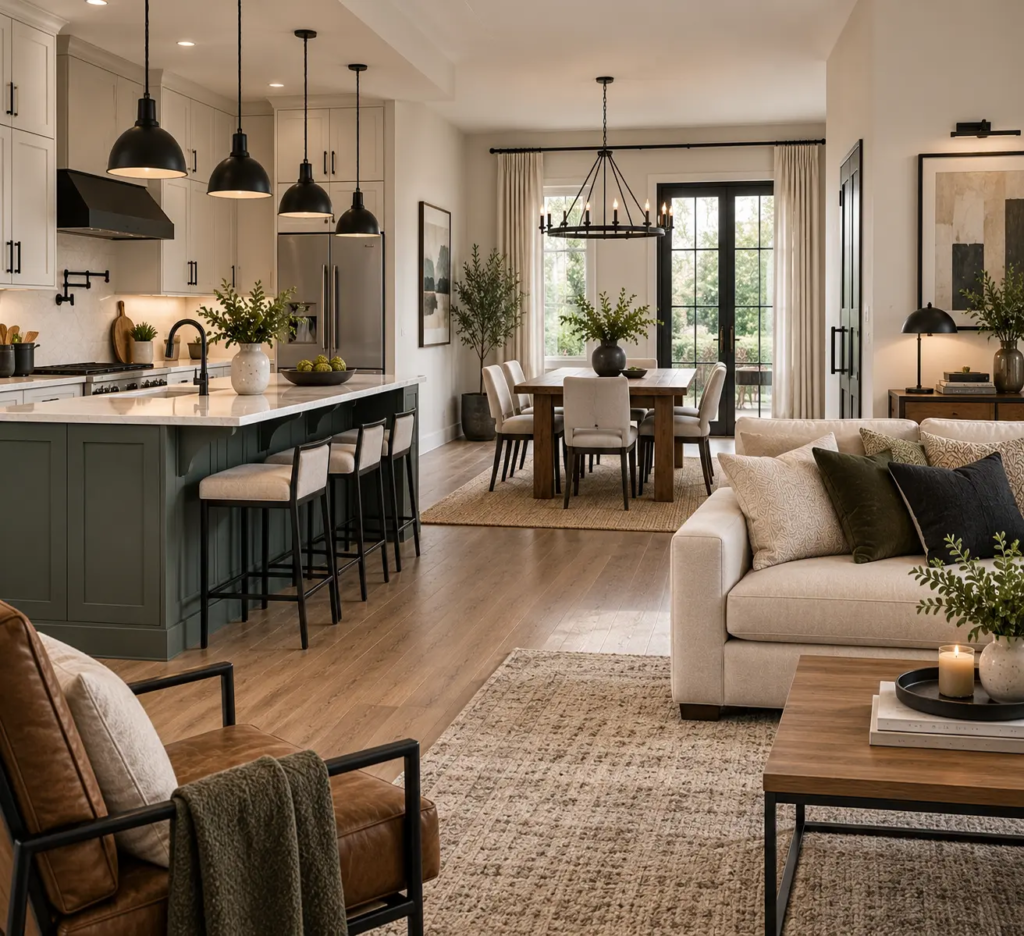
Black table lamps, floor lamps, and pendant fixtures do double duty in a room that needs both black decor and more usable light: the fixture itself contributes the color, while the light it produces actively works against the “dark room” problem rather than adding to it. This is one of the lowest-risk ways to introduce black into a living room, since a lamp is easy to relocate or swap if the placement doesn’t work.
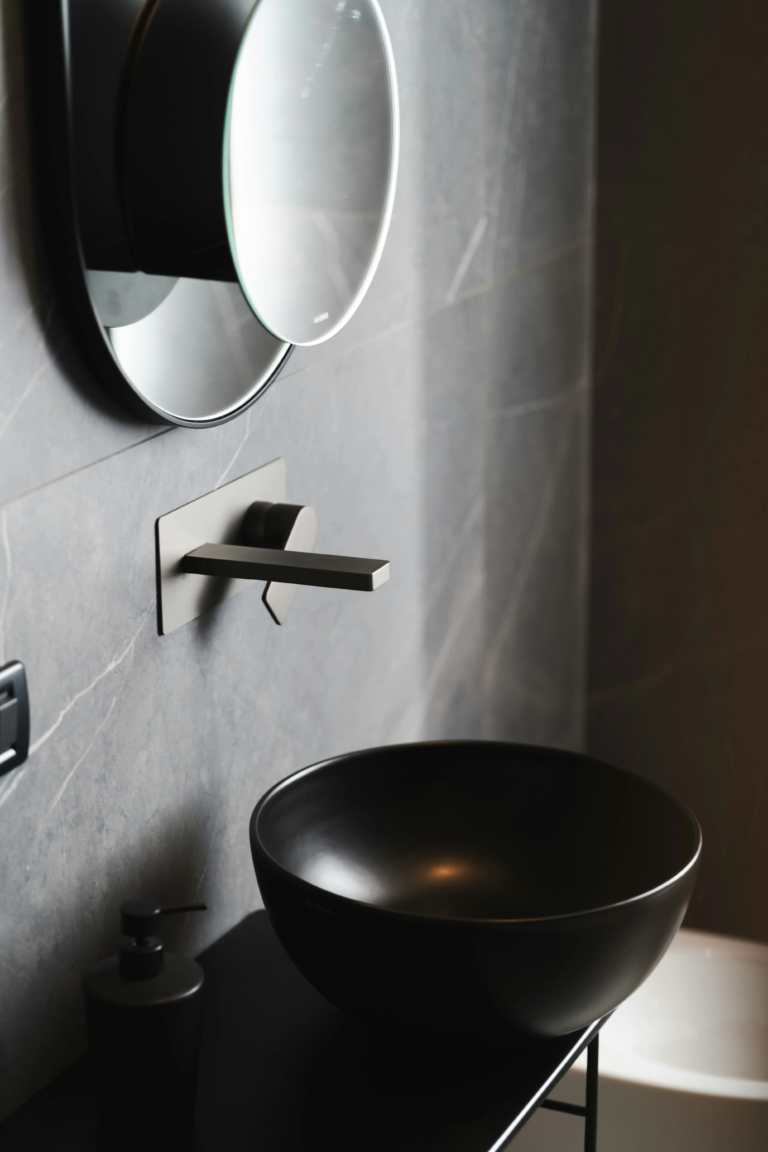
Matte black metal hardware — door handles, curtain rods, picture frames — adds the same color in small, repeated doses without covering any large surface, which is a useful strategy if you’re still deciding how much black the room can handle before committing to furniture or paint.
For a broader look at pairing black metal accents with warmer finishes in a more finished, upscale room, see INTERNAL LINK: modern luxury living room.
Pro Tip: Position at least one black lamp so its shade is backlit by a window during the day — a black lamp base against natural light reads as a graphic silhouette rather than a dark object, which keeps it from visually shrinking the room during daylight hours when the lamp itself isn’t even turned on.

- PROTECT YOUR EDGES: With this edging strip, you can protect metal edges on your car, boat, and more. Whether using it as…
- HIGH-QUALITY MAKE & MATERIALS: At Seal Rubber we use high-quality materials and are proud of our strong manufacturing pr…
- PERMANENT GRIP: The internal metal clips on this edge trim are designed for permanent installation. With the U-shaped cl…
5. Warm Materials to Offset the Cool Edge
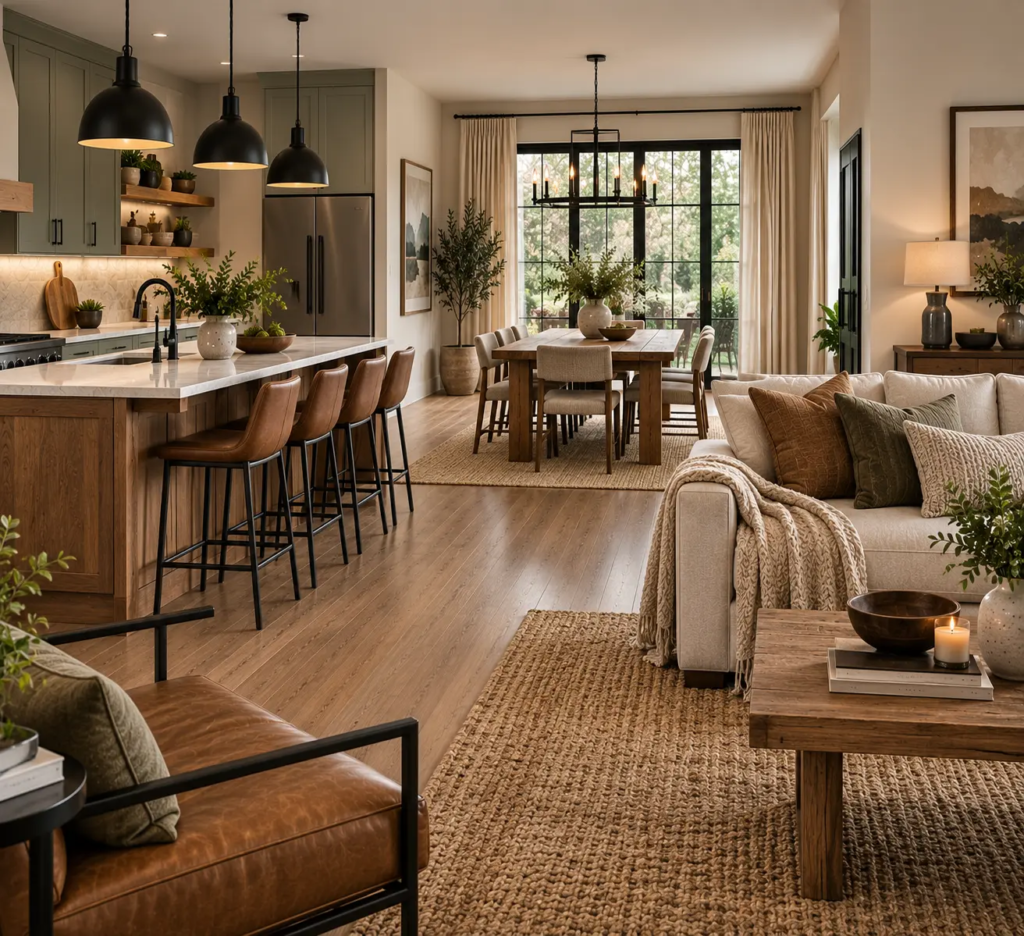
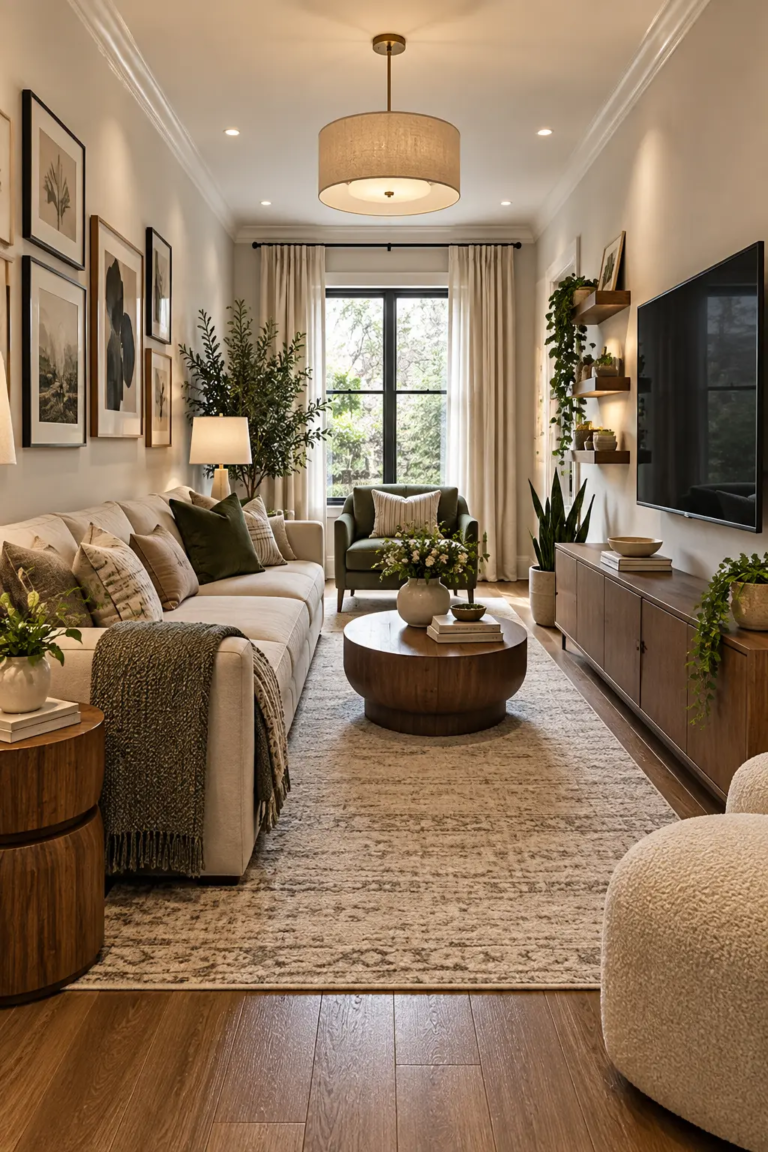
Black on its own, especially in a matte or cool-toned finish, can read as sharp or clinical rather than cozy — which matters more in a room that’s already working with limited daylight to feel warm and inviting in the first place. Pairing black elements with warm wood tones (oak, walnut), brass or unlacquered brass hardware, and natural fiber textures (jute, boucle, linen) keeps the room from feeling like a stripped-down showroom.
This is the detail that separates a black living room that photographs well but feels cold from one that’s genuinely pleasant to spend an evening in: at least one warm material touching or sitting directly next to every major black element in the room, rather than black existing as its own isolated color story.
For general styling of a room that leans on this kind of warm, livable finish, INTERNAL LINK: living room aesthetic covers similar material-layering principles.
- Ideal for Crafts: packaging comes with 2 pcs insulated lining, giving ample material for your projects, ideal for hobbie…
- Multifaceted Uses of Insulated Lining: adequately meet your insulation requirements with this all in one batting for pot…
- Protective Nature: our heat resistant pads are easy to cut, providing protection from a range of temperatures, the heat …
Common Mistakes to Avoid
Choosing flat matte black for large surfaces in a dim room. As covered in the foundation section, flat black absorbs light rather than reflecting it, which matters more the less natural light a room gets. Satin or eggshell finishes on walls, and glossy or semi-gloss on furniture, do more of the work of keeping the room from feeling closed in.
Putting black on every surface at once. Black walls, a black sofa, and black flooring in the same room removes any contrast for the eye to rest on, and in lower light this reads as heavy rather than sophisticated. Picking one or two black “anchors” and keeping the rest of the room’s surfaces light does more for the room than distributing black evenly.
Skipping a warm material entirely. A room built only from black, white, and cool metal finishes can look sharp in photos and feel uninviting to actually sit in, especially without much daylight warming it up during the day.
Painting the light-source wall black. Painting the wall the window sits on removes exactly the surface that should be bouncing light into the room, which is a bigger loss in a room that doesn’t have much light to begin with.
Budget-Friendly Ways to Add Black Decor
You don’t need a full room repaint or new furniture to test whether black decor works for your specific light conditions:
- Under $50: Black picture frames, a black ceramic vase, or matte black hardware swapped onto an existing cabinet or door.
- $100–$300: A black table or floor lamp, or black-painted trim on a single window using a semi-gloss trim paint.
- $300–$800: A black accent wall in satin finish, or a black media console or coffee table to serve as the room’s anchor piece.
Pro Tip: If you’re testing a black accent wall, paint a large presentation board (a $15 sheet of foam core from a hardware store) rather than a small swatch, and move it to different spots in the room across a full day — a wall’s actual light exposure varies enough from morning to evening that a swatch alone won’t tell you how the color performs at 7 p.m., which is often when the room gets used most.
[IMAGE: A black-painted foam board being held up against a living room wall near a window, testing how the color looks at different times of day]
Bringing It Together
Black living room decor works in rooms without abundant natural light when the black is reflective rather than flat, concentrated in one or two clear anchors rather than spread across every surface, and paired with something warm — wood, brass, natural fiber — touching every black element in the room. Start with the lowest-commitment option that fits your space, whether that’s a lamp or a single painted wall, and judge it under your room’s actual evening light before deciding how much further to take it