7 TV Wall Ideas for a Living Room That Feels Curated
Most TV wall advice falls into one of two camps: hide the TV behind a sliding panel, or mount it dead-center on a blank wall like a theater display. Neither matches how most people actually live — hiding it is impractical if you watch most nights, and a bare wall with a black rectangle bolted to it rarely feels like the rest of your room.
The better goal is a wall that reads as intentional whether the screen is on or off. Here are seven ways to get there, from paint and paneling to layout decisions most people skip.
[IMAGE: A living room TV wall painted deep charcoal, TV mounted at eye height flanked by floating walnut shelves with books and ceramics, warm afternoon light from a side window]
Start With Sightlines, Not the Wall Itself
Before you touch paint or shelving, figure out where people actually sit — that should drive the TV’s height, not the wall that happens to be free. The center of the screen should land roughly at seated eye level, around 42 to 48 inches from the floor. Mounting higher “to make it look like art” is one of the most common mistakes, and it results in a stiff neck during anything longer than a 20-minute show.
Distance matters too. A rough rule is 1.5 to 2.5 times the screen’s diagonal size — a 65-inch TV wants roughly 8 to 13 feet. If your seating is closer, a smaller screen will look sharper and less overwhelming than a bigger one crammed into a tight room.
Pro Tip: Before you commit to a mounting height, tape the TV’s outline on the wall and sit in your usual spot for a night or two. A couple of inches makes a bigger difference to comfort than most people expect, and tape is a lot cheaper to redo than drywall anchors.
1. Paint the Wall a Deep, Close-to-Bezel Color
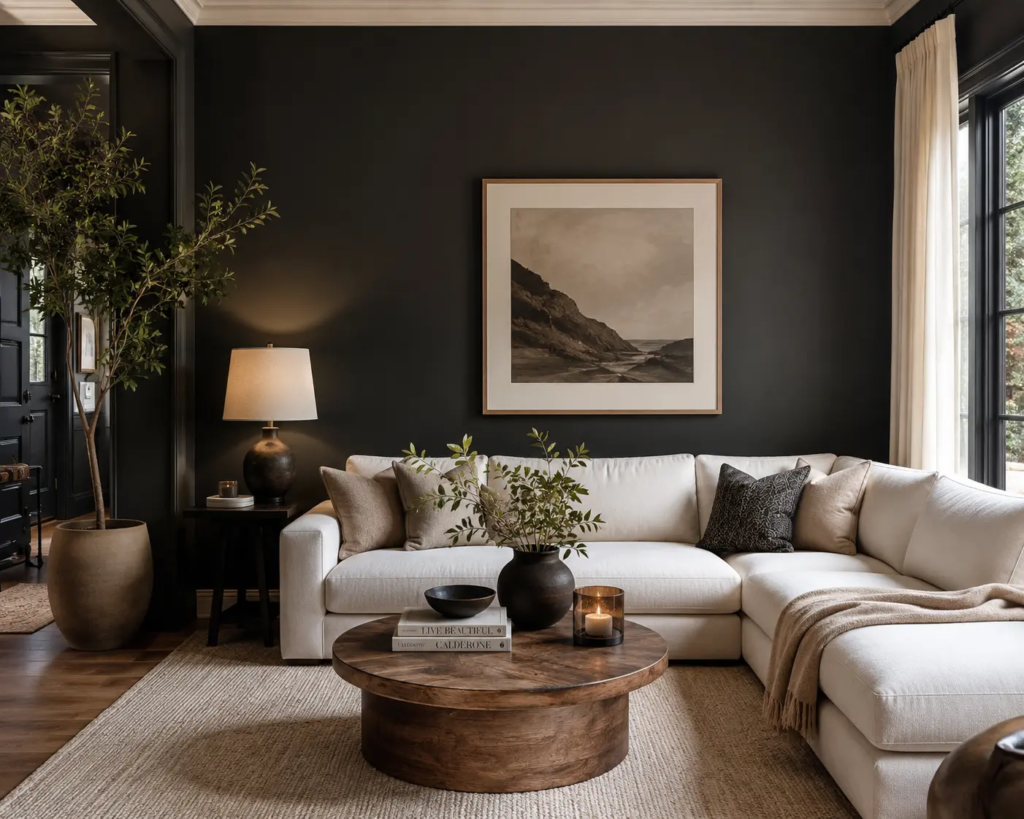
One of the simplest ways to make a TV recede is to paint the wall behind it a color close to the TV’s bezel — deep charcoal, ink navy, or espresso brown. When wall and screen frame sit close in value, the TV loses its hard edges instead of reading as a rectangle bolted onto a plain white or beige wall.
This works best as an accent wall rather than painting the whole room dark, keeping the drama contained to the one wall doing double duty as a design feature and TV mount. If you’re still narrowing down a shade, it helps to think about the wall the same way you would for any other statement wall in the room — undertone and light exposure matter just as much here as anywhere else.
2. Flank the TV With Floating Shelves or Built-Ins
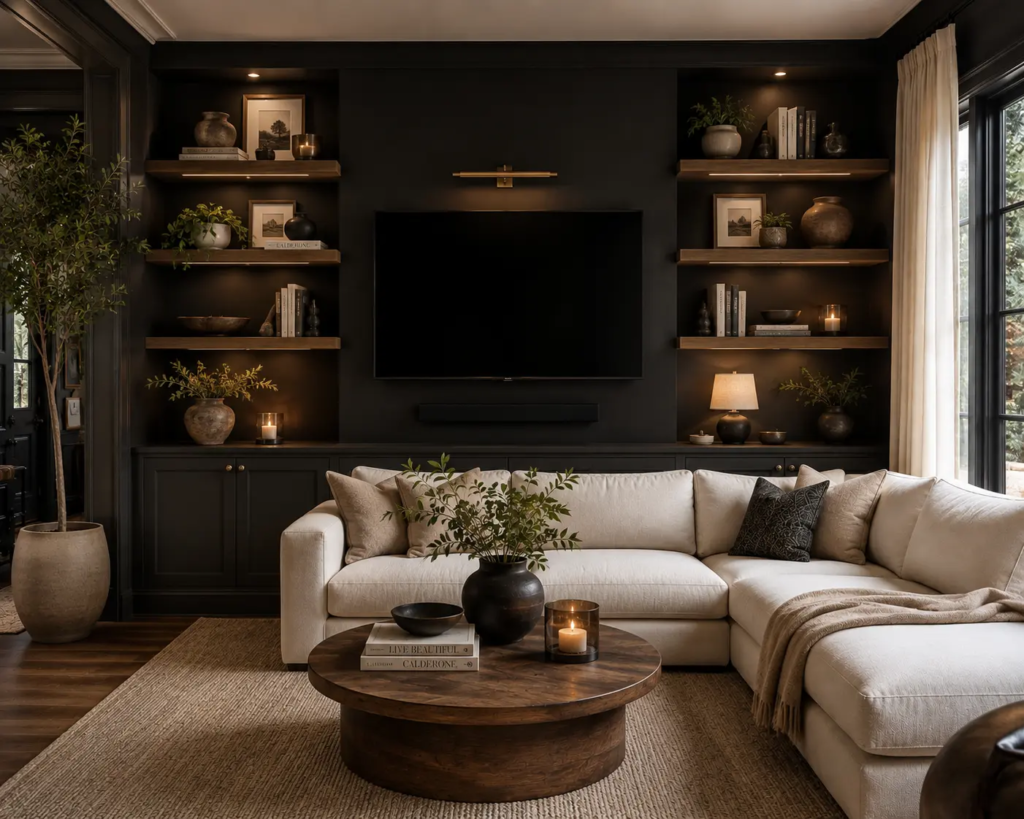
Floating shelves or a built-in unit on either side of the TV turn it into one element in a larger composition instead of the sole focal point. Matching shelves at the same heights on both sides read as calm and architectural; an asymmetrical mix — more shelves on one side, a taller cabinet on the other — reads as more collected and less like a catalog set.
Keep shelf depth around 10 to 12 inches, and leave at least 6 inches of clearance between the TV’s edge and the first shelf so it doesn’t feel like it’s boxing the screen in.
3. Build a Gallery Wall That Includes the TV
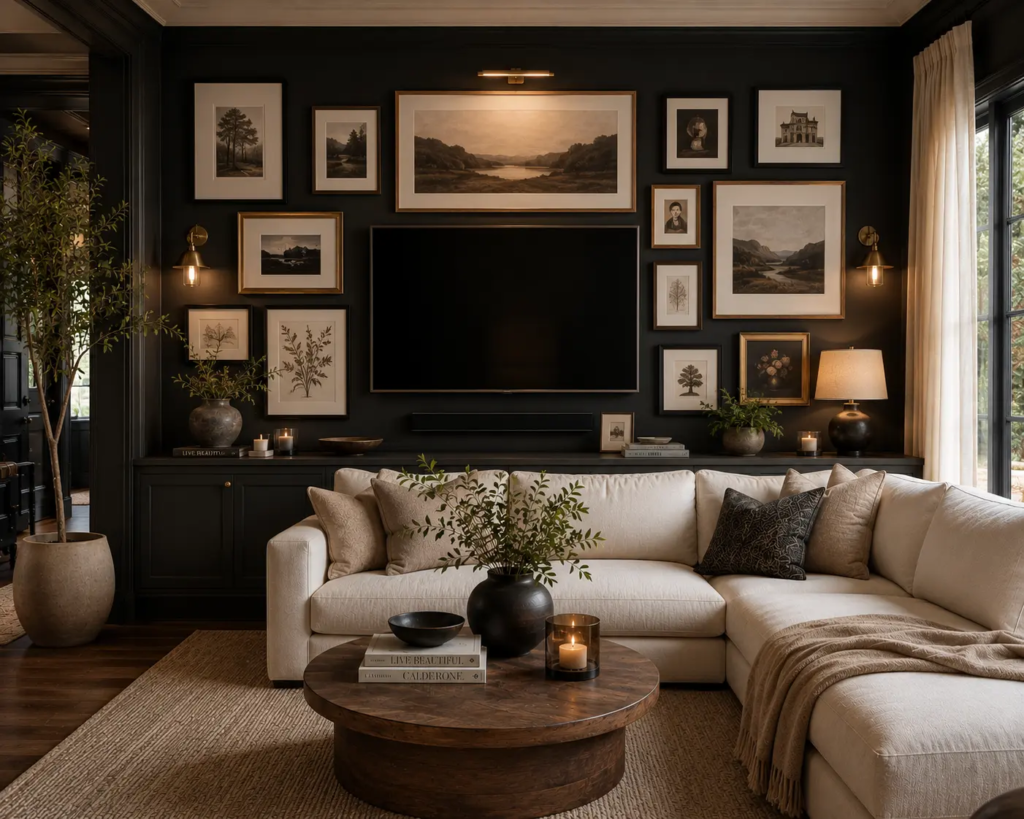
Rather than treating the TV as separate from your art, work it into a gallery wall layout so it becomes one frame among several. This works best roughly centered but not perfectly symmetrical — a slightly off-grid arrangement of art, mirrors, and screen reads as more intentional than a rigid grid around a rectangle that’s clearly not art. Keep spacing consistent (2 to 3 inches) and stick to two or three frame finishes so the TV doesn’t feel like the odd one out.
[IMAGE: A gallery wall arrangement mixing framed prints, a round mirror, and a wall-mounted TV at slightly offset heights, warm wood tones and brass frame details]
Pro Tip: Hang everything at the same visual weight rather than the same size. A large, heavy black TV frame next to several small, light-frame prints can throw off the balance even if the wall space is even — mix in one or two larger, bolder pieces to hold their own against the screen.
4. Style the Console Underneath Instead of Leaving It Bare
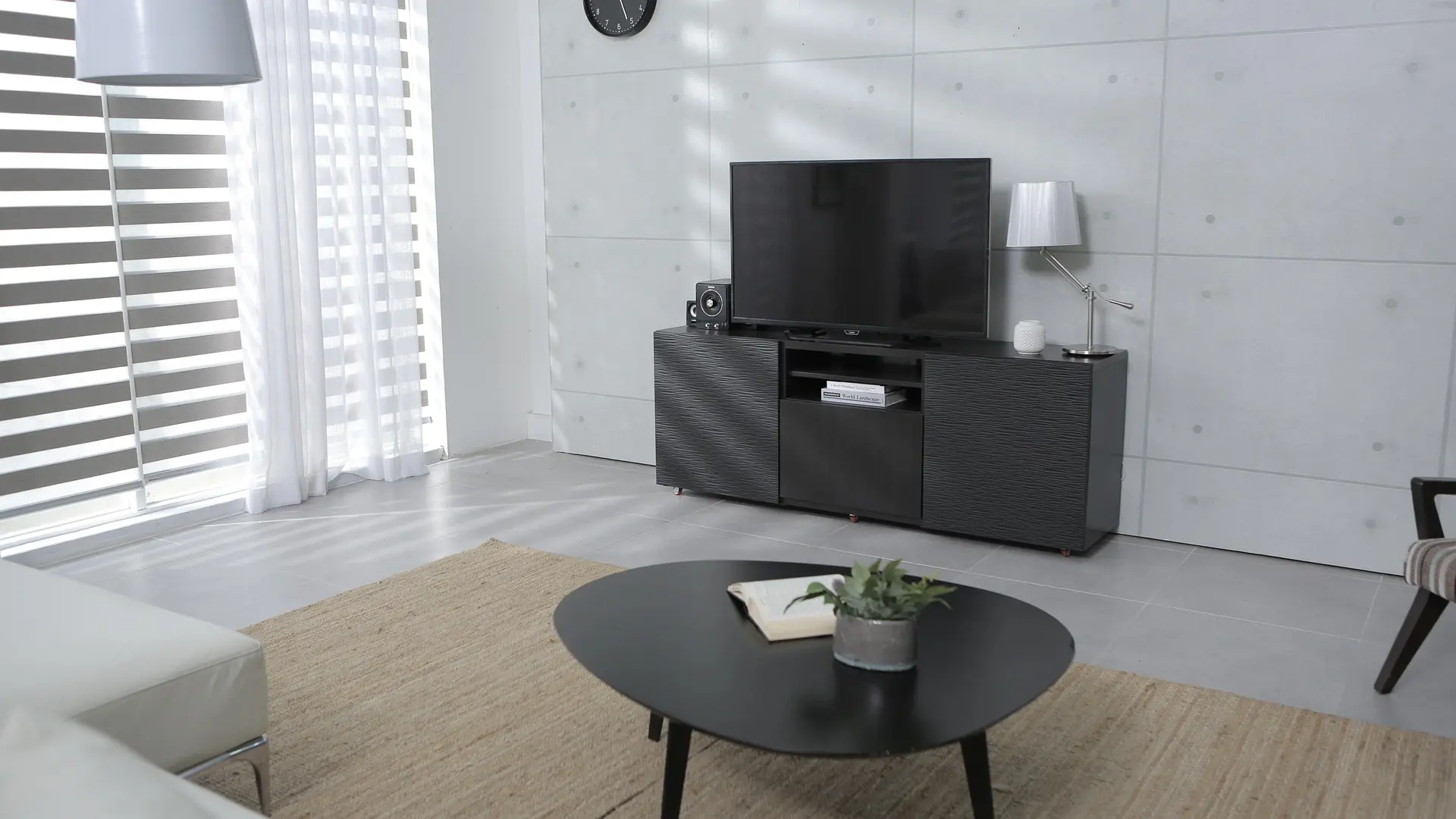
A TV mounted directly on drywall with nothing below it tends to look unfinished, even with good paint or shelving around it. A low console — sitting about 4 to 6 inches below the TV — grounds the wall and gives you a place to introduce texture: a woven basket, a stack of books, a ceramic lamp.
Choose closed storage if you’re dealing with a cable box or streaming device — exposed electronics undercut the calm you’re building elsewhere. Open shelving underneath only works if you’ll genuinely keep it tidy.
5. Use Wood Paneling or Slat Detailing Behind the Screen
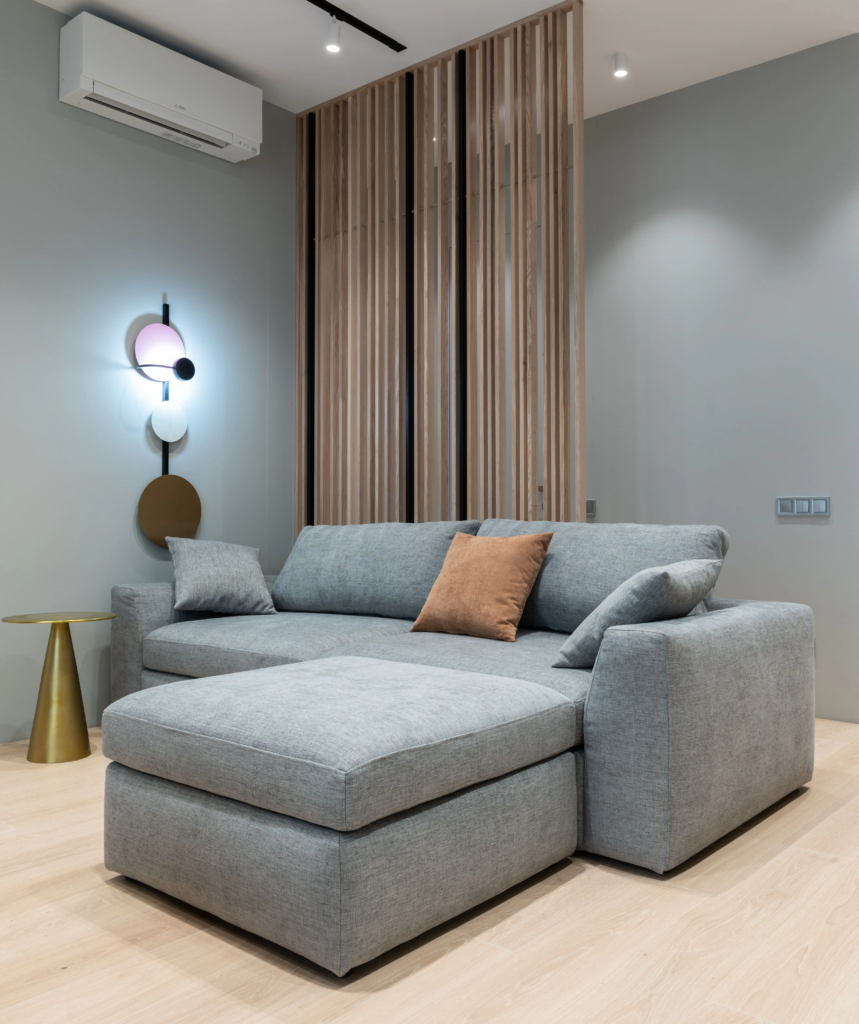
Vertical wood slats or a paneled accent behind the TV add texture and warmth without competing with the screen for attention, since wood grain reads as a backdrop rather than a focal point. Slat walls do practical work too: they can hide a cord channel between slats, and the vertical lines add a sense of height in rooms with lower ceilings.
Pre-fabricated slat panels are considerably easier to install than site-built paneling and come pre-finished, which matters if you’re not confident staining wood yourself.
6. Try Molding or Millwork for a More Traditional Look
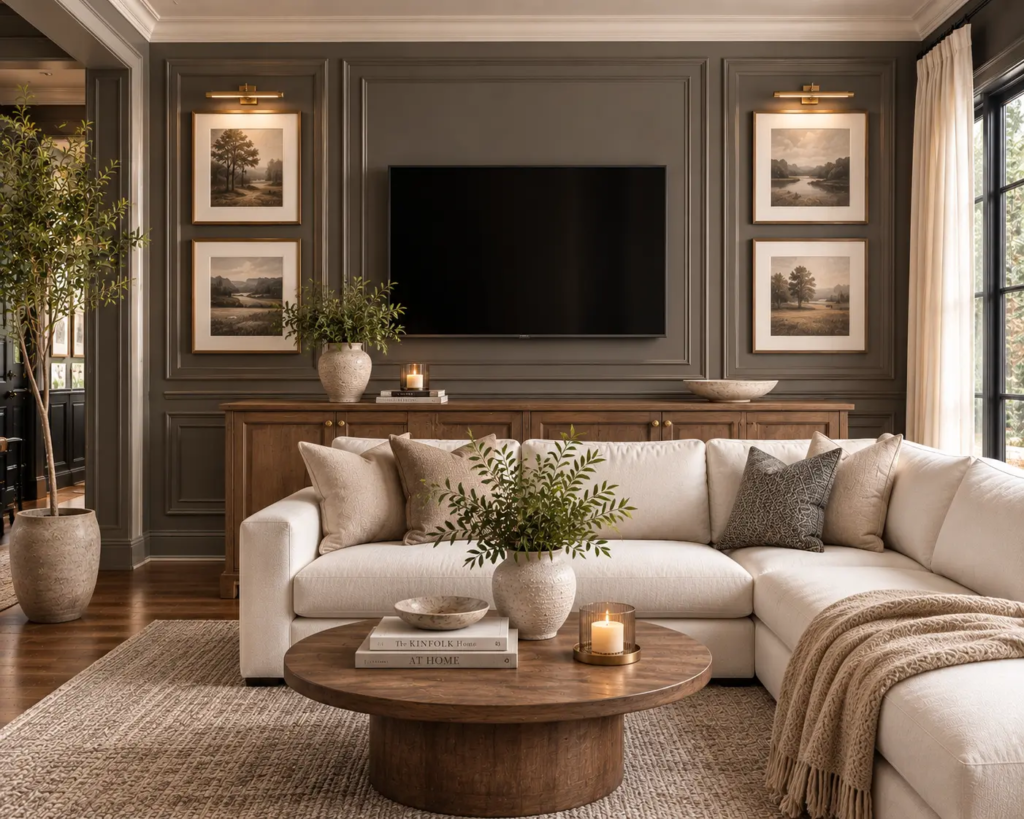
Picture-frame molding or a paneled wainscot treatment around the TV brings a more formal feel and fits naturally into an elegant, more traditional living room rather than a modern one. It creates a defined “frame” for the whole wall — a boundary so the TV doesn’t feel like it’s floating on an otherwise plain surface.
Keep the molding profile modest — 1.5 to 2 inches deep — in smaller rooms, since deep, heavy millwork can visually shrink a space that doesn’t have much depth to spare.
Pro Tip: If you’re adding molding around a mounted TV, run the cord channel before the molding goes up, not after. Fishing a cable through finished trim is a common source of hairline cracks and touch-up headaches a little planning avoids entirely.
7. Move the TV Off-Center or Into a Corner
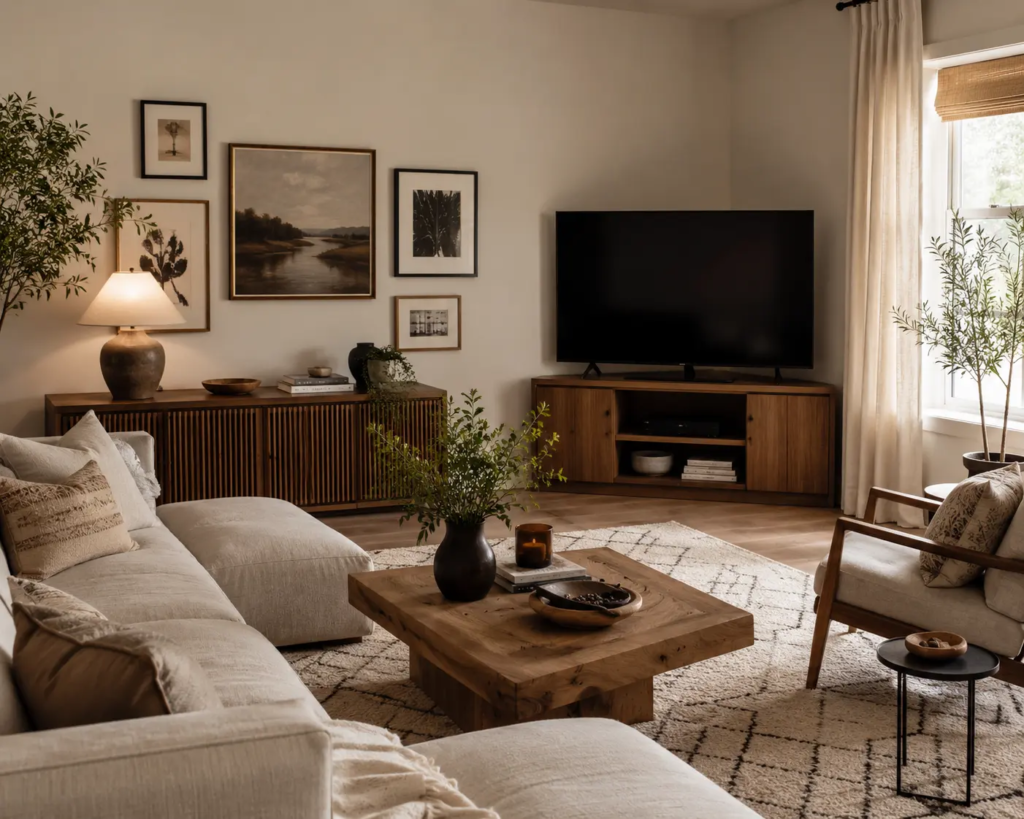
Not every living room needs the TV on the primary focal wall. If your room already has a fireplace or a big window, consider a secondary wall or a corner swivel mount instead of forcing two focal points onto the same sightline — especially useful in open-concept spaces where the “TV wall” and “conversation area” don’t need to be the same wall.
A corner mount means some seats get a slightly angled view, so this works best without one strict straight-on arrangement — an L-shaped sectional adapts better than two sofas facing each other head-on.
Common Mistakes That Undercut a TV Wall
Mounting too high. “Art height” mounting looks good in photos and bad in practice. If you’re unsure, err lower rather than higher.
Leaving cords fully visible. A tangle of visible cords undoes almost any styling effort. A paintable cord channel or an in-wall kit (check local electrical code first) solves this for well under the cost of most furniture pieces.
Centering the TV on the wall instead of the seating. A wall’s physical center and your sofa’s sightline aren’t always the same point, especially with an off-center window or door.
Choosing screen size by the wall instead of the distance. A TV that looks proportionate in a showroom can be wrong for your actual viewing distance — use the 1.5–2.5x rule above instead of eyeballing it in the store.
[IMAGE: Overhead flat-lay style shot showing a tidy in-wall cord management channel behind a mounted TV before console styling is added]
Budget-Friendly Ways to Style a TV Wall
You don’t need built-ins or custom millwork to get most of the effect:
- Paint: One gallon for an accent wall costs far less than any shelving or paneling project and delivers most of the “TV disappears” effect on its own.
- Shelving: Pre-made floating shelf kits install in an afternoon for a fraction of custom built-ins, though with less depth or weight capacity.
- Cord management: A cord cover kit or fabric cable sleeve is one of the cheapest upgrades here relative to the clutter it removes.
- Console: A secondhand console, refinished or left as-is, does the same grounding job as a new one for a fraction of the cost.
Once the wall itself is handled, the biggest remaining cost is usually the seating that faces it — if you’re rethinking that too, it’s worth a look at a few sofa options built for a living room like this one before committing to anything.
Pro Tip: If you’re renting and can’t paint or drill into drywall, a piece of furniture-grade MDF cut to size and leaned against the wall behind a freestanding TV stand (secured with furniture straps) can mimic the “dark accent wall” effect without touching the wall — fully reversible at move-out. It’s a good low-cost stand-in for the kind of layered, high-end look you’d see in a modern luxury living room, minus the renovation.
Frequently Asked Questions
What height should I mount my TV in the living room? Aim for the center of the screen at roughly 42 to 48 inches from the floor for standard seating — close to eye level when seated. Taller ceilings or lower sectionals may shift that slightly, so it’s worth taping the outline and test-sitting before drilling.
Should the TV be centered on the wall or on the sofa? Center it on your seating’s actual sightline rather than the wall’s physical midpoint, since the two often don’t match — especially with an off-center window, door, or fireplace.
How do I hide TV cords without cutting into the wall? A paintable cord channel or fabric cable sleeve run down to a console handles most visible clutter without drywall work. For a fully hidden look, an in-wall cable kit is a straightforward weekend project — check local electrical code first.
Does the TV wall need to match the rest of the living room’s style? It should relate to it, but not match exactly — a TV wall is a good candidate for one bolder material or color that the rest of the room echoes in smaller doses, like a dark picture frame or wood side table.
Is it worth painting behind the TV if I’m not doing an accent wall? Even without a full accent wall, a slightly deeper shade directly around the TV footprint — a “TV nook” treatment — can reduce the contrast on a smaller scale, a lower-commitment way to test the effect first.
The Wall Should Work Whether the Screen Is On or Off
A TV wall you’re happy with in five years usually comes down to one test: does it still look intentional with the screen off? Paint, shelving, molding, and layout all answer that question before you’ve spent money on furniture that only solves half the problem. Start with where people actually sit, build the wall around that, and the TV stops being the thing you’re decorating around and becomes just one more considered piece in the room.