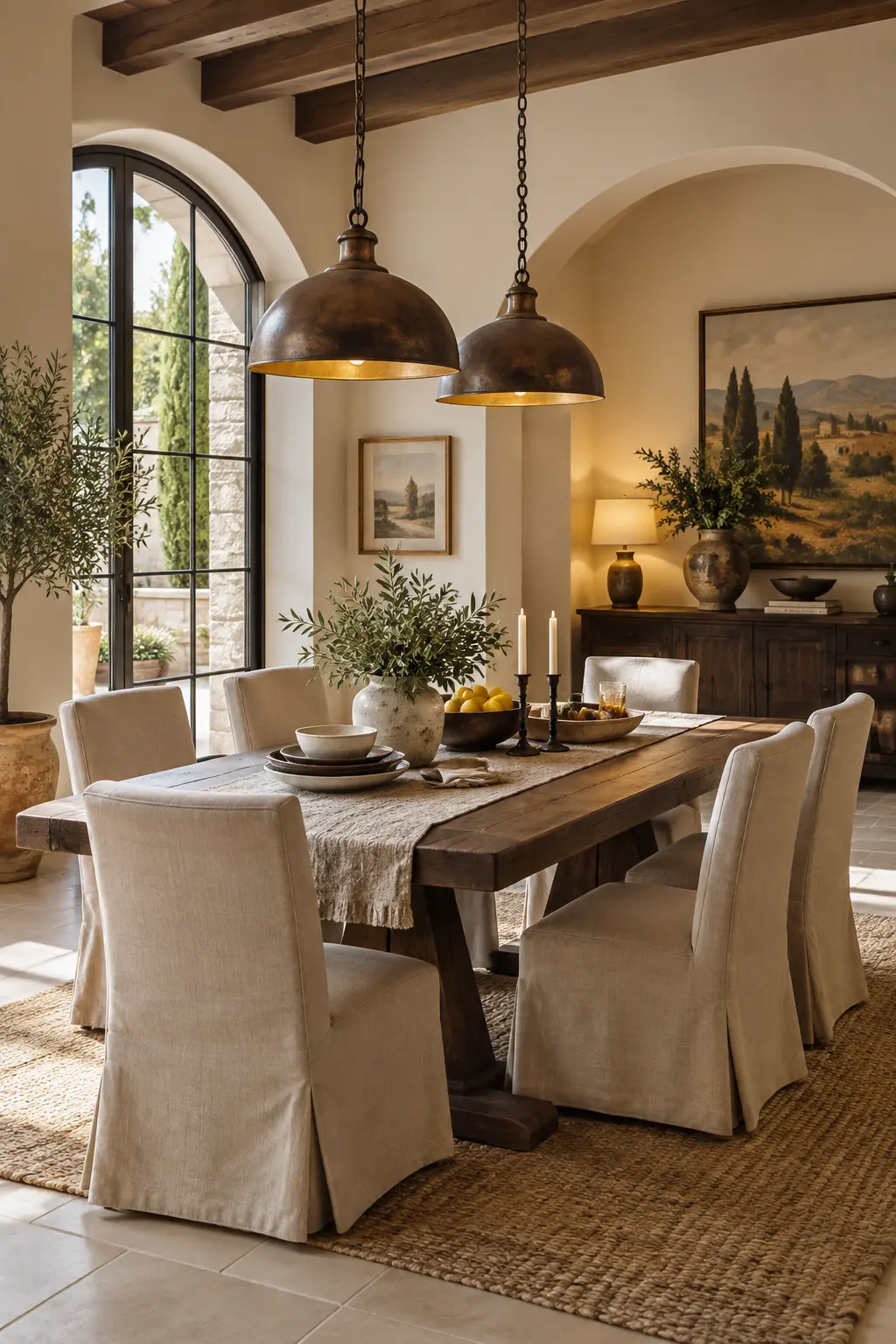
Italian Dining Room Ideas for Everyday, Not Just Holidays
Most “Italian dining room” inspiration photos are staged for one specific moment: a long table set for twelve, candles lit, a holiday-worthy spread. It’s a beautiful photo and a completely unrealistic room. The truth is most people eating in a dining room styled this way use it for a Tuesday dinner with two kids and a laptop pushed to one side — not a dinner party every night of the week.
This is the gap worth addressing directly: an Italian dining room built to actually function on an ordinary Tuesday, using the same material language — warm wood, handmade ceramics, layered lighting, natural texture — but chosen and placed so it survives daily use instead of only looking right in photographs.
The Foundation: Warmth and Durability Come From the Same Material Choices
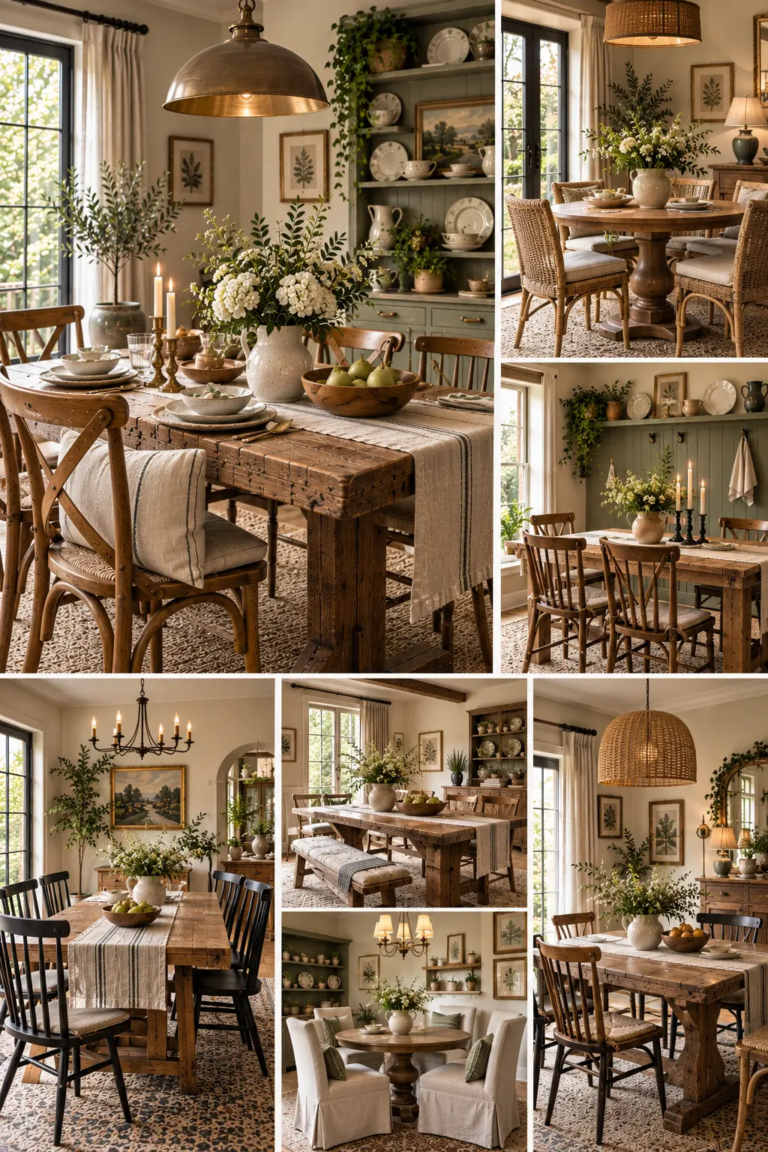
The good news is that the materials that define Italian dining room style — solid wood, terracotta, linen, wrought iron — are also genuinely durable choices, which means you don’t have to choose between “looks the part” and “survives daily life.” A solid wood table with a natural oil finish (rather than a high-gloss lacquer) actually hides daily wear better, because small scratches and water rings blend into the wood grain instead of standing out against a mirror-flat surface.
The core framework: warm, saturated color on walls or in textiles; natural materials with visible texture, not flat manufactured finishes; and layered lighting rather than one single overhead fixture doing all the work.
Pro Tip: Choose a table finish you can spot-repair yourself — an oil or wax finish can be touched up with more oil rubbed into a scratch, while a factory lacquer finish usually needs professional refinishing once it’s damaged, which matters a lot more in a table used daily than one set for occasional dinners.
1. Choose a Table That’s Built for Real Use, Not Just Photographed Once
A long trestle or turned-leg wood table is the classic anchor of this style, but the wood species and finish matter more than the silhouette for daily durability. Oak and walnut hold up better to daily scraping and setting-down than softer woods like pine, which dents more easily under regular use. A matte oil finish, reapplied every year or two, actually improves with age and use in a way a glossy polyurethane finish doesn’t — the surface develops a patina rather than showing every scuff as damage.
Table decor built to survive actual daily use applies directly here — the same logic about avoiding delicate, easily-damaged centerpieces in favor of sturdier daily-use styling holds for a dining table as much as a coffee table.
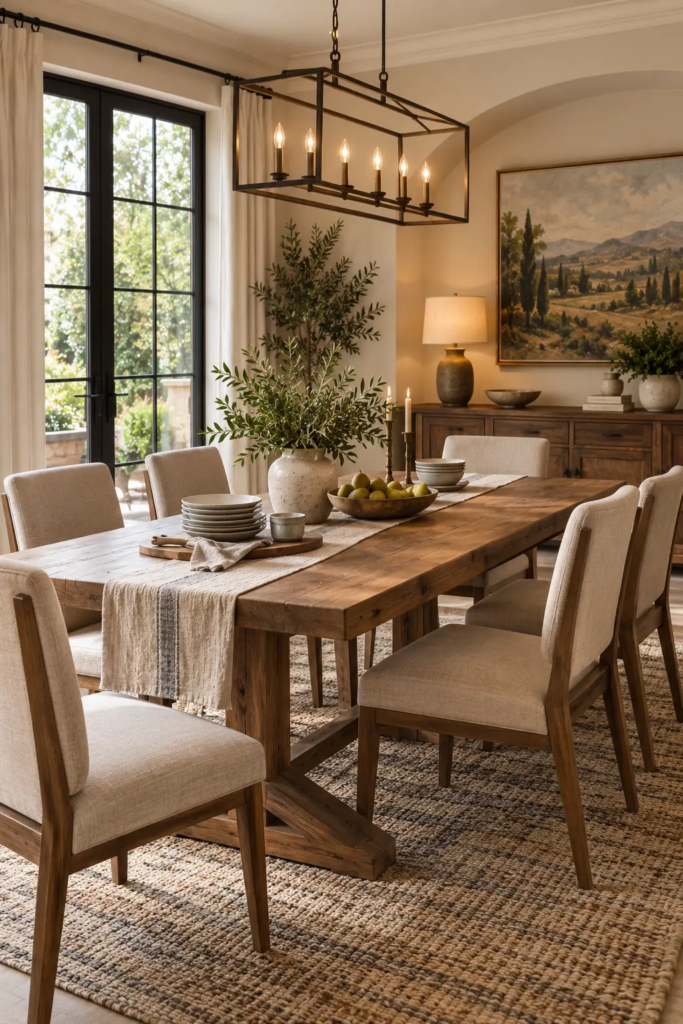
2. Layer Lighting So the Room Works Beyond Dinner Hour
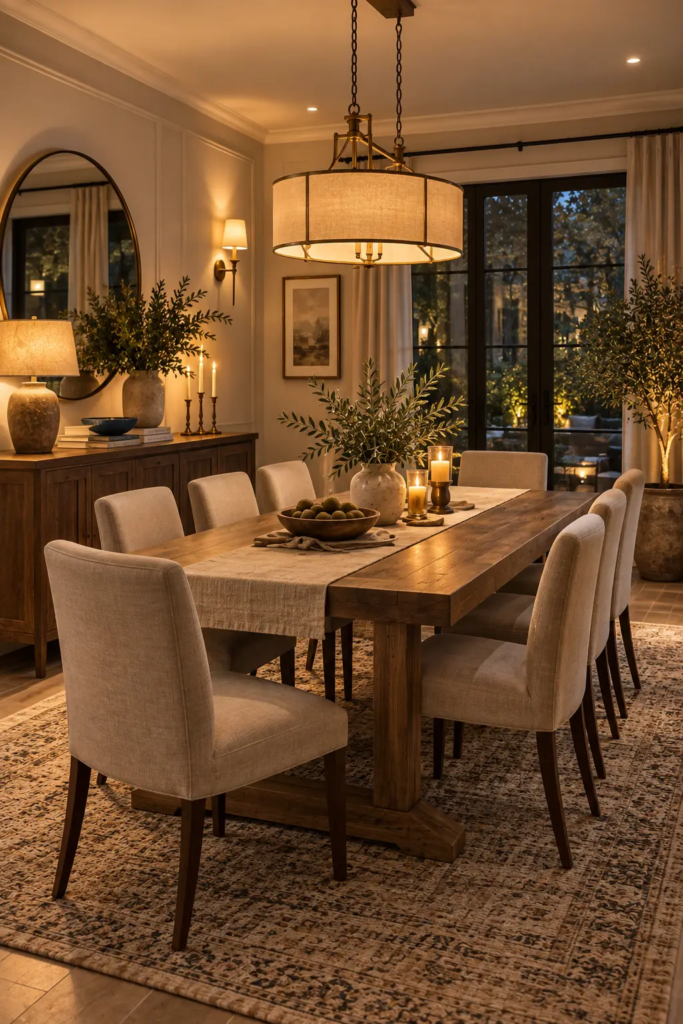
A single statement chandelier looks striking in a photo but leaves a dining room either too dim or too harshly lit for anything other than a formal dinner. Pairing an overhead fixture — ideally a wrought-iron or aged-brass chandelier with warm-temperature bulbs — with a secondary light source, like wall sconces or a floor lamp in an adjacent corner, gives the room a softer, usable light level for homework, laptop work, or an early breakfast, not just an evening meal.
Pro Tip: Put the overhead fixture on a dimmer even if it wasn’t wired with one originally — a plug-in or smart-bulb dimmer solution avoids an electrician visit and lets the same fixture serve a bright working meal and a low, warm dinner setting without buying a second light.
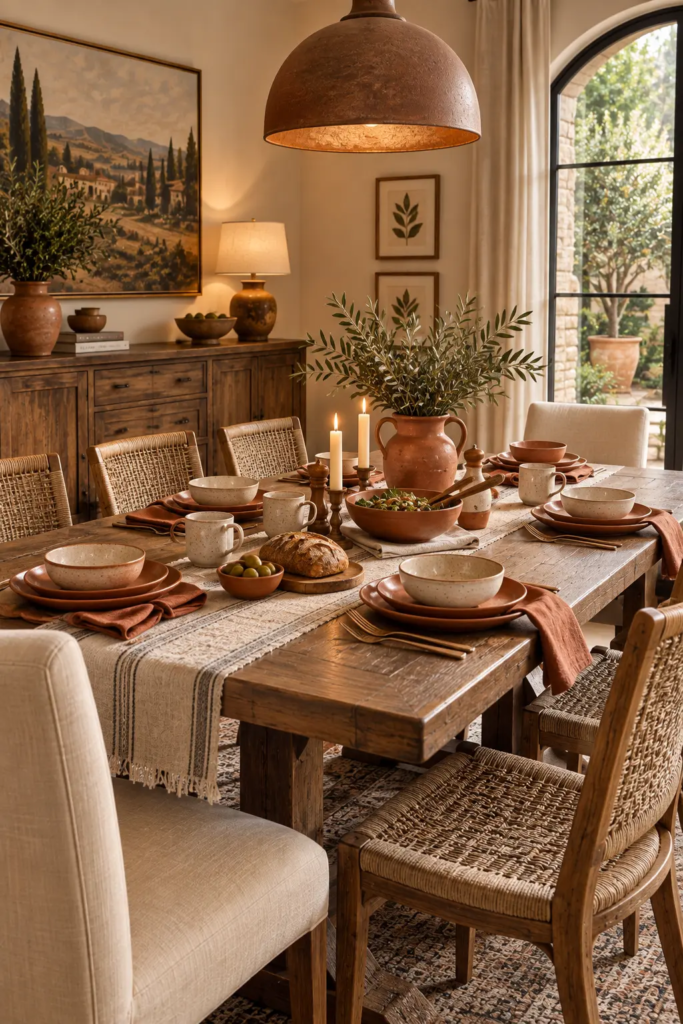
3. Use Terracotta and Ceramic as Daily Tableware, Not Display Pieces
Handmade or hand-glazed ceramic dinnerware and serving pieces are core to the look, but treating them purely as display objects on open shelving means they rarely get used and the room reads as staged rather than lived-in. Rotating a set of textured stoneware or terracotta-toned dinnerware into actual daily use — not just for guests — keeps the material identity present in the room’s daily rhythm, not just its photographed moments. Look for glazes described as reactive or hand-dipped, which show natural variation piece to piece rather than the uniform finish of mass-produced dinnerware.
4. Bring Linen In Where It Can Actually Handle Spills
A linen table runner or napkins are a defining textile choice in this style, but pure, undyed linen shows stains more visibly than a linen-cotton blend. For daily use, a linen-cotton blend runner in a warm, mid-tone color (rather than white or cream) hides everyday spills far better while still carrying the same visual texture and drape as pure linen. Save the finest pure linen pieces for occasions where a quick wash after use is realistic, and use the more forgiving blend for regular meals.
If your existing dining space also connects to an open living area, zoning logic for a shared living-dining layout is worth applying alongside the material choices here, since an open-plan Italian-style dining area needs the same boundary definition any combined space does.
5. Add a Wrought-Iron or Woven Detail That Doesn’t Need Babying
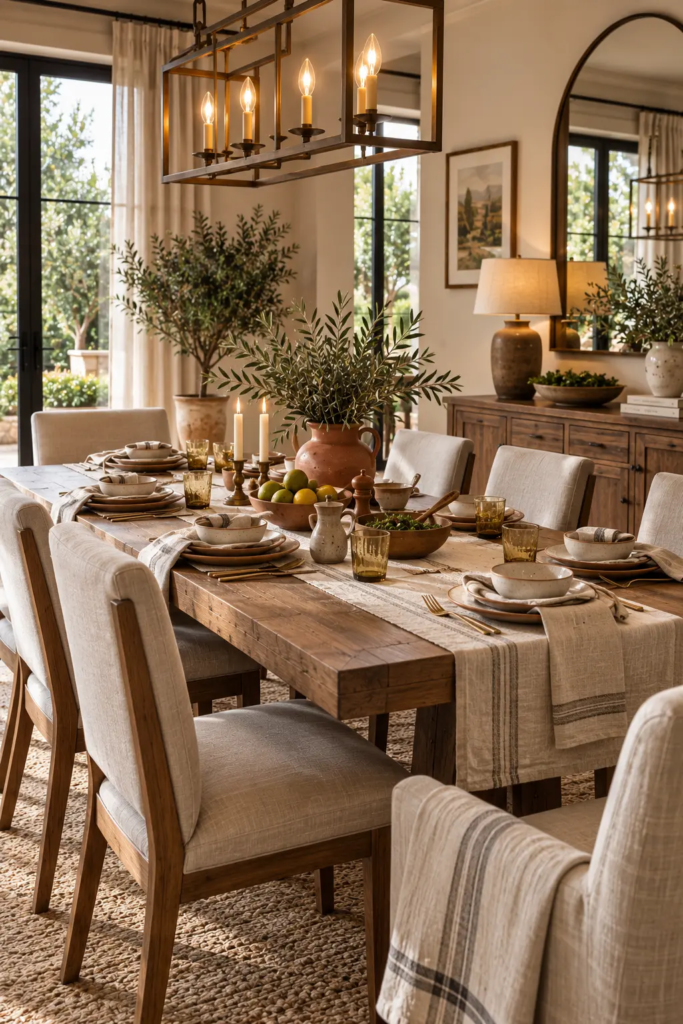
Wrought-iron chair accents, a woven-seat chair, or an iron-based light fixture bring in the material variety this style depends on, and unlike some decorative textiles, iron and tightly woven rush or cane seating actually hold up well to daily use — iron doesn’t stain, and a well-made woven seat resists the wear of daily sitting better than a delicate upholstered dining chair would. If chairs are due for a refresh, mixing two wrought-iron or cane chairs at the table ends with an upholstered bench or pair down the long sides balances comfort with the material texture the style calls for.
6. Let the Wall Color Set the Warmth Without Needing to Match Everything
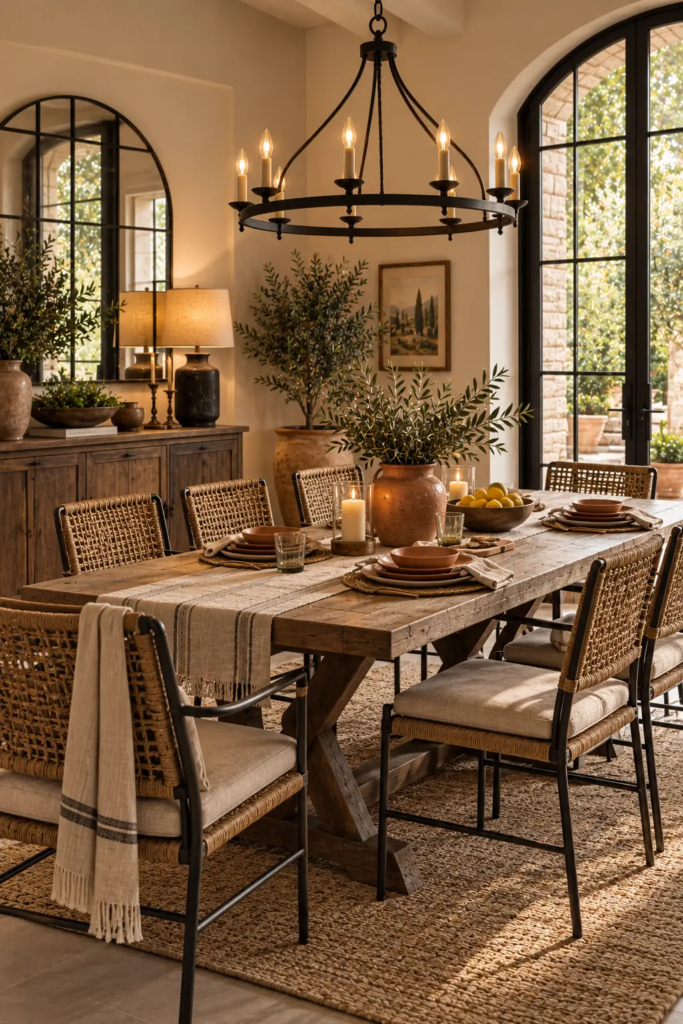
A warm, saturated wall color — deep ochre, muted terracotta, olive, or a rich cream — does more to establish Italian dining room character than any single furniture piece, and it’s also one of the lowest-maintenance choices in the room since paint doesn’t wear the way textiles or tabletops do. Wall color chosen specifically for the warmth and mood it sets is worth treating as seriously here as in any adjoining living space, since an open dining area often shares sightlines and paint continuity with the room next to it.
Pro Tip: Test the wall color specifically under your dining room’s evening lighting, not just daylight — a color that reads warm and inviting in daylight can shift noticeably cooler or muddier under certain bulb temperatures, and dinner is when this room gets used and seen the most.
Common Mistakes to Avoid
Buying a table sized for the photo, not the room. A long farmhouse-style table looks right in inspiration photos but needs at least 36 inches of clearance on all sides for chairs to pull out and people to walk past — measure your actual room before committing to a length.
Choosing delicate, purely decorative dinnerware over anything usable daily. If ceramic pieces are too precious to actually use, they end up as static shelf decor rather than part of the room’s lived character, which undercuts the warmth the style is going for.
Relying on a single overhead chandelier for all lighting. This leaves the room either too dim for daily tasks or too bright and formal for a relaxed meal — layered lighting is what makes the room function beyond special occasions.
Skipping texture in favor of color alone. A warm wall color without the accompanying wood grain, woven seating, and ceramic texture reads as a paint choice, not a style — the materials are doing the identity work, not the color by itself.
Budget-Friendly Ways to Get the Look
A full furniture replacement isn’t necessary to shift a dining room toward this style. Swapping in a linen-cotton blend runner and warmer-toned napkins is an inexpensive textile change. Adding wall sconces or a plug-in dimmer to an existing overhead fixture is a low-cost lighting upgrade that makes a real functional difference. If a new table isn’t in the budget, refinishing an existing wood table with a matte oil product instead of replacing it can shift both its look and its daily durability for a fraction of the cost of new furniture.
FAQ
What makes a dining room read as “Italian style” versus generic farmhouse or rustic?
The combination of warm saturated wall color, hand-glazed ceramic or terracotta accessories, and wrought-iron detailing together is what distinguishes it — a farmhouse room often leans cooler and more neutral, while rustic style tends to emphasize raw, unfinished wood over the warmer, more finished materials this style uses.
Is a long trestle table necessary for this style, or does it work with a smaller table?
A smaller round or rectangular table can carry the same material and color choices just as effectively — the trestle table is a common example in inspiration photos, but the style identity comes from finish, wood tone, and accessories, not a specific table shape or size.
How do I keep a wood dining table looking good with daily use and kids?
An oil or wax finish, rather than a high-gloss lacquer, actually hides daily scuffs and water marks better because they blend into the wood grain, and minor damage can be spot-treated with more oil rather than requiring professional refinishing.
Can this style work in a small dining space, or does it need a large room?
It works in a smaller space as long as the scale of furniture and fixtures is adjusted down — a smaller iron chandelier, a narrower table, and fewer but more considered ceramic accessories carry the same identity without overwhelming a tighter room.
What’s the most budget-friendly way to start moving a dining room toward this style?
Wall color and textiles are the lowest-cost, highest-impact starting points — a warm ochre or terracotta-toned paint and a linen-blend table runner shift the room’s character significantly before any furniture spending is needed.
The Takeaway
An Italian dining room doesn’t have to live only in holiday photos — the same materials that give the style its warmth also happen to hold up well to daily use, once you choose finishes and pieces built for that instead of ones chosen purely for how they photograph. Start with the table finish and the lighting layering, and the room will look just as good on an ordinary Tuesday as it does set for a special occasion.