8 Living Room Table Decor Ideas That Survive Daily Use
Most living room table decor advice is written for a table nobody actually uses — a perfectly styled surface of stacked books, a single candle, and a small vase, photographed before anyone sets down a coffee mug or puts their feet up. The second real life hits that table, the styling falls apart: rings on the wood, a toppled vase, three remote controls shoved into the one open corner because there was nowhere else for them to go.
This is decor for the table you actually live around. Every idea below is chosen because it holds up to daily use — drinks, homework, a laptop, a kid’s snack plate — rather than requiring the table to sit untouched between photos. If your coffee table needs to look good and function as an actual coffee table, this is built for that.
The Foundation: Leave Room for the Table to Do Its Job
Before adding a single object, it helps to think of your coffee or side table’s surface as split into two zones: a styled zone and a working zone. The styled zone holds your decor — books, a tray, a plant — and the working zone stays clear for the stuff that shows up daily: a drink, a plate, a laptop, a game controller. On a standard 36 to 48 inch coffee table, that usually means keeping decor to roughly one-third to one-half of the surface, with the rest left open.
This single principle solves most of the “why does my styled table always end up a mess” problem. A table where decor covers the entire surface leaves no obvious place for daily items to land, so they end up stacked on top of or shoved next to your styling instead of replacing it — which is what makes a styled table look wrecked within a day of company leaving.
1. A Tray That Corrals Instead of Just Decorates
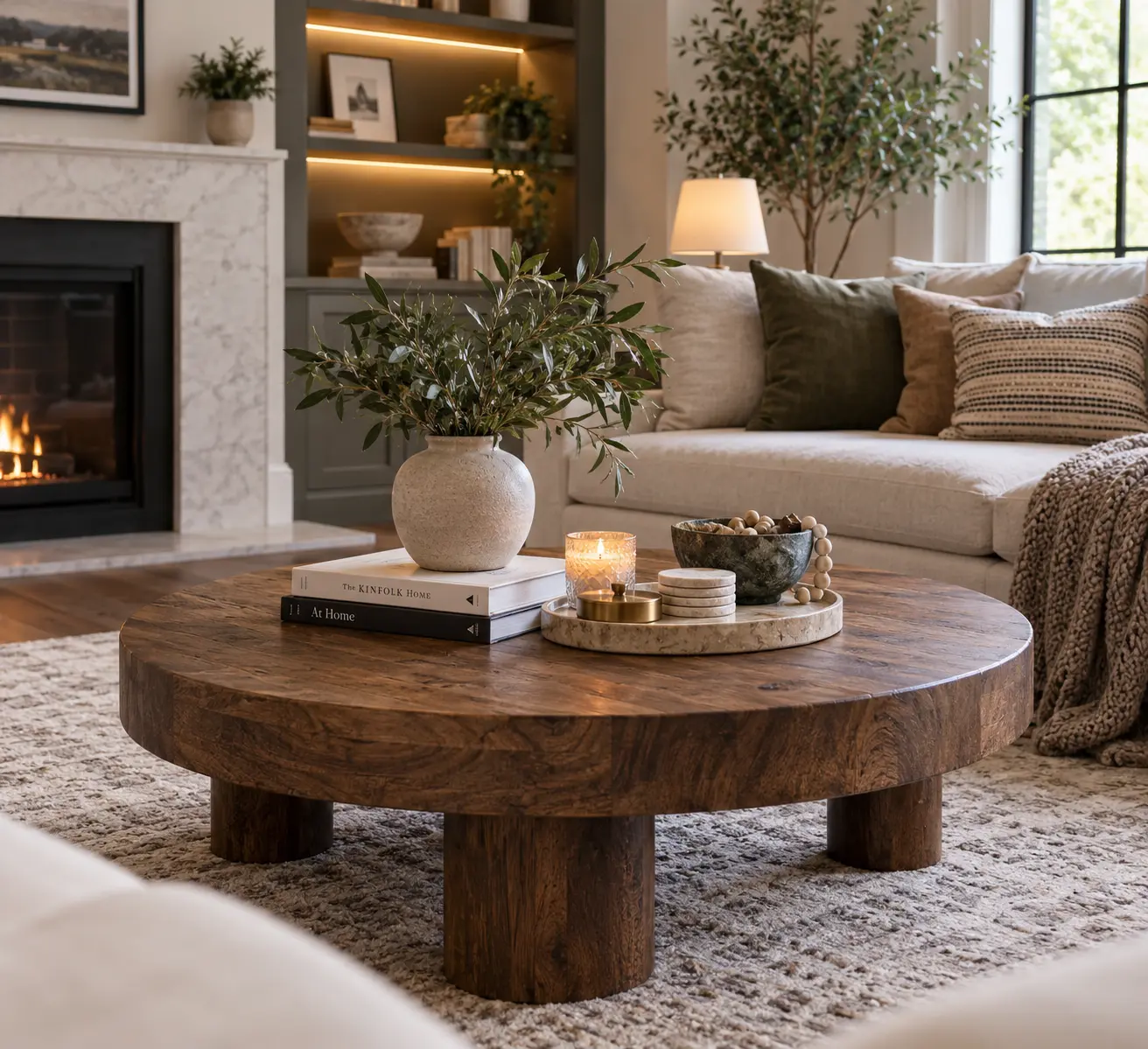
A low tray, roughly 16 to 20 inches for a standard coffee table, does double duty: it groups your styled objects into one defined zone, and it gives daily items — a mug, a phone, a stack of mail — an obvious landing spot within that same zone rather than scattered across the whole surface. The tray edge acts as a visual boundary, which matters more than people expect; a coffee table with loose objects spread edge to edge reads as cluttered even with relatively few items, while the same items grouped on a tray read as intentional.
Choose a tray with a slight lip or raised edge rather than a flat platter if the table sees regular drink traffic — the lip catches minor spills before they reach the wood or fabric underneath, which a flat surface won’t do.

2. Books as Function, Not Just a Riser
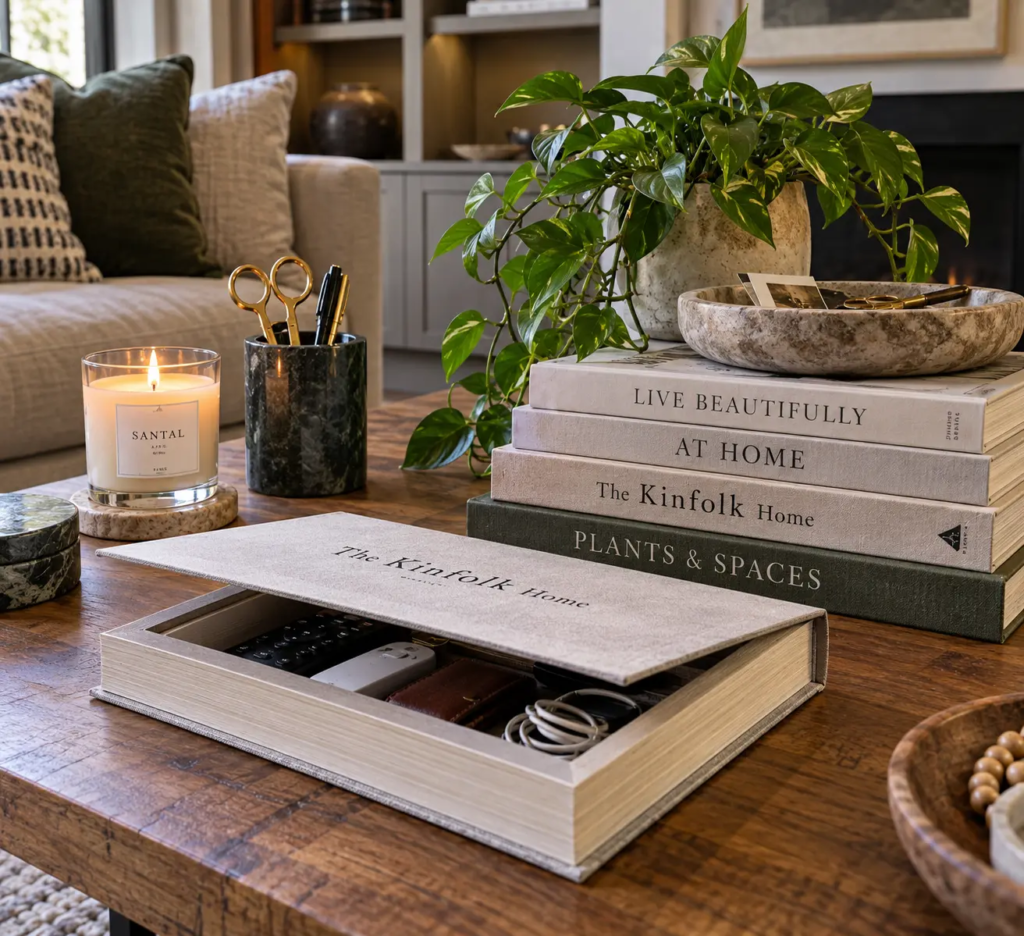
Stacked books are a common styling shortcut, but they work harder when you actually pick books that get used rather than purely decorative ones bought for their spine color. A stack of two or three books that genuinely get picked up and read gives the table a lived-in quality no styling trick can fake, and it solves the “what happens when someone actually wants to read the book on top” problem that purely decorative stacks run into.
Vary the stack height across a grouping of tables rather than making every stack identical — a taller stack of three on the coffee table and a shorter stack of one on a side table reads as more natural than matched stacks, since a genuinely used bookshelf never distributes evenly either.
Pro Tip: Stack books with the spines facing the room’s main seating rather than facing each other or the wall — it’s a small detail, but a title turned inward reads as an afterthought, while a visible spine looks like an intentional part of the styling even on a book you’re currently reading.
3. One Large Object Instead of Several Small Ones
In a household with kids, pets, or just a lot of daily table traffic, a single larger decorative object — a substantial ceramic bowl, one sculptural vase, a large candle in a sturdy holder — survives daily bumps far better than a cluster of small tchotchkes that get knocked over or lost among daily clutter. A large object is also easier to work around: it’s obvious where it lives on the table, so it doesn’t end up shuffled aside the way small objects do when someone needs table space.
This trade-off matters most on a busy family coffee table specifically. A table that gets used constantly for homework, snacks, and remote controls generally holds up better with one substantial anchor object than with a curated grouping of five delicate pieces, even though the grouping might look more elaborate in photos.

4. Low-Maintenance Greenery, Not High-Maintenance Florals
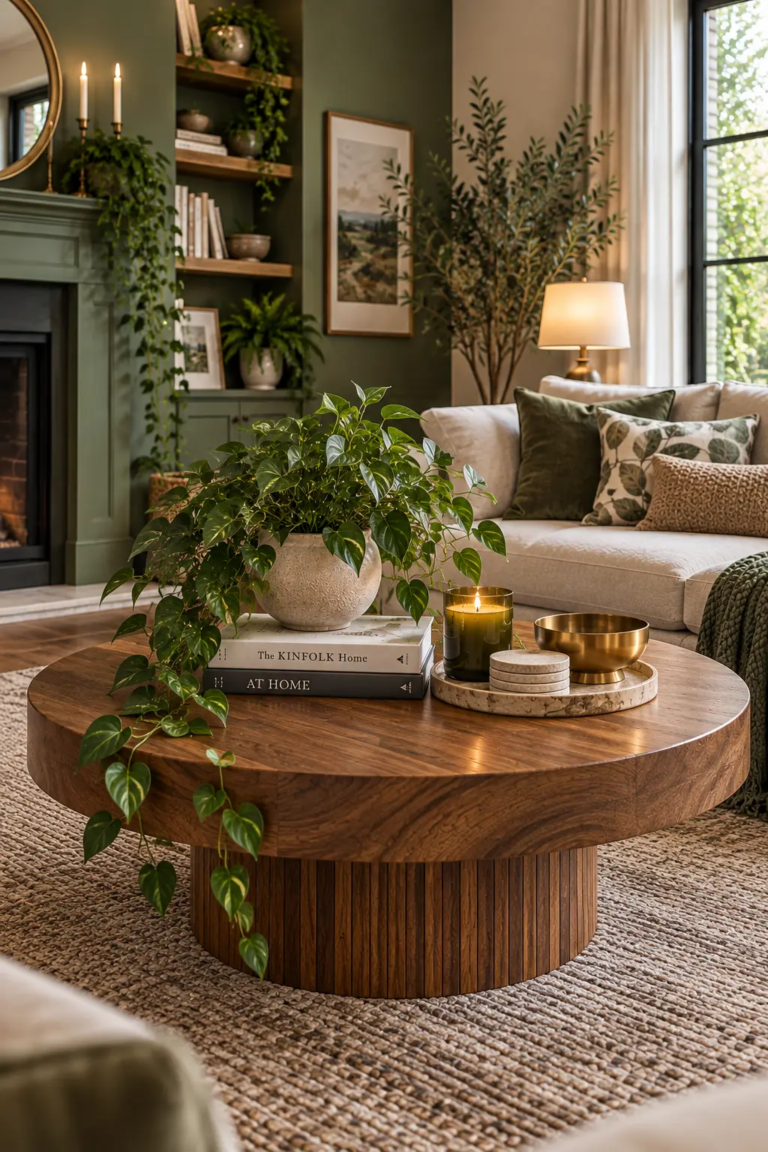
A small plant or a well-made faux arrangement adds life to a table without the upkeep of fresh-cut flowers, which wilt within a week and need water changed every few days on a surface that’s already busy with daily use. A compact, low-light-tolerant plant like a pothos cutting in a small pot, or a quality faux eucalyptus stem in a low vase, holds its look for months rather than days.
If you do want real flowers occasionally, choosing a shorter arrangement — under 10 inches tall — keeps sightlines open across the table when people are sitting around it, which taller arrangements tend to block.

5. Style the Side Table Differently Than the Coffee Table
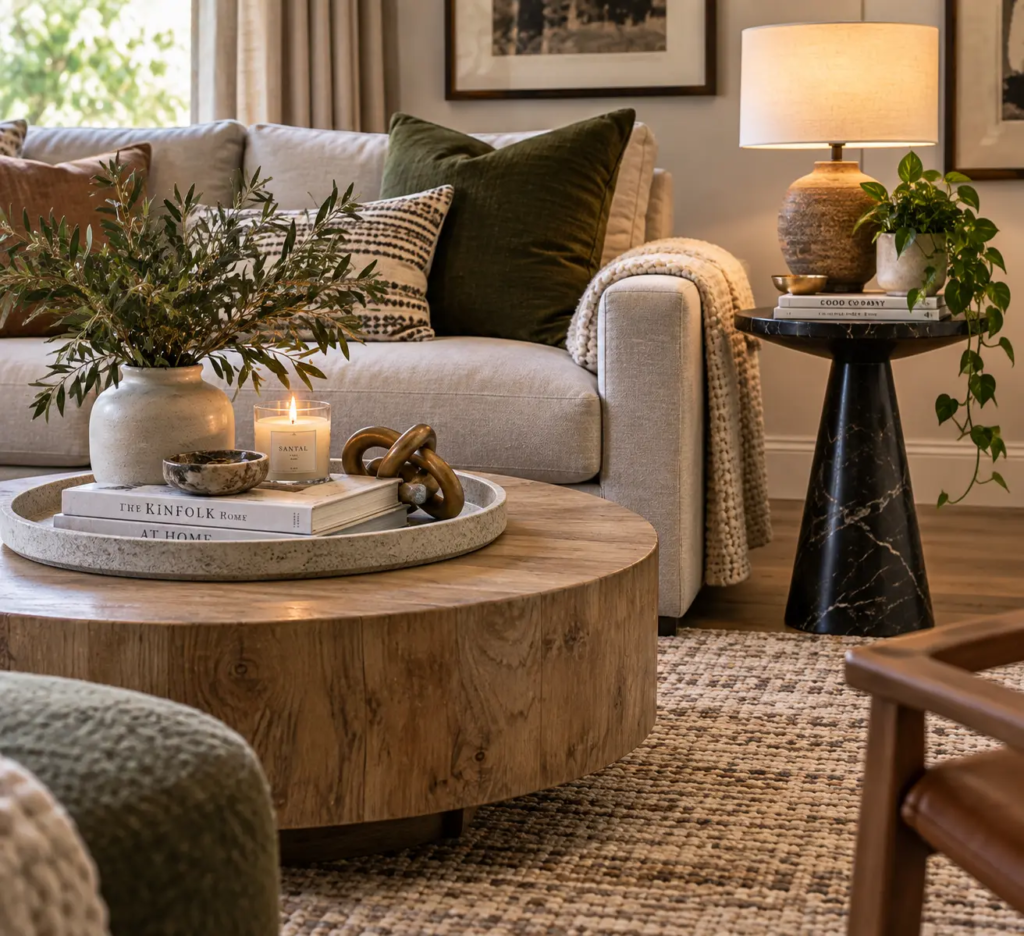
A coffee table and a nearby side table styled identically — same tray, same book stack, same candle — reads as a matched set rather than a room that’s been put together over time. Giving the side table a different role, like holding a reading lamp and a single small object rather than mirroring the coffee table’s layout, creates variety and also acknowledges that the two tables usually get used differently: the coffee table for shared, central activity, and the side table for one person’s individual items within arm’s reach of their seat.
Pro Tip: If your side table sits directly next to a favorite reading or work spot, leave more open surface there than you would on the coffee table — a side table that’s fully styled leaves no room for the phone, glasses, or remote someone will inevitably set down right next to where they’re sitting.
6. A Small Rotating Box for Seasonal Swaps
Rather than buying entirely new decor each season, keeping a small labeled box of seasonal pieces — a few pinecones and a runner for fall, a bowl of citrus for winter, a small vase for whatever’s blooming in spring — makes refreshing a table’s look a five-minute task rather than a shopping trip. This also keeps the core, everyday styling (the tray, the books, the anchor object) consistent and functional year-round, while only the seasonal accent changes.
This approach is particularly practical for a table that gets heavy daily use, since it limits how often you’re introducing new objects that need to survive kids, pets, or general wear — most of the table stays in its tested, durable configuration, and only a small seasonal element rotates.

7. Materials That Hide Daily Wear
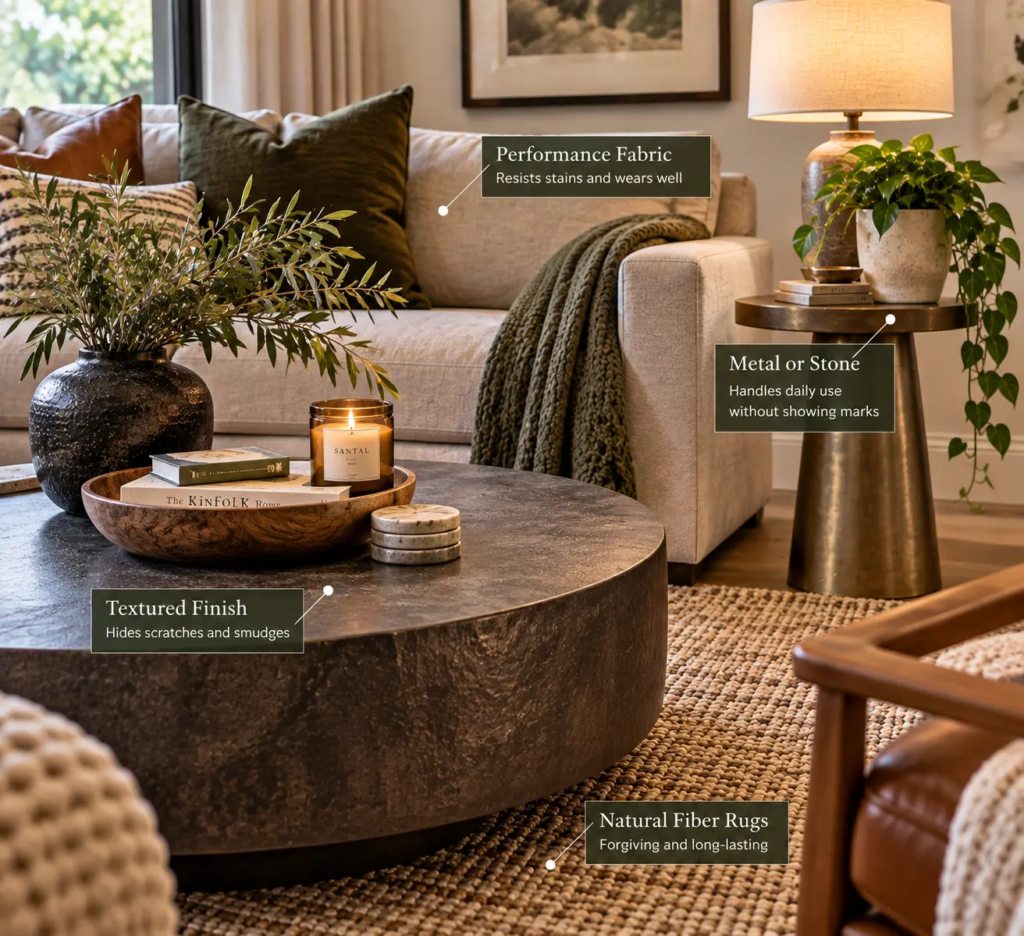
A honed or matte stone surface, a wood table with a matte oil finish rather than high gloss, or a textured woven tray all show water rings, dust, and light scuffs far less than a glossy lacquer or polished glass surface does. This matters more on a table that’s actually used daily than on one styled purely for photos, since a high-shine surface needs to be wiped down constantly to look presentable, while a matte or textured surface simply hides more between cleanings.
If you already have a glossy table and aren’t ready to replace it, a large tray covering the section that sees the most daily traffic — where drinks and plates typically land — protects the finish without requiring a full swap.
8. Scale Decor to the Table’s Actual Size, Not the Room’s
A large sectional paired with an undersized coffee table is a common living room mismatch, and it affects decor too: a small table styled with objects sized for a larger surface looks cramped and leaves no working zone at all. As a general guide, a coffee table should sit low enough that its surface is roughly level with or slightly below the seat cushions of the surrounding sofa, and decor objects should be sized so the tallest piece doesn’t block sightlines across the table when everyone’s seated.
If you’re unsure whether your current table is sized well for your seating, it’s worth assessing the whole grouping together rather than the table alone — a table that’s technically an appropriate size can still feel wrong if the surrounding furniture was chosen without much thought to proportion in the first place.
Pro Tip: Measure the gap between your coffee table and the front edge of your sofa before adding decor, not after — 14 to 18 inches of clearance is the general comfort zone for knees and foot traffic, and a table styled to look full can tempt you to push it closer to the seating than that gap actually allows.

Common Mistakes to Avoid
Styling the entire surface with no working zone. As covered in the foundation section, a table with decor covering every inch leaves no obvious place for daily items to land, which is what causes styled tables to look chaotic within a day of real use.
Choosing delicate objects for a high-traffic table. Small, easily knocked-over pieces work fine on a side table in a low-traffic room, but on a family coffee table that sees kids, pets, and constant activity, they tend to get broken, lost, or simply moved aside within days.
Matching every table in the room too closely. Identical styling across a coffee table and side table reads as a showroom display rather than a room that’s actually lived in.
Ignoring the finish’s practical wear. A glossy or unsealed surface that shows every ring and scuff requires constant upkeep to look intentional; a more forgiving matte or textured finish holds its look with far less maintenance.
Budget-Friendly Ways to Style a Living Room Table
You don’t need to buy new furniture to get a table that looks and functions better:
- Under $30: A woven or wood tray from a home goods store, a secondhand hardcover book or two, or a small faux plant cutting.
- $50–$150: A ceramic bowl or vase substantial enough to anchor a busy table, or a low-profile coaster set that doubles as a small styling element.
- $150–$400: A textured or matte-finish tray large enough to cover the table’s main traffic zone, or a compact side table if your current one is mismatched in scale to your seating.
Bringing It Together
Living room table decor works long-term when it’s built around how the table actually gets used, not just how it photographs on day one. Leave a genuine working zone, choose materials and objects that can survive daily contact, and let the coffee table and any side tables serve slightly different roles rather than matching each other exactly. Start with a tray and one substantial object — that alone solves most of the clutter problem — and build the rest of the styling around whatever your household actually sets down on that table every day.
Frequently Asked Questions
How much decor is too much on a coffee table? If decor covers more than half the surface, there’s usually not enough room left for daily items like drinks or a laptop, which pushes people to set things down on top of or around your styling instead. Keeping decor to roughly a third to a half of the table’s surface leaves a clear working zone.
What’s the best material for a coffee table decor tray in a house with kids? A wood or resin tray with a slight raised lip handles daily wear better than glass or thin metal, since the lip catches minor spills and the material itself is less prone to chipping or shattering if knocked. Matte or textured finishes also show fewer scuffs than glossy ones over time.
Should my coffee table and side table have matching decor? Not necessarily — giving each table a distinct role, like a shared styled tray on the coffee table and a simple lamp-and-one-object setup on the side table, tends to look more collected than matching decor on both, and it better reflects how the two tables actually get used.
Is it better to use real plants or faux plants on a living room table? Faux, high-quality stems or a low-maintenance real plant like a small pothos generally hold up better on a table that sees regular daily use than fresh-cut flowers, which wilt within a week and need frequent water changes. Save fresh flowers for occasions rather than everyday styling if the table doesn’t get much dedicated care time.
How do I keep coffee table decor from getting knocked over by kids or pets? Favor one or two larger, heavier objects over several small, light ones, and keep anything fragile on a side table out of the main traffic path rather than on the central coffee table. A tray with a raised edge also helps contain smaller items so they’re less likely to end up on the floor.