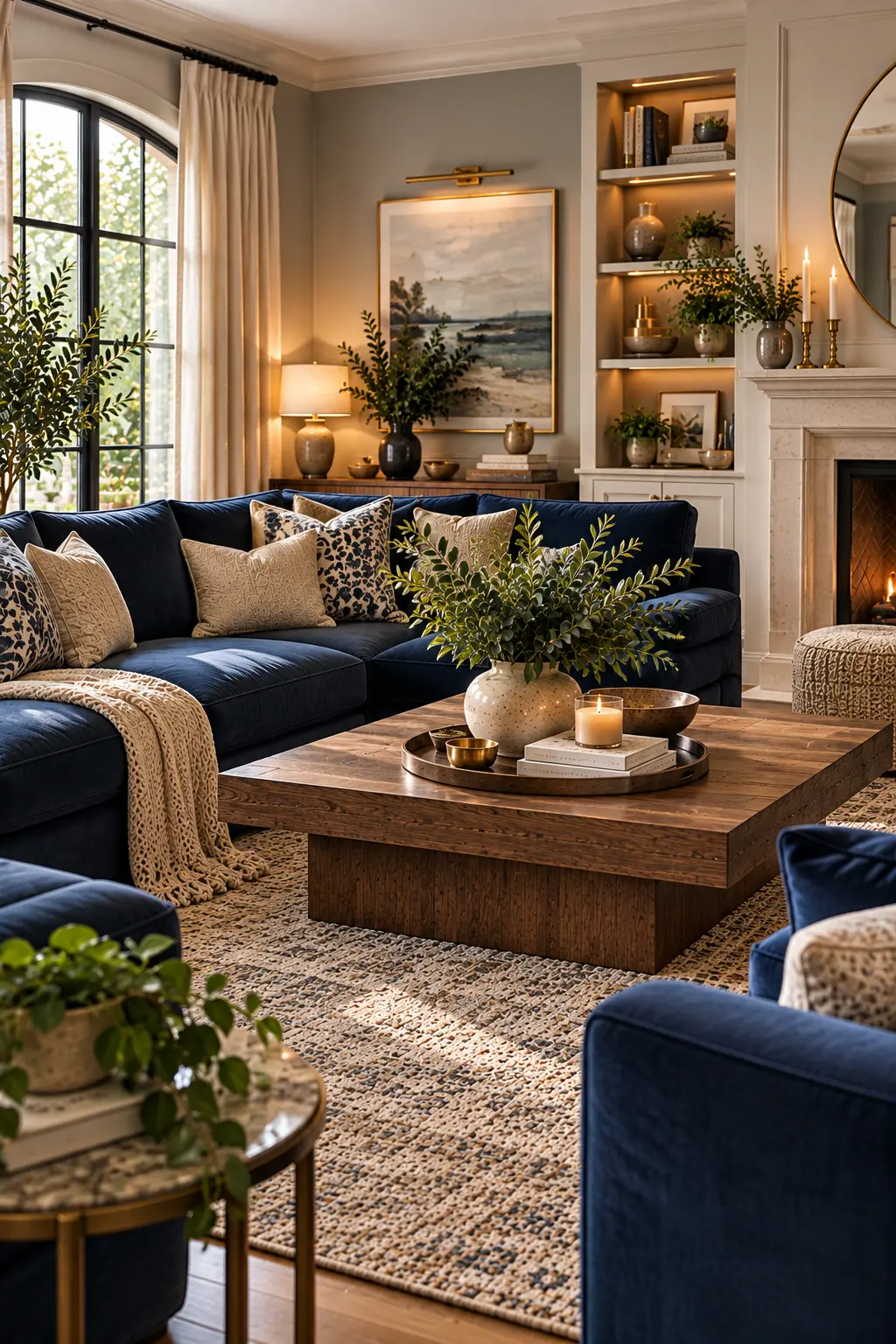
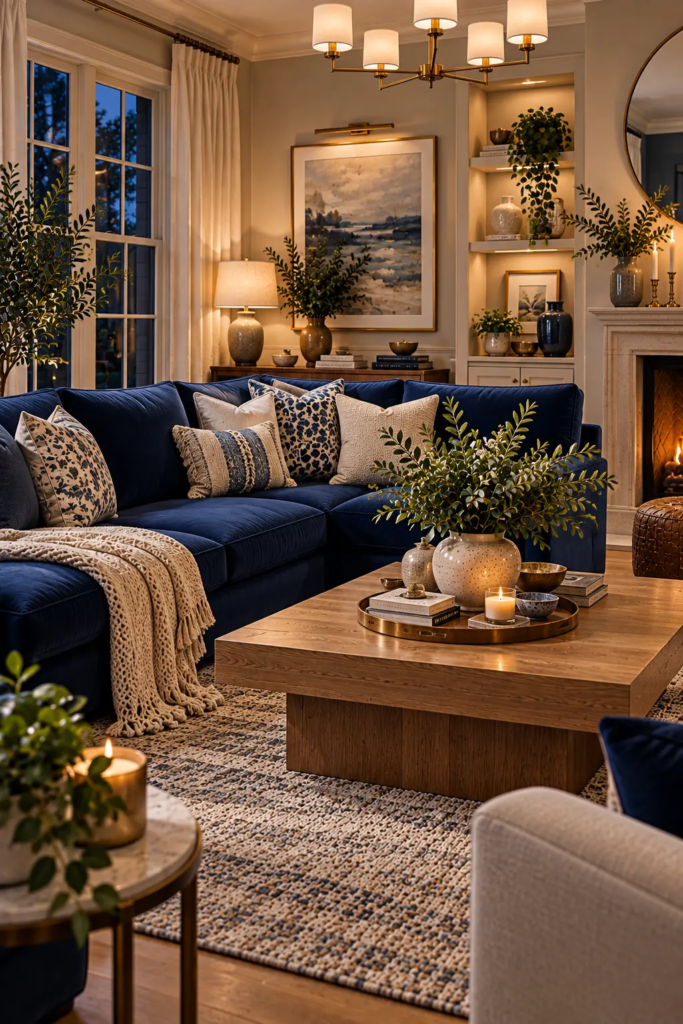
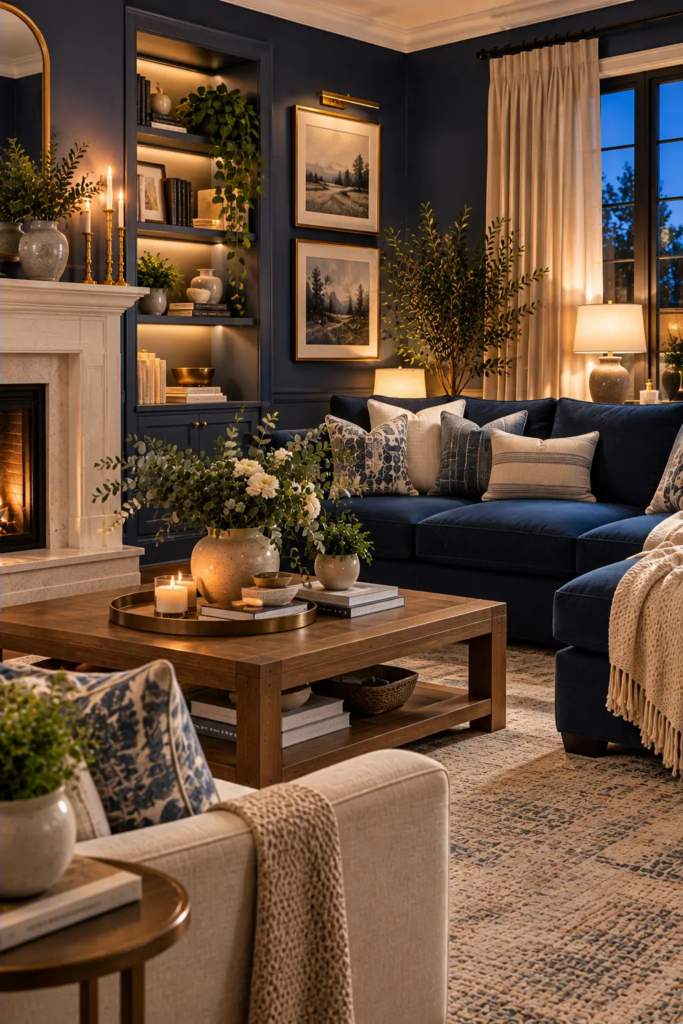
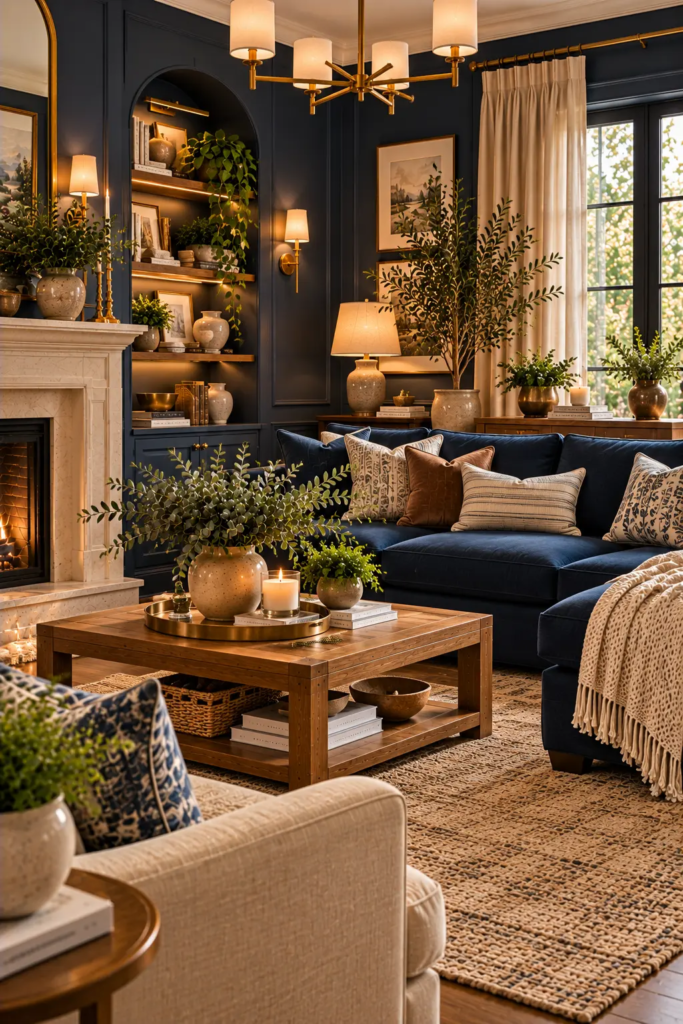
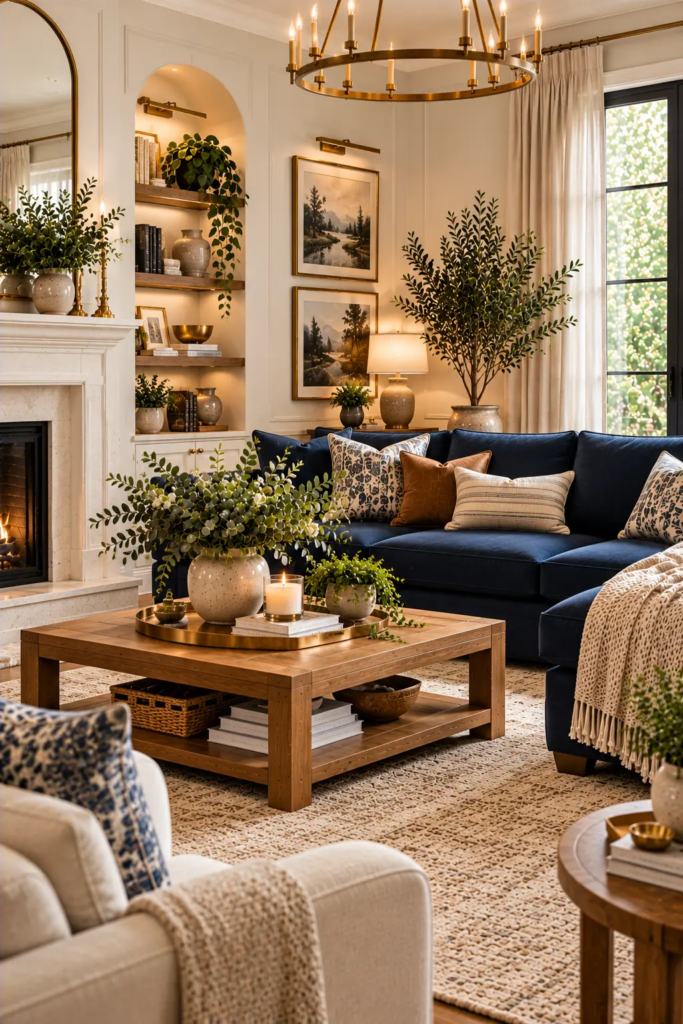
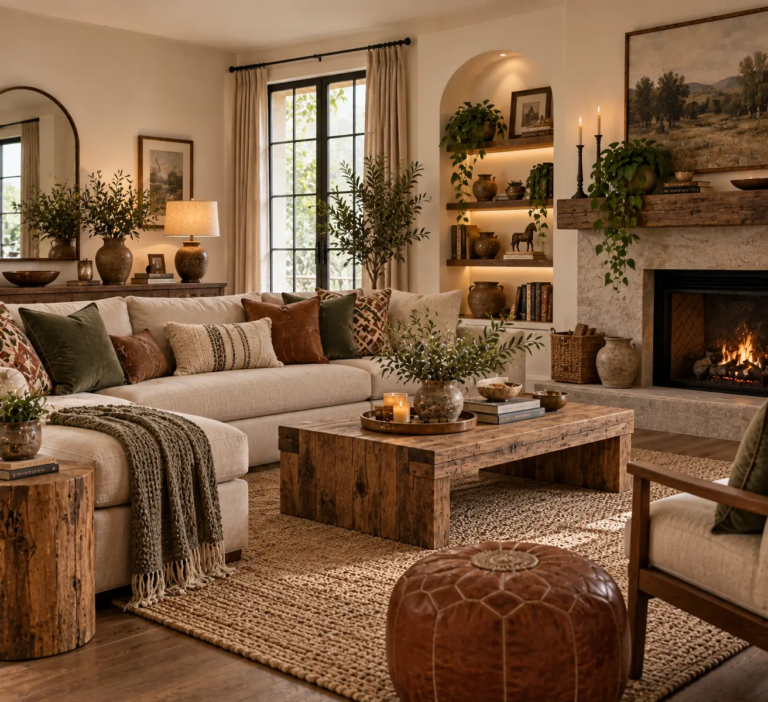
A navy sofa reads as confident and grounded in almost every photo you’ve pinned, and then arrives in your actual living room looking closer to black once the sun goes down. That’s the gap most navy sofa advice skips over: navy is a saturated, low-light color, and in a room that’s small or doesn’t get much daylight, it can absorb more than it adds.
The fix isn’t avoiding navy. It’s choosing the right depth of blue and giving it enough contrast, warmth, and light to stay a color instead of turning into a dark shape in the corner. These 6 navy sofa living room ideas are built around that problem specifically, so the sofa reads as rich and intentional rather than heavy.
Why Navy Behaves Differently Than Other Sofa Colors
Most neutral sofa colors, like beige or light gray, reflect a good amount of light back into a room. Navy does the opposite. Because it’s both dark and saturated, it absorbs light rather than bouncing it, which is fine in a bright, larger room but can make a small or low-light living room feel more closed in than it already does.
This isn’t a reason to skip navy. It’s a reason to treat it the way you’d treat a bold wall color: something that needs contrast and light planned around it, not just dropped into a room designed for a lighter sofa.
Choose a Navy That Still Reads as Blue at Night
Not all navy fabrics behave the same once the sun goes down. Some genuinely deep navy blues shift toward true black under warm bulb light or in a dim room, which can make the sofa look flat rather than rich. A navy with a bit more saturation, sometimes labeled “indigo” or “midnight blue” rather than “navy,” tends to hold onto its blue undertone better after dark.
If you’re choosing fabric in a showroom, that lighting rarely matches your living room. Bring a swatch home and look at it under your actual evening lighting before committing, especially if your room doesn’t get much natural light during the day.
Pro Tip: Photograph the fabric swatch on your phone in your living room after dark, with your usual lamps on, then check the photo the next morning in daylight. A navy that photographs as near-black at night is one you’ll be looking at as a dark shape most evenings, which matters more than how it reads under a showroom’s bright lighting.
Pair It With Warm Wood and Brass, Not Cool Metals
Navy sits at the cooler end of the color wheel, so pairing it with more cool tones, like chrome, gray-washed wood, or icy white accents, can tip a room toward feeling cold rather than rich. Warm wood tones and brass or warm gold hardware do the opposite: they pull the navy toward feeling deep and grounded instead of flat.
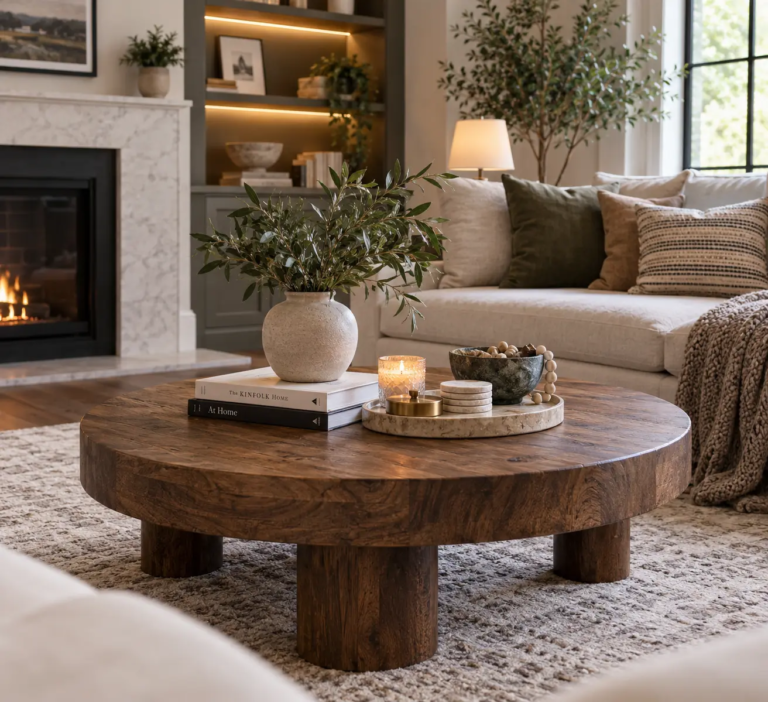
A walnut or oak coffee table next to a navy sofa reads noticeably richer than the same sofa next to a pale, cool-toned one, because the wood’s warm undertone contrasts with the blue rather than competing with it in the same cool register. If you’re deciding between navy and other saturated sofa colors for this same reason, these gray couch living room ideas and green sofa living room ideas go through similar warm-pairing logic for other dark, saturated fabrics.
Keep the Wall Color Light Enough to Create Contrast
Because a navy sofa is already the darkest, most saturated object in most rooms, dark or heavily saturated walls behind it tend to flatten the contrast that makes navy look intentional in the first place. A warm white, soft greige, or pale oat wall gives the sofa something to stand out against, rather than blending into a similarly deep backdrop.
This matters even more in a smaller room, where losing that contrast can make the whole space feel like one dark block rather than a room with a clear focal point. For help narrowing down the right shade for your light and layout, this guide to choosing a living room wall color walks through how undertone and exposure interact.
Pro Tip: If you want a bolder wall color rather than a neutral one, choose something on the warm side, like a soft terracotta or warm sage, rather than another cool tone like gray-blue or slate. Two cool, saturated colors in the same room tend to compete rather than complement each other, while a warm wall against a cool sofa creates the kind of contrast that reads as designed.
Break Up the Sofa’s Surface With Texture and Pattern
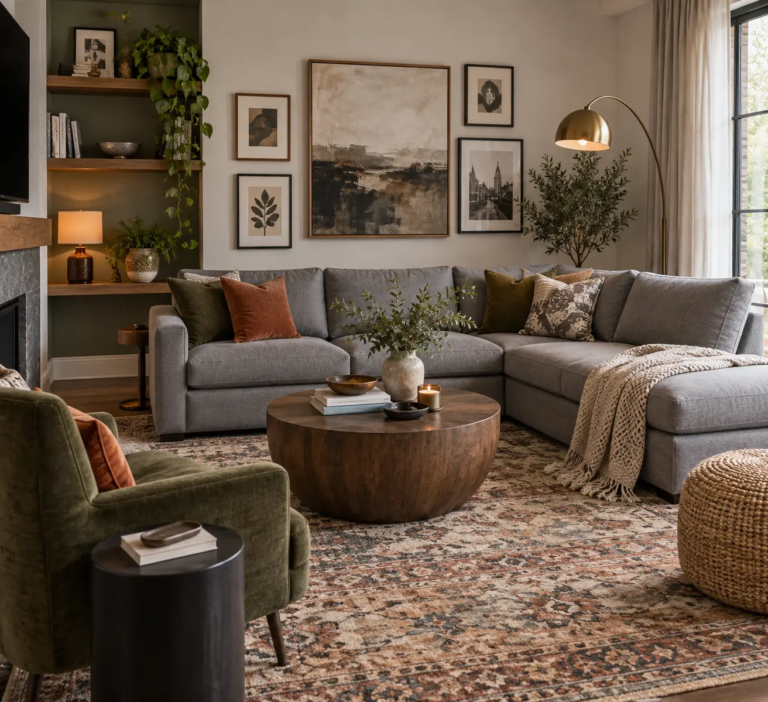
A large navy sofa with a smooth, uniform fabric can read as one heavy block of color, especially in a smaller room where it takes up a bigger share of the visual space. Breaking that surface up with pillows in a different texture or a subtle pattern, and a throw draped over one arm, keeps the eye moving across the sofa instead of landing on it as one flat shape.
Textures that catch light differently than a smooth navy upholstery, like a chunky knit throw or a woven rattan accent nearby, add the visual depth that a single uniform surface can’t provide on its own. A patterned or textured rug underneath does similar work at the floor level, keeping the room from reading as too many solid, heavy shapes stacked together.
https://pixabay.com/images
Layer Lighting So the Sofa Doesn’t Disappear at Night
Because navy absorbs light rather than reflecting it, a single overhead fixture often isn’t enough to keep the sofa looking like a color rather than a dark silhouette once evening comes. Adding at least one warm-toned lamp near the seating area, positioned so light falls across the sofa’s arm or back rather than only onto the floor in front of it, makes a real difference in how the fabric reads after dark.
A floor lamp positioned behind or beside the sofa, angled so it catches the fabric’s texture, does more for a navy sofa at night than the same lamp placed across the room ever will. If your living room shares space with a dining or kitchen area and light needs to travel further, that same layering principle matters even more, since a navy sofa can end up in the dimmest part of an open-plan room without a dedicated light source nearby.
Common Mistakes to Avoid
Choosing fabric only under bright showroom lighting. A navy that looks rich there can shift toward black under your actual evening light.
Pairing navy with other cool, dark tones. Two saturated cool colors in one room tend to flatten each other instead of adding contrast.
Skipping wall contrast. Dark walls behind a navy sofa remove the visual separation that makes the color read as intentional.
Relying on one overhead light. Navy needs a warm, layered light source nearby to avoid disappearing into shadow at night.
Leaving the sofa as one uniform, unbroken surface. Texture and pattern keep a large navy piece from reading as one heavy block.
Budget-Friendly Ways to Adapt These Ideas
Low budget: Add a warm-toned lamp near the seating area, swap in a couple of textured pillow covers, and check your current wall color against the sofa in evening light before deciding whether it needs to change.
Mid budget: Repaint the wall behind the sofa in a warm neutral, add a textured or patterned rug, and bring in one warm-wood accent piece like a side table.
Higher budget: If you’re still choosing a sofa, work with what you already own where possible. This guide to working with the couch you actually have is a useful starting point before investing in a full navy replacement, especially in a small room where sizing matters as much as color. For sizing guidance specifically, these sofas for a small living room cover scale alongside color.
FAQ
Does a navy sofa make a small room feel smaller? It can, mainly because navy absorbs light rather than reflecting it, which is more noticeable in a room with limited natural light. Keeping the walls light and adding warm, layered lighting nearby helps counter that effect without giving up the color.
What color walls go best with a navy sofa? Warm neutrals like soft white, greige, or oat create the clearest contrast, since navy is already dark and cool. A bold warm color, like terracotta, can also work well, but two cool, saturated tones together tend to flatten each other.
Is navy a good sofa color for a room that doesn’t get much sun? It can be, as long as you plan for artificial light to do more work. A room with limited daylight benefits from at least one warm-toned lamp positioned near the sofa, since overhead light alone often isn’t enough to keep navy from reading as near-black in the evening.
What metal finishes pair best with a navy sofa? Warm finishes like brass, bronze, and warm gold tend to complement navy better than cool finishes like chrome or brushed nickel, since they add warmth to balance the sofa’s cool, saturated tone.
Should a navy sofa be paired with patterned or solid pillows? A mix works best. A few solid pillows in a warm, contrasting tone alongside one or two with pattern or texture keep the sofa from reading as one flat, heavy surface, without making the whole seating area look busy.
The Takeaway
A navy sofa isn’t a risky choice, but it is a color that needs planning the way a bold wall color would. Choose a blue that holds its tone at night, pair it with warm wood and metal, keep the walls light enough for contrast, and layer in warm lighting nearby, and these 6 navy sofa living room ideas keep the color feeling rich and intentional instead of heavy, even in a smaller or dimmer room.
Every small bedroom storage roundup eventually recommends “install built-in shelving” or “add a custom closet system,” as if that’s a weekend project. If you’re renting, working with a tight budget, or just don’t want to drill a dozen new holes into a wall you’ll have to patch later, that advice is close to useless. The…
A gray couch is the safest sofa purchase most people make, and that’s exactly why so many gray couch living rooms end up looking the same: neutral walls, a gray sofa, a gray rug, and a room that photographs fine but feels a little flat to actually sit in. Gray was supposed to be the…
Most living room table decor advice is written for a table nobody actually uses — a perfectly styled surface of stacked books, a single candle, and a small vase, photographed before anyone sets down a coffee mug or puts their feet up. The second real life hits that table, the styling falls apart: rings on…
Most rustic living room inspiration comes from homes that already have the bones for it — exposed timber beams, a stone fireplace, wide-plank original flooring. That’s not most homes. Most living rooms have flat drywall, builder-grade window trim, and wall-to-wall carpet or laminate flooring, and none of that disappears just because you bring in a…
The cottagecore trend has captured the hearts of homeowners and interior design enthusiasts alike. Inspired by rural living, vintage charm, and a slower pace of life, this aesthetic embraces comfort, simplicity, and a deep connection to nature. Among the many spaces that can benefit from this design style, the dining room stands out as the…
An Arabic style living room gets flattened into a caricature more often than most design styles — a few tasseled cushions, a hookah on a side table, and a rug with the “right” pattern, dropped into an otherwise generic room. That’s a theme, not a style, and it reads as costume the moment anyone spends…