Boho Chic Living Room: How to Keep It Curated, Not Cluttered
“Boho” and “chic” don’t naturally sit together. Boho, on its own, leans toward more: more pattern, more texture, more vintage finds stacked into every corner. Chic leans the other way, toward restraint and a clear point of view. A boho chic living room has to hold both at once, and that tension is exactly where most attempts go wrong, tipping into a look that reads more like a thrift store than a considered room.
The difference isn’t which pieces you use. It’s how much editing happens after you’ve gathered them. These ideas are built around that editing process, so your boho chic living room keeps the warmth and personality the style is known for, without it sliding into visual noise.
Boho Chic Starts With a Controlled Palette, Not a Free-for-All
Classic boho decor often reads as maximalist because the color palette has no real boundary, jewel tones next to earth tones next to whatever pattern showed up at a flea market. A boho chic room needs a tighter starting point: pick two or three base tones, usually warm neutrals like terracotta, cream, and rust, and let everything else, pattern included, stay within that range.
This doesn’t mean every piece matches exactly. It means a rug in a muted rust, a throw in cream, and a pillow in a warmer terracotta all read as part of one palette, even though none of them are identical. Without that shared base, a room full of individually great pieces can still look chaotic together.

Layer Texture With a Plan, Not by Accident
Texture is where boho earns its warmth, but a room with ten different textures competing for attention gets busy fast. A more curated approach picks two or three lead textures, like a woven jute rug, a chunky knit throw, and a rattan chair, and repeats variations of them rather than introducing a new material with every new piece.
Think in terms of a dominant texture per surface: the floor carries the woven rug, the seating carries the knit, and the accent furniture carries the rattan or cane. When each surface has one clear textural role, the layers read as intentional instead of accumulated.
Pro Tip: Before adding a new textured piece, hold it against what’s already in the room. If it doesn’t echo a material that’s already present somewhere else, like wood, woven fiber, or a specific weave, it’s likely to read as a random addition rather than part of the layered look, even if the piece itself is beautiful on its own.
Mix Clean-Lined Furniture With Organic Pieces
A room built entirely from curvy, ornate, or heavily carved furniture can tip fast into feeling busy, no matter how good the individual pieces are. The “chic” half of boho chic often comes from pairing a few organic, textural pieces, like a rattan chair or a carved wood stool, with at least one or two pieces that have cleaner, simpler lines, such as a low platform sofa or a simple black metal frame.
That contrast gives the eye a resting point. Without it, every piece is competing for the same kind of attention, and the room loses the sense of hierarchy that makes a space feel designed rather than assembled.

Edit for Negative Space, Not Just What to Add
Most boho advice focuses entirely on what to bring into the room. The more important skill for a chic result is knowing what to leave out, and how much bare wall, floor, or surface to leave visible. A shelf styled with three carefully chosen objects and some open space around them reads as curated. The same shelf packed edge to edge with a dozen small trinkets reads as cluttered, regardless of how nice each individual piece is.
As a working habit, once you’ve styled a surface, remove about one in every four or five objects. Rooms almost always benefit from slightly less than what feels complete in the moment, and that extra breathing room is often the single biggest difference between “boho” and “boho chic.” For a broader look at balancing pattern and open space in this style specifically, these boho living room decor ideas that feel curated, not cluttered go deeper into that editing process.
Pro Tip: Photograph the room after you think it’s finished, then look at the photo rather than the room itself. Clutter and visual busyness are often much easier to spot in a still image than while standing in the space, since a photo removes the context of movement and lighting shifts that can make a cluttered room feel less overwhelming in person.
Choose One or Two Statement Vintage Pieces, Not a Dozen Small Ones
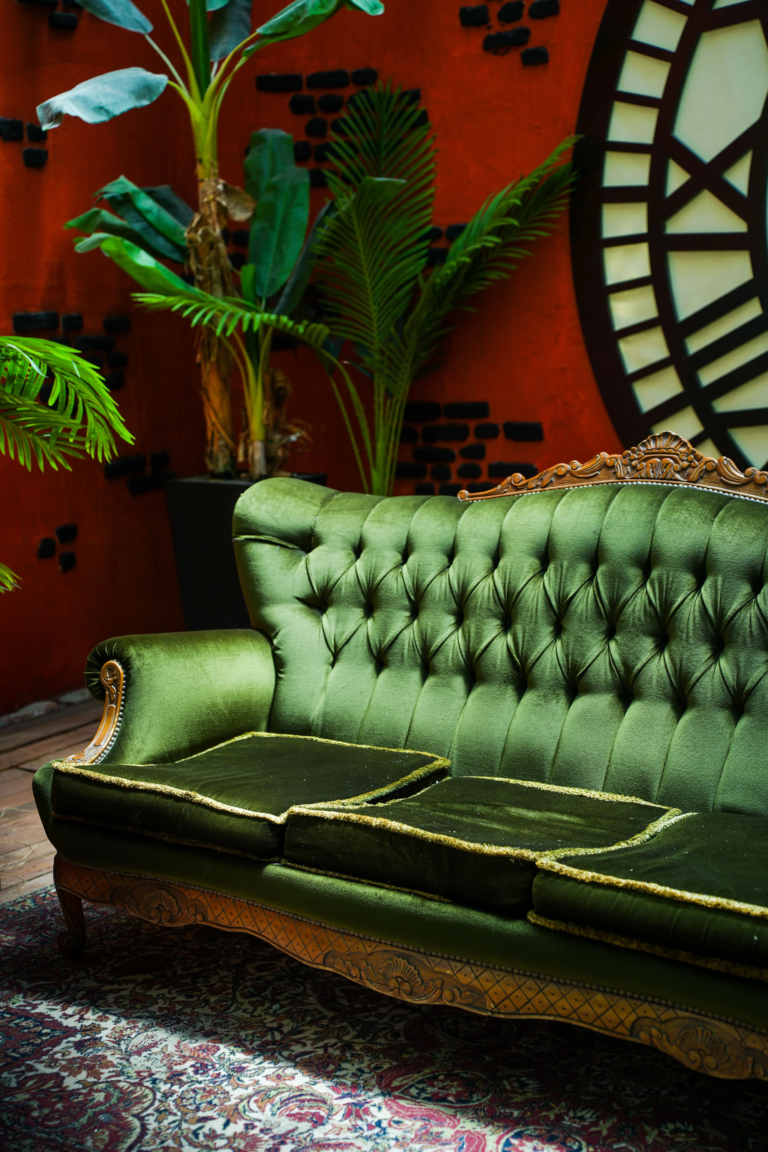
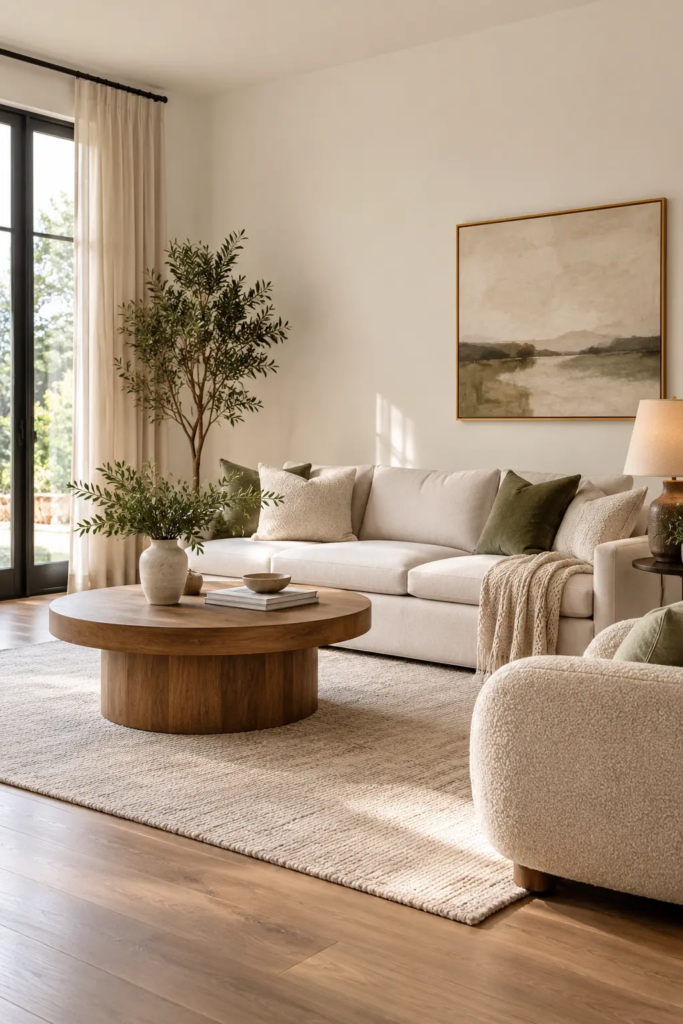
A room filled with many small vintage finds, one interesting lamp, one carved box, one odd little stool, can end up feeling scattered even though each piece has real character. A more chic approach concentrates that vintage character into one or two larger, more significant pieces, like a substantial vintage rug or a single striking piece of case furniture, and keeps the smaller accessories more restrained around it.
This also tends to be more budget-friendly over time, since one well-chosen larger piece often costs less in total than accumulating many smaller ones, and it gives the room a clear focal point instead of scattered visual interest.
Ground the Palette With Natural Materials and Warm Light
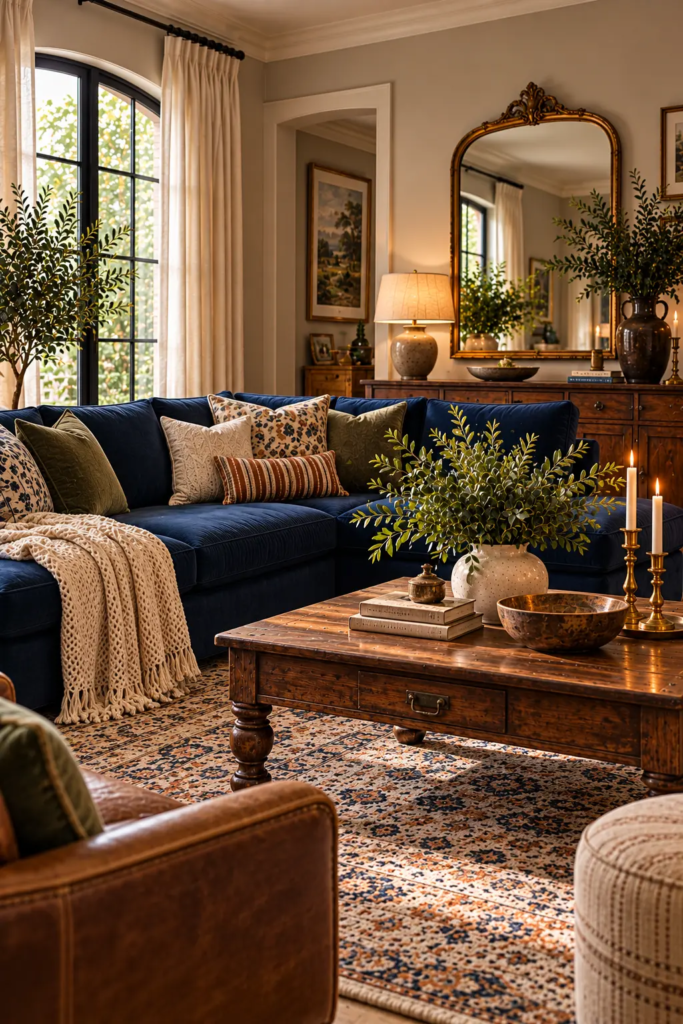
Boho chic leans heavily on natural materials, unfinished or lightly finished wood, woven fiber, linen, and stone, which do more to establish the look than any single decorative object. If your existing furniture is mostly synthetic or heavily lacquered, even one or two natural-material swaps, like a wood coffee table or a jute rug, shift the room’s feel significantly.
Lighting matters just as much. Warm-toned bulbs, layered lamps instead of one overhead fixture, and a few candles do more for the boho chic mood than almost any single piece of decor, since warm light is what makes all that texture and earthy color actually glow in the evening rather than looking flat. If your room leans toward a heavier, more rustic material palette, this guide to rustic living room decor for a home without exposed beams covers similar natural-material logic from a different style angle.
Common Mistakes to Avoid
- Using too many unrelated patterns at once. Without a shared color thread, mixed patterns read as chaotic rather than layered.
- Styling every surface to full capacity. Leaving some visible empty space is what separates curated from cluttered.
- Collecting many small vintage pieces instead of one or two larger ones. Scattered small finds rarely add up to a cohesive focal point.
- Skipping clean-lined furniture entirely. An all-organic, all-textured room loses the visual hierarchy that makes it feel designed.
- Relying on one overhead light. Boho chic depends heavily on warm, layered lighting to make its materials and colors read as rich rather than flat.
Budget-Friendly Ways to Adapt These Ideas
Low budget: Edit an existing shelf or console down by removing about a quarter of what’s currently on it, swap in a warm-toned bulb, and add one textured throw in your chosen palette.
Mid budget: Add a natural-fiber rug sized to anchor your seating area, and source one larger secondhand piece, like a vintage cabinet or substantial mirror, instead of several smaller decorative objects.
Higher budget: Invest in one or two well-made, clean-lined furniture pieces to balance your more textural finds, and consider natural wall treatments like a wood accent panel or a warm plaster finish. If you’re also weighing wall color as part of that budget, this guide to choosing a living room wall color is worth reading before committing to a shade.
FAQ
What’s the difference between boho and boho chic? Boho on its own tends to layer pattern, texture, and vintage finds without much restraint, while boho chic applies the same warm, layered materials with a tighter color palette and more intentional editing. The materials are similar; the discipline around how much to include is what differs.
How do I keep a boho living room from looking cluttered? Limit your palette to two or three base tones, repeat a small set of lead textures rather than introducing new ones constantly, and deliberately leave some surfaces and wall space empty. Removing a portion of what you’ve styled almost always improves the result.
Does boho chic work with modern furniture? Yes, and it often looks more elevated because of it. Pairing a few clean-lined modern pieces, like a simple sofa or a black metal frame, with organic, textural boho elements creates the contrast that makes the room feel curated rather than purely eclectic.
What colors work best in a boho chic living room? Warm neutrals like terracotta, cream, rust, and warm brown form the most flexible base palette. A single deeper accent color, like a muted teal or forest green, can work well if it’s repeated in just two or three spots rather than spread across many small pieces.
Do I need a lot of plants for a boho chic living room? No, one or two well-placed, healthy plants usually read as more intentional than many scattered smaller ones. A single larger plant in a natural-material pot often does more for the look than a windowsill crowded with several small ones.
The Takeaway
A boho chic living room isn’t about collecting more pieces, it’s about editing the ones you have down to a controlled palette, a few repeated textures, and enough negative space to let it all breathe. Ground it with natural materials and warm light, and choose one or two vintage pieces with real presence instead of many small ones, and the result reads as considered rather than accumulated, which is the whole difference between boho and boho chic.