7 Small Bedroom Ideas for Storage That Don’t Waste Space
Every small bedroom storage roundup eventually recommends “install built-in shelving” or “add a custom closet system,” as if that’s a weekend project. If you’re renting, working with a tight budget, or just don’t want to drill a dozen new holes into a wall you’ll have to patch later, that advice is close to useless.
The seven ideas below assume the opposite: no permanent changes, no contractor, and a bedroom that’s already doing its best with limited square footage. Each one focuses on space you’re probably not using yet, not space you’d have to create.
Start With the Space You’re Not Using Yet
Before buying anything, walk your room and note three zones most people ignore: under the bed, the wall above furniture, and the back of the closet door. In a small bedroom, floor space is the scarcest resource, so the goal is to push storage up, under, or onto a surface that’s currently doing nothing — not to squeeze in another freestanding piece that eats the floor you’re trying to save.
Pro Tip: Measure your bed’s actual clearance before shopping for under-bed bins — many bed frames sit lower than they look in photos, and a bin that’s a half-inch too tall simply won’t slide in, no matter how good the price was.
7 Storage and Space-Saving Ideas for a Small Bedroom
1. Under-Bed Storage Bins or a Storage Bed Frame
Rolling bins with lids handle off-season clothing and extra linens without a dedicated dresser drawer. If you’re due for a new bed anyway, a frame with built-in drawers underneath does the same job without anything visible on the floor at all.
2. Floating Shelves Above the Headboard
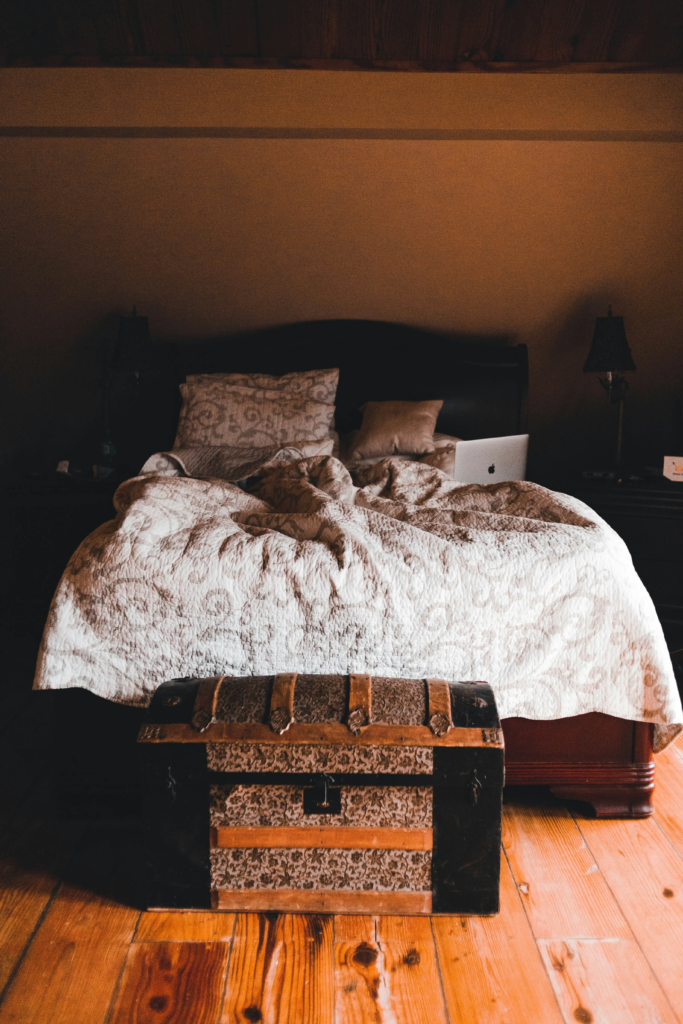
Wall space above a bed is almost always empty. A pair of narrow floating shelves there holds books, a small lamp, or display items without needing any floor footprint — and unlike a nightstand, it doesn’t narrow your walkway around the bed.
3. Multi-Functional Furniture
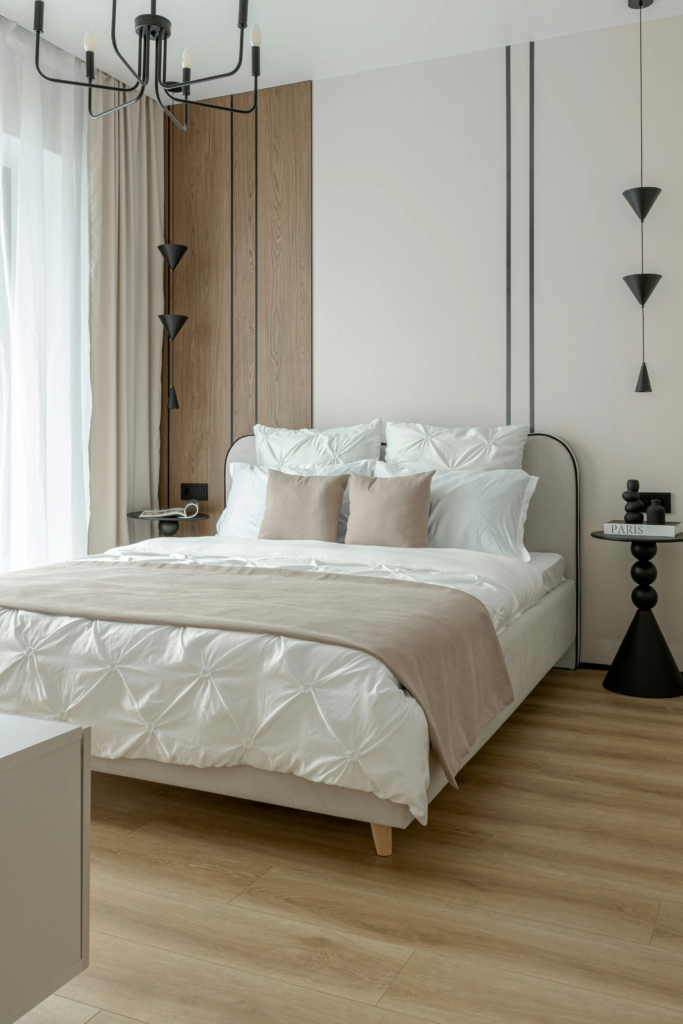
A vanity with built-in drawers can double as a desk with storage baked in, and a storage ottoman at the foot of the bed replaces both a bench and a blanket chest in one piece. If you’re drawn to a softer, layered look, a boho bedroom aesthetic pairs especially well with woven storage baskets that double as both organization and texture — they hide clutter without looking like plain plastic bins.
Pro Tip: When shopping for multi-functional furniture, prioritize pieces with drawers over open shelving in a small bedroom — open shelves need to look tidy at all times, while drawers hide the mess on days you don’t have time to style them.
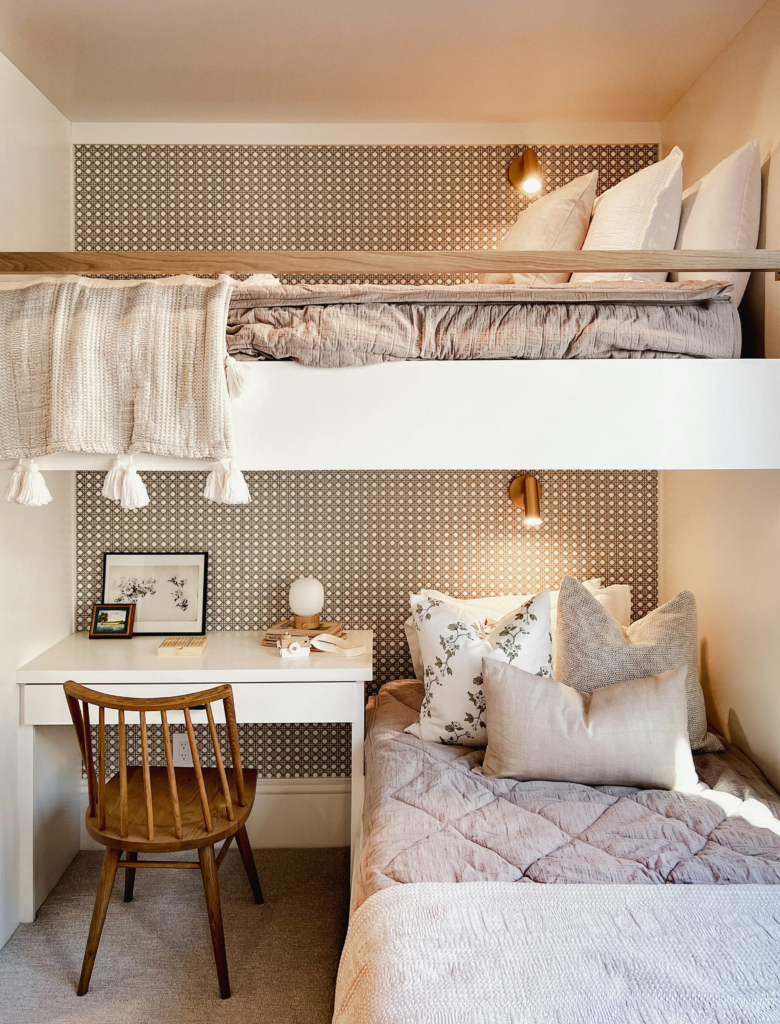
Photo by mk. s
4. Closet System Inserts
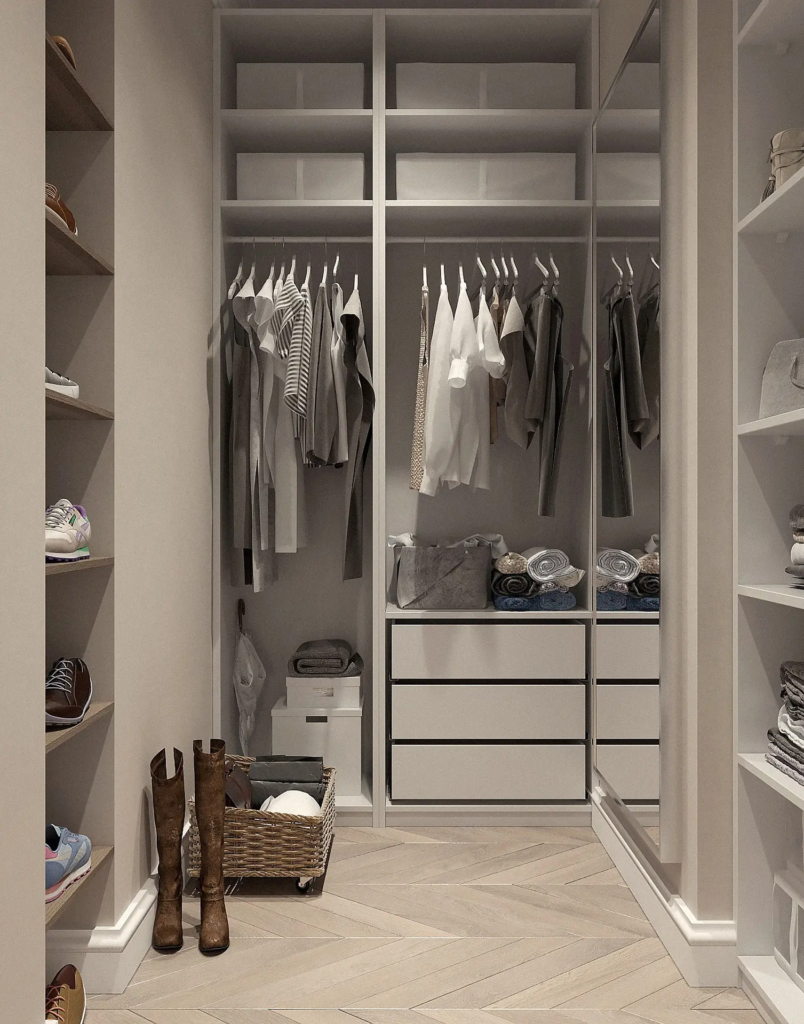
Most closets are only using their vertical space at one height. Tension rods, stackable shoe organizers, and hanging shelf dividers roughly double usable storage in the same footprint, and every one of these installs without tools or damage to the closet itself — which matters if you’re in a rental.
5. Corner Shelving or a Corner Wardrobe
Corners are the most commonly wasted space in a small bedroom, since most furniture is built for flat walls. A corner shelf unit or a slim corner wardrobe uses a spot that would otherwise sit empty, without extending into the room the way a flat-wall dresser would.
Pro Tip: Before buying a corner unit, check that it doesn’t block a window, outlet, or radiator — corners near these fixtures often look “unused” but aren’t actually free to fill.
6. Over-the-Door Organizers
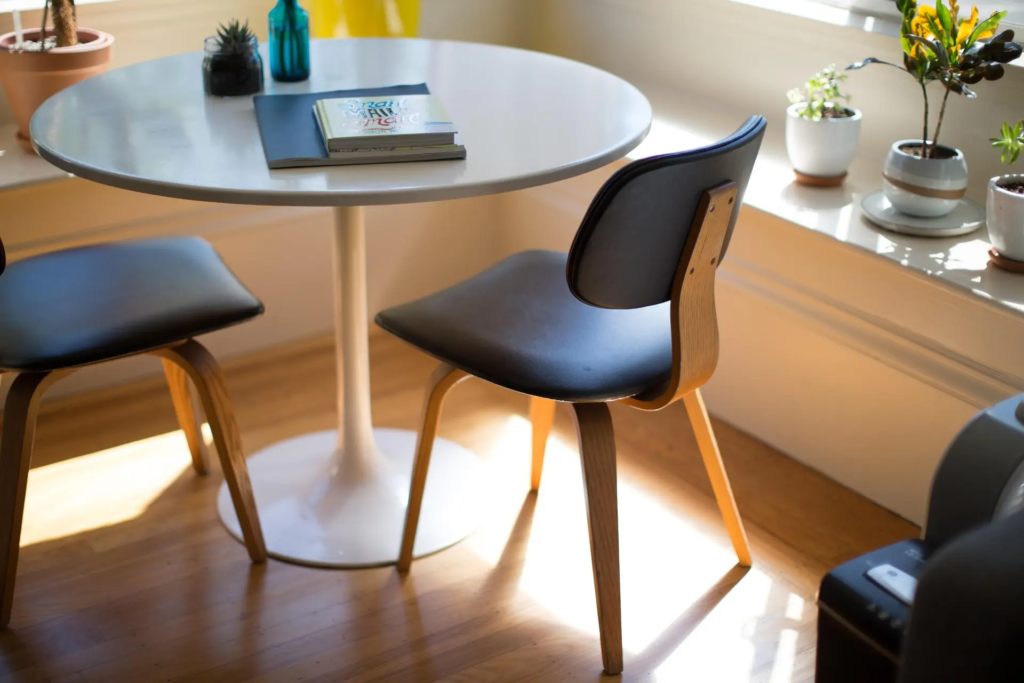
The back of a bedroom or closet door holds an organizer with a dozen pockets for accessories, shoes, or toiletries — storage that would otherwise require an entire piece of furniture. It’s also one of the few storage upgrades that requires zero tools and comes off cleanly if you move.
7. Rethink Furniture Placement Before Adding More Furniture
Sometimes the fix isn’t new storage — it’s freeing up the floor space you already have. Pushing a dresser into a closet (if there’s room), swapping two nightstands for one shared shelf between the bed and wall, or removing a piece of furniture that’s more decorative than functional can open up more usable square footage than any single storage purchase.
[IMAGE: A small bedroom with a dresser relocated inside an open closet, freeing up a corner of the main room]
Common Mistakes to Avoid
Buying storage before measuring the room in 3D, not just floor space. A tall dresser might fit the footprint but block a window or clash with a sloped ceiling. Check height and depth clearance, not just the square footage it sits on.
Choosing open shelving as the primary storage in a very small room. Open shelves look great styled, but in a small bedroom they need to stay visually calm to avoid making the room feel cluttered — which means less actual capacity than a closed drawer of the same size.
Forgetting that under-bed storage needs airflow. Bins packed too tightly against each other under a bed frame with low clearance can trap moisture, especially in humid climates. Leave a small gap between bins and the wall for air to circulate.
Pro Tip: If your closet door swings inward, an over-the-door organizer can block the door from opening fully — measure the swing radius first, or look for a slimmer profile organizer designed for tight door clearance.
Budget-Friendly Adaptations
Under-bed bins and over-the-door organizers are among the least expensive storage upgrades available, and both require zero commitment if you rent or plan to move. For closet inserts, tension-rod shelving systems cost a fraction of a built-in closet system and remove cleanly at move-out, making them one of the best returns on investment for a small bedroom on a limited budget.
If you’re furnishing from scratch, prioritize one multi-functional piece — a storage bed or a drawer-based vanity — over several small organizational purchases. One well-chosen piece typically holds more than the sum of several small bins, and it’s one less thing cluttering the floor.
[IMAGE: A budget storage bed frame with visible drawer fronts in a compact, tidy small bedroom]
Frequently Asked Questions
What’s the best storage solution for a small bedroom with no closet? A freestanding wardrobe with drawers built into the base does the job of both a closet and a dresser in one footprint, which is usually more space-efficient than buying the two separately.
How do I add storage to a small bedroom without drilling into the walls? Over-the-door organizers, tension-rod closet systems, and freestanding furniture like a storage ottoman or under-bed bins all add real capacity without any wall damage, which makes them ideal for rentals.
Is under-bed storage actually practical, or does it just look good in photos? It’s genuinely practical as long as you measure your bed’s clearance first and choose bins low enough to slide freely — the most common complaint is buying bins that are a fraction of an inch too tall for the frame.
Should I choose a storage bed or add separate storage furniture to a small bedroom? A storage bed makes sense if you’re furnishing from scratch and want to avoid extra floor-standing pieces. If you already own a bed you like, separate pieces like under-bed bins or a corner wardrobe are usually the more practical add-on.
None of these seven ideas require a renovation, a landlord’s permission, or a big budget — they just ask you to look at the space in your bedroom you’re already not using. Start with the one closest to your actual constraint, whether that’s a bare closet, an empty wall above the headboard, or a bed that’s due for an upgrade anyway, and the rest of the room gets easier to organize from there.