
7 Dining Room Carpet Ideas That Hold Up to Real Meals
7 Dining Room Carpet Ideas That Hold Up to Real Meals
A dining room carpet gets a harder daily test than almost any other rug in the house. It sits under chairs that scrape in and out several times a meal, it catches crumbs and the occasional dropped glass of wine, and it needs to survive that without looking worn out within a year. A rug that’s perfectly fine under a coffee table can fall apart fast under a dining table, and most rug-buying advice doesn’t account for the difference.
The good news is the right dining room carpet choice is fairly predictable once you know what the room actually puts it through. Here are seven ways to choose and place one that looks good and holds up, from sizing to material to the specific problems chair legs create that other rooms don’t have.
Size It to the Chairs Pulled Out, Not Just the Table

The most common dining room rug mistake is sizing it to the table alone, which leaves chair legs half on and half off the rug the moment someone pulls out to sit down. The rug needs to extend far enough that all four legs of every chair stay on it even when pulled back roughly 24 to 30 inches from the table, how far someone typically slides a chair to sit or stand.
In practice, that usually means adding at least 24 inches of rug beyond the table’s edge on all sides. For a standard 36-by-60-inch table seating six, that puts you in the 8-by-10-foot rug range rather than the smaller 6-by-9 that might look proportionate to the table on its own. If you’re working with limited square footage, it’s worth checking a few small dining room ideas for how to balance rug size against the rest of the room’s layout.
Pro Tip: Measure with the chairs already pushed in, then physically pull one chair all the way out and check where the back legs land. It’s a more reliable test than measuring with a tape measure alone, since it accounts for how people actually move the chair rather than an idealized straight pull-back.

- The Most Stable Wide Arm Table: With longer legs, friction-generating rubber grips, and wide-profile hinge, The Shamrock…
- For All Sizes Couches: The first thing you notice about this foldable table, is the heft of the hinge and clamp of the s…
- Gripping, Not Slipping: Our friction-generating rubber grips do exactly that! They stop your tray table from rolling aro…
$32.99
Choose a Low-Pile or Flatweave Construction
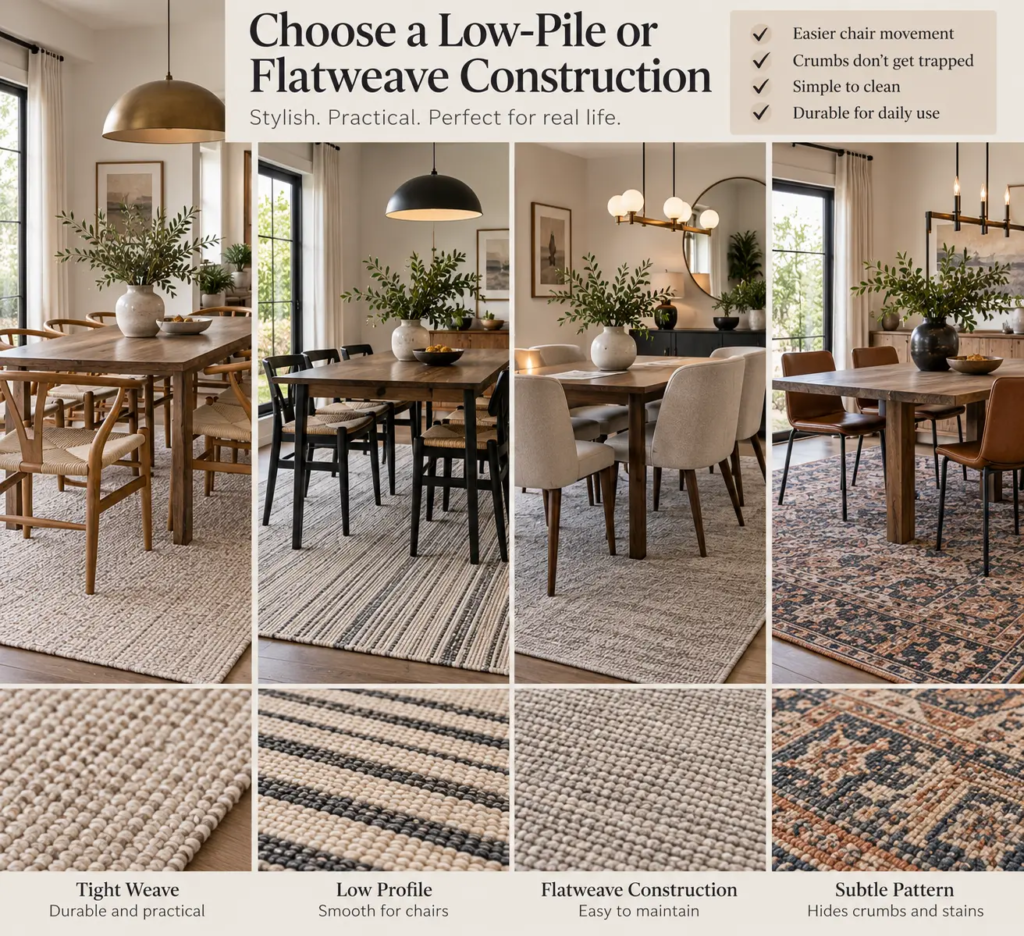
A high-pile, plush rug feels great underfoot in a living room but creates real problems under a dining table: chair legs sink into the pile and drag when pulled out, which is harder on both the chairs and the rug’s fibers over time. A low-pile or flatweave construction lets chairs glide rather than catch, and it’s considerably easier to vacuum crumbs out of than a deep pile that traps them.
Flatwoven wool, cotton, or jute rugs all work well here, and a pile height under about half an inch is a reasonable ceiling to aim for if you’re shopping by spec rather than feel. If you’re set on a plusher rug for the room’s overall look, felt or rubber caps on chair legs reduce some of the snagging, though they won’t fully solve the sinking issue a deep pile creates.

- 100% Cotton
- At 2′ 2 x 3′, this area rug is the perfect size for living rooms, large dining rooms, open floorplans, or anywhere you w…
- Gray is neutral, soothing and reliable. This gray rugs is especially suited in modern styles and serving as a backdrop t…
Pick a Fiber That Can Handle Real Meals

Wool for Durability and Natural Stain Resistance
Wool holds up better than most natural fibers under regular foot traffic and has some natural stain resistance built in, since it repels liquid briefly before soaking in — enough time to blot up most spills before they set. It’s a solid middle ground between durability and comfort, though it costs more upfront than synthetic options.
Synthetic Performance Fibers for Maximum Stain Resistance
Polypropylene and other synthetic performance fibers are the most forgiving option for a household that entertains often or has young kids at the table, since many are engineered to resist staining and can handle a damp mop or even a hose-down for washable versions. They won’t have wool’s natural texture, but for a genuinely hard-use dining room, the trade-off is often worth it.
Jute and Sisal for Texture, With a Caveat
Jute and sisal add natural texture and warmth, but they absorb liquid readily and stain more easily than wool or synthetics, making them a riskier choice directly under a dining table. If you love the look, jute works better in a lighter-use dining room, or layered with a smaller, more stain-resistant rug in the direct spill zone under the table.
Pro Tip: If you’re drawn to jute for its texture but worried about stains, look for a jute-synthetic blend rather than 100 percent natural jute. The blend keeps most of the visual texture while adding enough stain resistance to make it more practical directly under a table.
Match the Rug Shape to the Table Shape

A round table generally looks more proportionate on a round rug, and a rectangular or oval table looks more balanced on a rectangular or oval rug, since a mismatched shape leaves awkward triangular gaps of exposed floor at the corners or sides. It’s a small detail, but one of the faster ways to make an otherwise well-chosen rug look slightly off.
The exception is a square table in a smaller room, where a round rug can work well, since it softens the room’s overall geometry rather than repeating the same hard angles as the table above it.

- Tides Series – Effortless style that flows with your life.This modern machine-washable non-slip rug features reinforced …
- Soft Modern Area Rug: this area rug with a unique silk-like luster and a dense texture is made of low-pile soft material…
- Modern Abstract Rug Print Pattern Rug: the modern abstract aesthetic design is digitally printed, and the details can’t …
Choose a Pattern or Color That Hides Crumbs and Spills
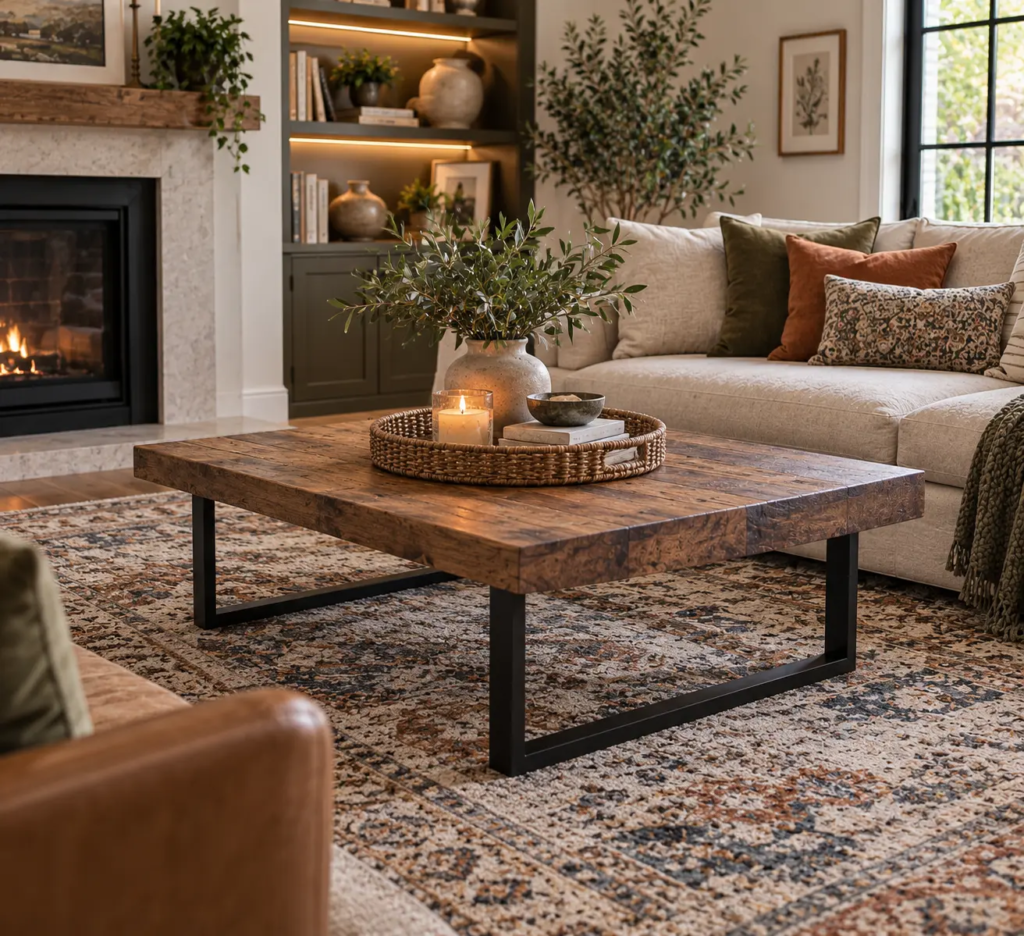
A solid, light-colored rug shows every crumb and water spot immediately after a meal, meaning it needs more frequent cleaning to look presentable than a patterned or mid-tone rug would. A busier pattern, a textured weave, or a mid-tone color does real practical work by visually breaking up small spills and debris between vacuuming sessions, not just adding style.
This doesn’t mean avoiding light rugs entirely — it means being realistic about the maintenance trade-off if you choose one for a dining room used daily, versus a formal dining room that mostly sees holidays and special occasions. A lighter, more solid rug still fits well into a minimalist dining room, as long as the cleaning routine matches how often the room actually gets used.
Pro Tip: A rug in a warm mid-tone with some tonal variation in the weave — rather than one flat, uniform color — hides everyday wear better over the first year than either a very light or very dark solid color, both of which show dust, crumbs, or bleaching from sun exposure more obviously.

- Diverse Choices: These classic Slubby Textured Design tablecloths are available in multiple colors and sizes of rectangu…
- Premium Quality: This durable tablecloth is made of high-quality polyester jacquard fabric to ensure the protection of y…
- Versatile Occasions: This classic Slubby textured pattern tablecloth is designed for a variety of happy occasions — suit…
$26.99
Placement in Open-Concept or Multi-Zone Spaces
In an open-concept layout where the dining area isn’t defined by its own walls, the rug does more work than just protecting the floor — it visually separates the dining zone from the kitchen or living area next to it. Sizing it generously enough to hold the full table-and-chairs footprint, rather than a smaller rug that looks like it’s floating in a larger open space, helps the dining area read as its own zone rather than an afterthought.
If the dining area sits close to a kitchen with hard flooring, a slightly darker or more textured rug at the transition point tends to hide the wear pattern from foot traffic better than a pale, uniform rug would. This kind of zoning comes up constantly in open kitchen and dining room layouts, where the rug is often the only thing signaling where one space ends and the other begins.
Common Mistakes to Avoid With a Dining Room Carpet
Sizing the rug to the table instead of the chairs pulled out. This is the single most common mistake and the easiest to avoid with a quick measurement before buying.
Choosing high pile for comfort without considering chair drag. A rug that feels great barefoot can be genuinely difficult to pull chairs across, becoming a daily annoyance rather than a one-time styling decision.
Picking pure white or very pale rugs for a high-use dining room. These require far more frequent cleaning than the room’s actual use pattern usually accounts for, and a rug that looks stained within a few months undercuts the whole investment.
Ignoring rug pad thickness under a dining table. A pad that’s too thick can make chairs slightly unstable when pulled out, since the legs sit on an uneven, cushioned surface rather than something firm; a thinner, denser pad works better here than the plush pad you’d choose for a living room rug.
Budget-Friendly Ways to Get a Dining Room Carpet Right
- Size over material: If budget forces a trade-off, prioritize getting the size right (with proper clearance for pulled-out chairs) over a higher-end fiber, since a well-sized budget rug functions better daily than an expensive rug that’s too small.
- Synthetic performance rugs: Often less expensive than wool while offering better stain resistance, making them a practical budget pick rather than a compromise.
- Flatweave over plush: Flatwoven rugs are frequently cheaper than deep-pile options at a comparable size, which works in your favor since flatweave is also the more functional choice under a table.
- Rug pads: A basic, thin rug pad protects both the floor and the rug’s underside for relatively little cost, extending the life of even a budget rug significantly.
Pro Tip: Buy slightly larger than you think you need if you’re choosing between two close sizes on a budget. A rug that’s a few inches short of proper chair clearance causes daily friction with chair legs catching the edge, while one that’s a bit larger than strictly necessary rarely causes a practical problem.
Frequently Asked Questions
What size rug do I need for a dining table that seats six? For a standard rectangular table around 36 by 60 inches, an 8-by-10-foot rug is a reliable starting point, giving enough clearance for chairs to be pulled out without their back legs falling off the rug.
Is a natural fiber rug like jute good for a dining room? It can work, but jute stains more easily than wool or synthetic options, so it’s better suited to a lighter-use formal dining room or layered with a more stain-resistant rug closer to the table. A jute-synthetic blend is a middle-ground option for texture with more practicality.
How do I clean crumbs and spills out of a dining room rug regularly? A low-pile or flatweave rug is significantly easier to vacuum thoroughly than a plush one, since crumbs sit on the surface rather than sinking into deep fibers. For spills, blotting immediately rather than rubbing prevents the stain from spreading further.
Can I use a round rug under a rectangular dining table? It’s possible but generally looks less proportionate than matching the rug shape to the table shape, since a round rug under a rectangular table often leaves the corners hanging over the curved edge. It can work in smaller or more casual spaces, but a rectangular or oval rug is the safer default.
A Dining Room Carpet That’s Built for the Table Above It
The right dining room carpet comes down to sizing it for chairs in motion, not just a table sitting still, and choosing a construction and fiber that can handle crumbs, spills, and daily chair drag without falling apart. Get the size and material right first, and the color and pattern decisions get a lot easier, since you’re styling a rug that’s actually going to hold up instead of one that looked right in the store and struggled the moment real dinners started happening on top of it. From there, the rest of the room’s dining room decor has a solid, functional base to build on.