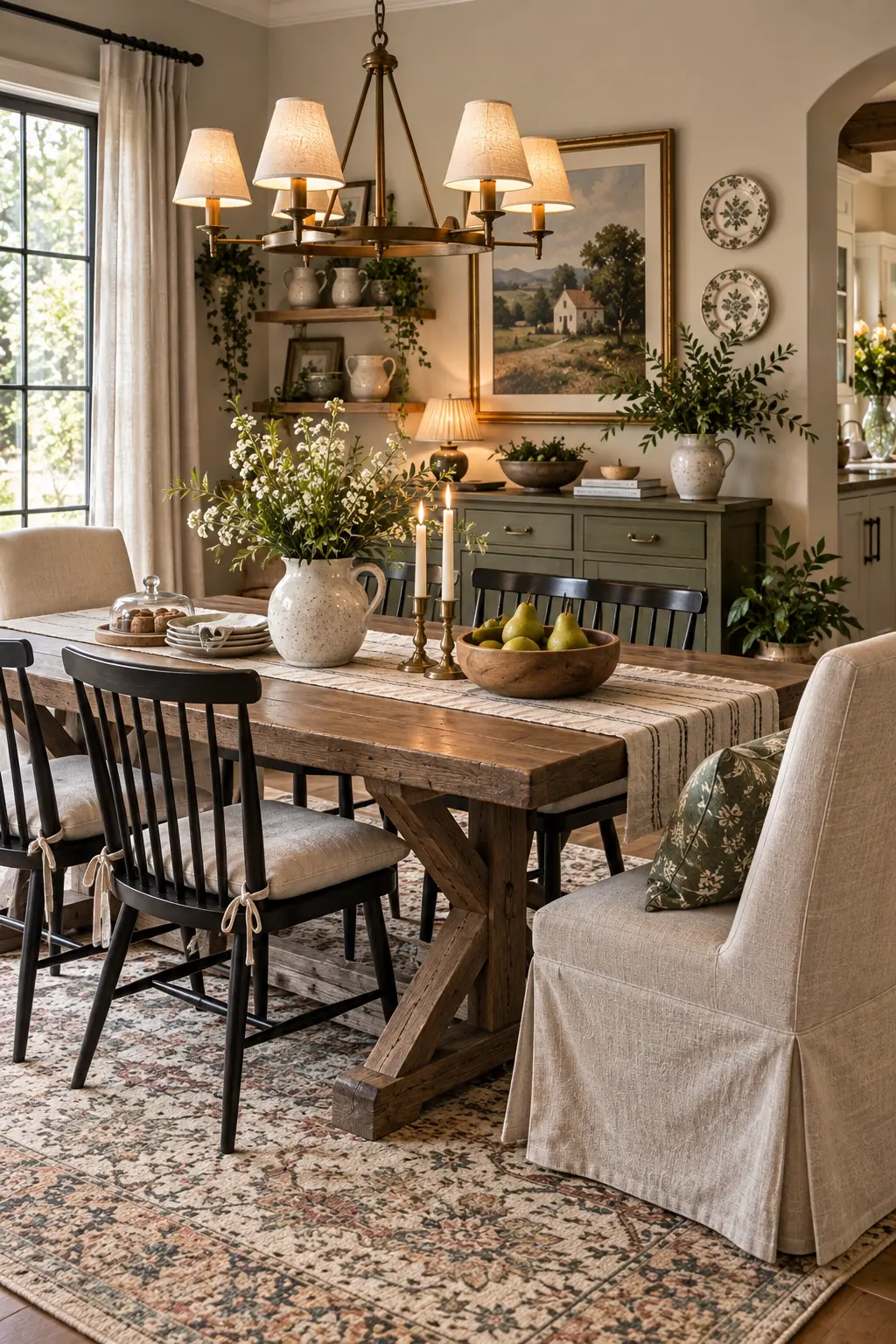
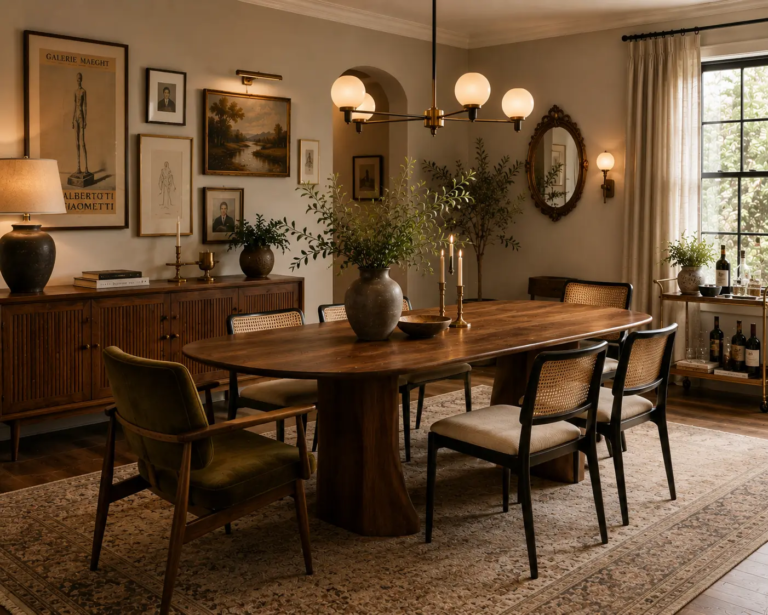
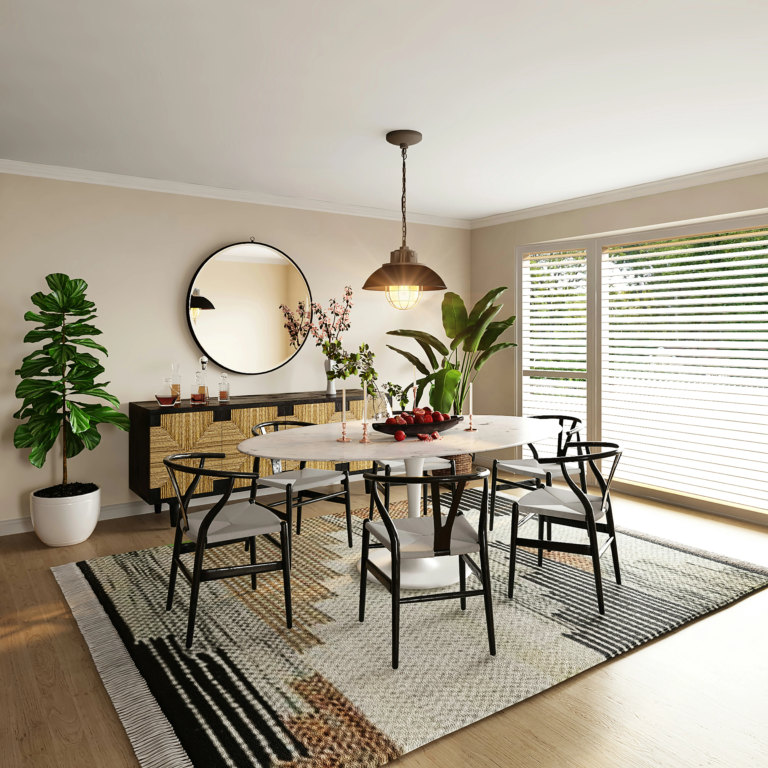
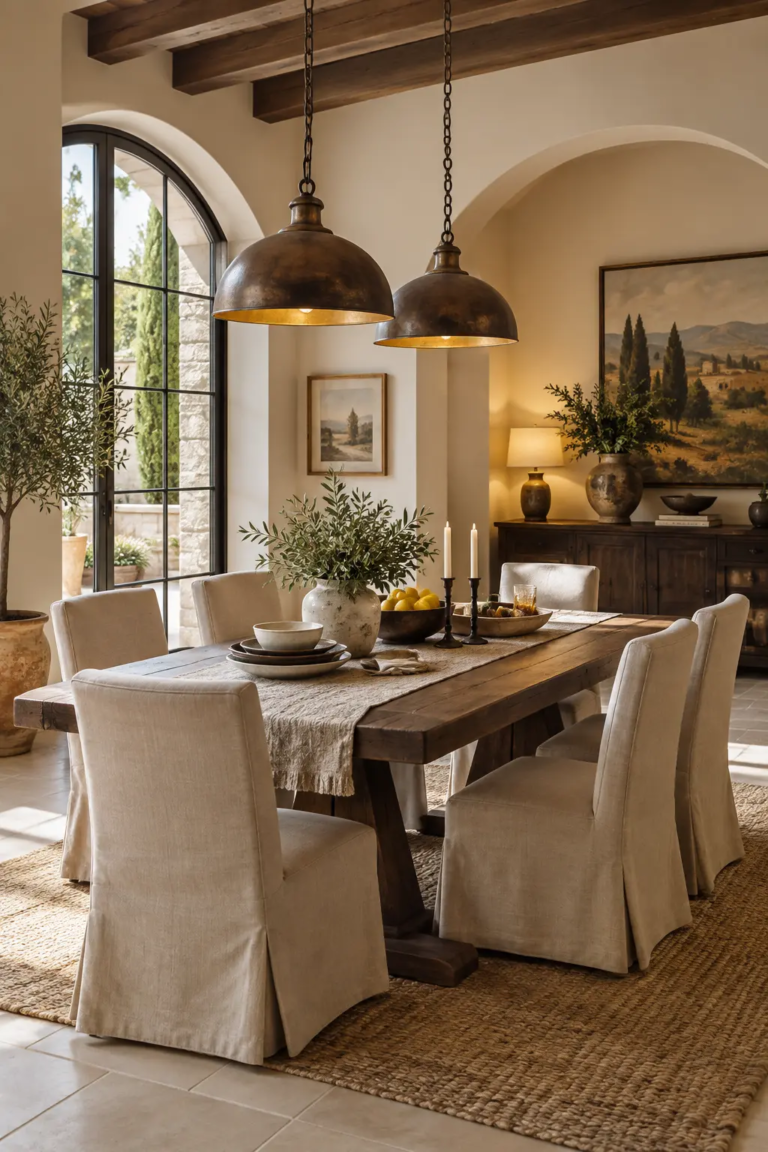
The dining rooms in cottage photos come with help: a low beamed ceiling, a deep-set window, walls that bow slightly where the plaster has settled. Yours is more likely a rectangle with an 8-foot flat ceiling, a builder-grade window and perfectly straight drywall. That’s workable. The cottage feeling comes from a handful of decisions about height, surface and light, and none of them need the architecture. These 7 cottage dining room ideas are built for the ordinary room, and they’re a plainer, less themed take than a full cottagecore dining room.
What a Real Cottage Has That Your Room Can Fake
A real cottage feels snug for three reasons: the visual weight sits low, the surfaces look lived in, and nothing matches too perfectly. You can reproduce all of that on flat drywall. Cottage style is also plainer than French country, which relies on carved detail and a more formal palette. Here, painted wood, cotton and stoneware do the work. If yours is a small dining room, you’re ahead, since a snug room is closer to the goal than a cavernous one. Use one test for every idea below: does it pull the room’s visual weight down, or does it take the edge off something too new and perfect? If it does neither, skip it.
1. Half-Height Beadboard That Lowers the Room
Run beadboard or tongue-and-groove planking 32 to 36 inches up the wall and cap it with a simple ledge. That height lands at the top of the chair backs, so it protects the wall where chairs scrape. It also gives the eye a low horizontal line, which is what makes a tall, plain room feel gathered in. Paint the paneling and the wall above in warm tones, such as warm white or muted butter yellow on top and sage or the same warm white below. Keep the cap ledge about an inch deep so it doesn’t collect clutter.
Pro Tip: Use satin or semi-gloss on beadboard, not flat. The grooves trap dust and food splatter, and a harder sheen wipes clean with a damp cloth.
https://pixabay.com
2. A Wood Table Allowed to Look Used
Cottage tables are working tables: pine, oak or ash with a plain top and turned or square legs, standing 29 to 30 inches high. Skip anything lacquered or factory-distressed, where the “wear” repeats in a pattern. Soft pine dents easily, and in this style that’s a feature. Finish a bare top with hardwax oil, which can be spot-repaired when a ring appears, unlike polyurethane, which chips and usually has to be sanded back. Put a flat-weave cotton or jute rug underneath, sized so its edge extends at least 24 inches past the table and the chair legs stay on it.
3. Chairs That Don’t Match but Share One Paint Color
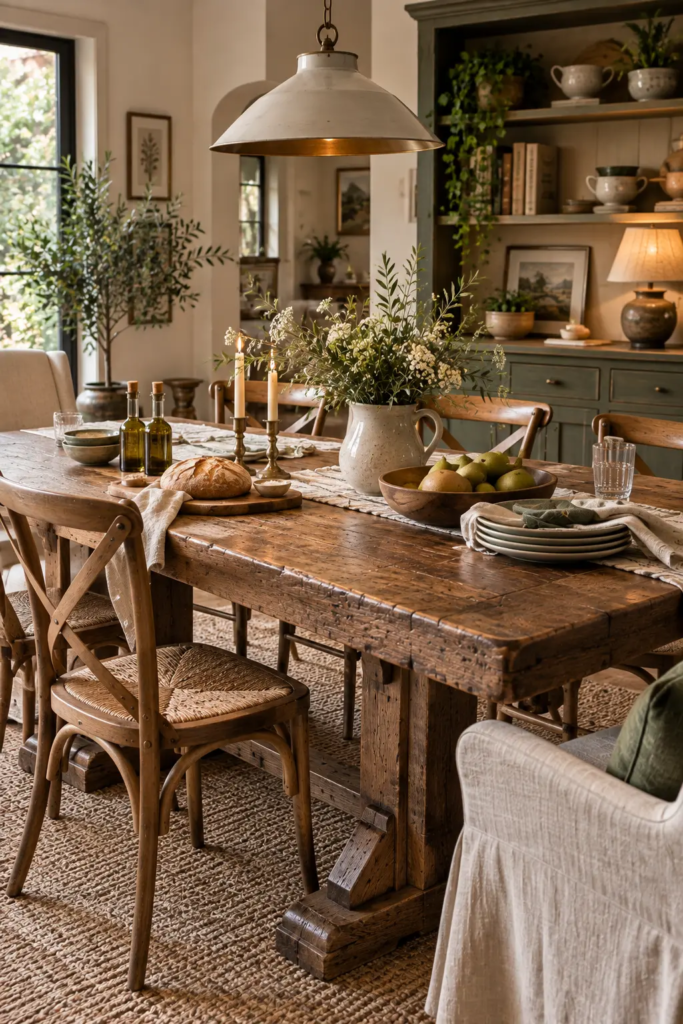
Six mismatched vintage chairs painted the same soft shade look collected rather than messy, because the color repeats. Lightly sand, apply a bonding primer, and finish in satin. Sage, cream and faded blue all sit well against wood. Keep seat heights within an inch of each other, ideally 17 to 19 inches under a 29-inch table, so nobody sits noticeably higher than their neighbor.
https://images.unsplash.com
4. Cafe Curtains That Make a Flat Window Look Paned
A builder-grade window has no deep sill or small panes to work with, so borrow them. Cafe curtains cover only the lower half of the window. That gives privacy while leaving the upper glass clear for light, and the horizontal break reads like the meeting rail of a cottage sash. Choose cotton, linen, gingham or ticking, and buy fabric about twice the width of the rod so the panels gather instead of hanging flat.
Pro Tip: Mount the rod at the meeting rail, where the two sashes join, or at the halfway mark on a single pane, and let the fabric hang to within an inch of the sill. Higher, and it reads as a valance. Lower, and it blocks light for nothing.
https://plus.unsplash.com
5. A Plate Rail That Puts Everyday Dishes on Display
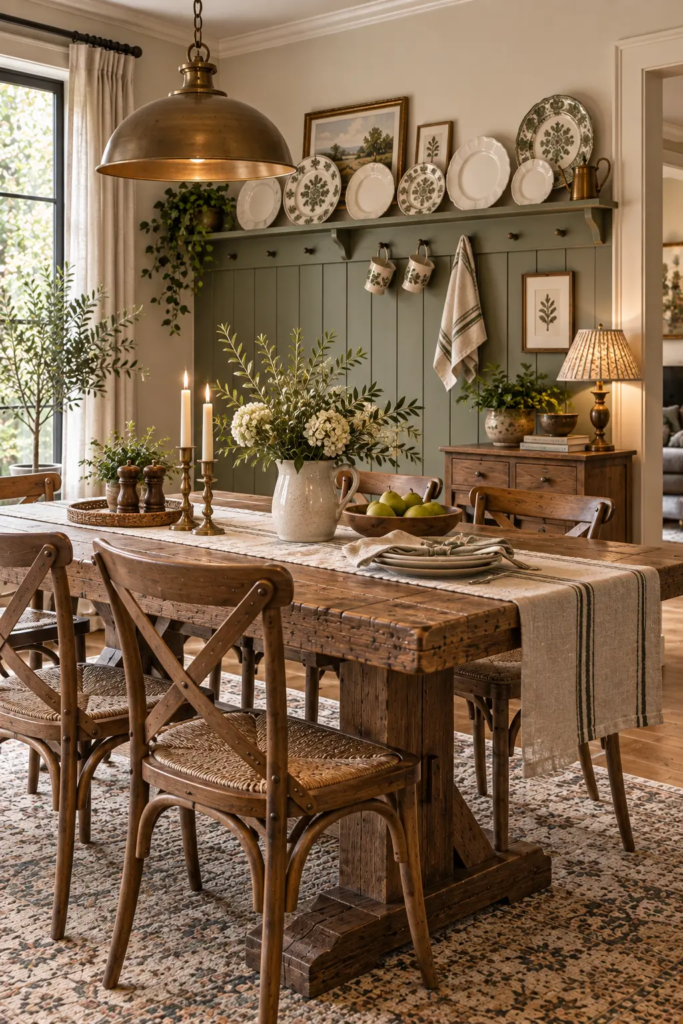
Mount a narrow shelf with a lip, a plate rail, 60 to 66 inches from the floor and stand stoneware plates on edge along it, with a pitcher or two between them. The shelf should be 4 to 5 inches deep, with a lip about an inch high so the plates stay put. Screw it into studs rather than relying on anchors, since a run of stoneware is heavier than it looks. Use dishes you actually eat from. A rail of decorative plates nobody touches reads as a display, while a rail of working plates reads as a cottage.
6. Low, Warm Light Instead of a Ceiling Glare
Swap a flush-mount fixture for a pendant with a fabric, wicker or enamel shade, and hang it so the bottom edge sits 30 to 34 inches above the tabletop. That keeps the light low and the ceiling out of the picture. Put it on a dimmer with 2200K to 2700K bulbs. If you’re renting and can’t touch the wiring, a swag-hook pendant plus a plug-in sconce over the sideboard gets you the same layers.
Pro Tip: Skip clear bulbs in glass or open shades, because the filament glares straight into seated eyes. Frosted or amber-tinted bulbs, or a shade that’s opaque on the outside, keep the glow soft.
https://plus.unsplash.com
7. Linen, Stoneware and One Jug of Flowers
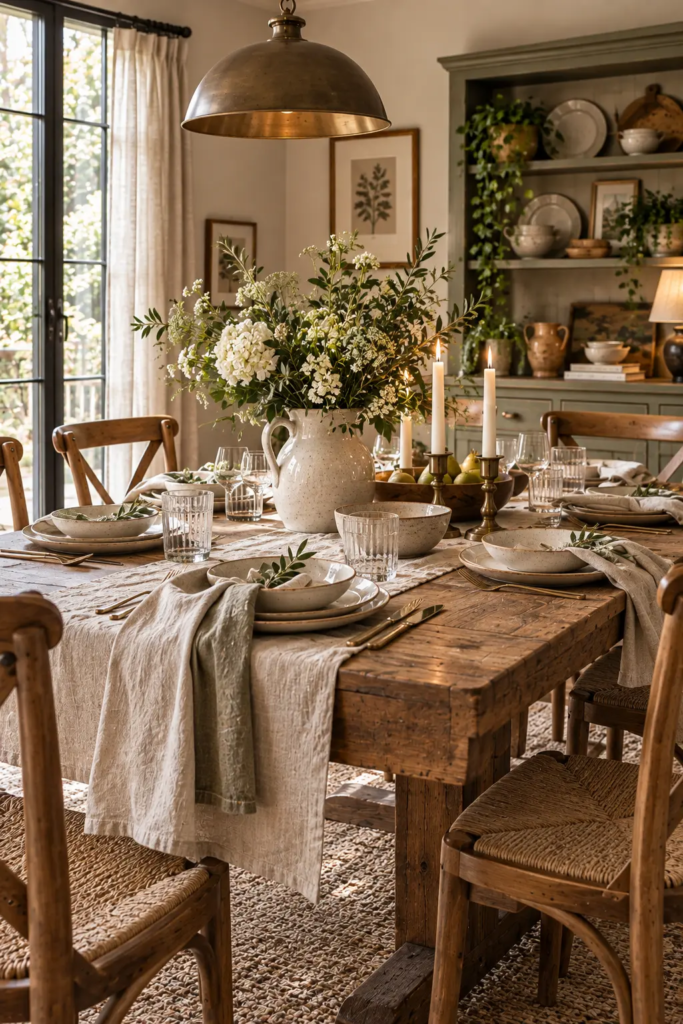
The last layer is the table itself. Use an unironed linen cloth or runner, ironstone or stoneware plates, and a pitcher of whatever is cheap and in season. That’s enough to layer texture without clutter, because everything is matte or softly glossy and nothing competes. Keep the arrangement under 12 inches tall so people can see across the table. A tall, bushy one turns dinner into a conversation with a hedge.
Where Cottage Dining Room Ideas Go Wrong
Pre-distressed furniture. Factory distressing repeats the same scuffs in the same spots. Look for real wear, or leave the piece plain.
All-white everything. Without wood or a warm tone, a white room reads clinical rather than cozy. Let a wood table, a natural rug or one painted piece bring the warmth.
Themed accents. Roosters, “gather” signs and printed slogans tip a cottage room into costume. Let materials carry the style.
Matching sets. A table and six chairs from one catalog undercut the collected look. Change at least one element.
Where to Spend and Where to Save
Spend on the table and on any lighting you can wire in, since those are the hardest pieces to swap and the most visible. Beadboard costs far less than custom millwork, and painting chairs yourself takes a quart of paint and a can of primer. Save on the plate rail (a pine board and two brackets), the linens (thrifted cotton and linen are often better than new) and the cafe curtains (a cotton sheet, cut and hemmed, works fine).
FAQ
What’s the difference between a cottage and a farmhouse dining room? Cottage is smaller in scale and softer: painted wood, cotton and mismatched pieces. Farmhouse leans bigger and bolder, with long trestle tables, black metal and shiplap. If your room is compact, cottage proportions will fit it better.
What paint colors work for a cottage dining room? Warm white, butter yellow, sage and faded blue are the reliable ones. Test large swatches under your evening bulbs, since that’s when you’ll use the room, and a white that looks creamy at noon can turn gray at night.
Can I get a cottage look with a modern table? Yes, if you soften it. Layer a linen runner on top, pair it with painted or vintage chairs, and keep the finish matte. A clean-lined pale oak table sits happily in a cottage room, while a glossy white or glass one doesn’t.
What size table suits a small cottage dining room? A round table 42 to 48 inches across seats four and has no corners in the walkway. Leave at least 36 inches between the table edge and the wall so chairs can slide back.
Start With Two Ideas, Not Seven
You don’t need all 7 cottage dining room ideas to change the room. Start with the two that cost least and show most: paint the chairs one color, and lower the lighting. Then sit down at the table and notice where your eye lands first. That’s where the next idea goes.
A vintage modern dining room usually goes wrong one of two ways. Either every piece is its own standalone “statement,” so the room feels like a showroom floor with no relationship between the objects, or one vintage piece gets dropped into an otherwise brand-new room and looks like it wandered in from a different house….
Japandi gets recommended constantly for dining rooms, and then a lot of people end up with a room that looks more like a furniture catalog than a place they’d want to eat dinner in. The style leans on restraint — clean lines, muted palettes, very little on the walls — and restraint is exactly what…
Most “Italian dining room” inspiration photos are staged for one specific moment: a long table set for twelve, candles lit, a holiday-worthy spread. It’s a beautiful photo and a completely unrealistic room. The truth is most people eating in a dining room styled this way use it for a Tuesday dinner with two kids and…
A minimalist dining room is more than just a design trend—it is a lifestyle choice that embraces simplicity, functionality, and elegance. By eliminating unnecessary clutter and focusing on essential elements, a minimalist dining room creates a peaceful environment where family and friends can gather comfortably. Whether you live in a spacious home or a compact…
The bathroom is often one of the most overlooked spaces in a home when it comes to interior design. While living rooms, bedrooms, and kitchens usually receive the most attention, a well-designed bathroom can significantly enhance your daily routine and create a relaxing retreat. Whether you’re planning a complete renovation or simply looking to refresh…
The living room is often considered the heart of a home. It is where families gather, guests are entertained, and memories are created. An elegant living room design combines beauty, comfort, and functionality to create a welcoming environment that reflects personal style while maintaining a refined aesthetic. Whether you prefer classic sophistication or modern minimalism,…