8 Black Bathroom Ideas That Read Rich, Not Like a Cave
Most black bathrooms fail for the same reason: someone paints every surface the same shade of black and calls it moody. It isn’t moody. It’s a parking garage with a toilet in it. The bathrooms that actually work — the ones that look expensive rather than experimental — treat black as a material to place carefully, not a color to pour over the whole room.
If you’re standing in your bathroom right now trying to decide whether black is a mistake, the honest answer is: it depends entirely on where you put it. That’s what this list is really about. Not eight ways to go all-in on black, but eight ways to use it with enough restraint that it still looks intentional five years from now, not like a 2024 Pinterest board you’re already tired of.
What Actually Determines Whether a Black Bathroom Works
Before picking a look, it helps to understand the two variables that make or break a black bathroom: natural light and surface ratio.
A north-facing bathroom with one small window behaves completely differently than a south-facing bathroom with a skylight. In the first, black walls floor to ceiling will genuinely darken the room and make it feel smaller, especially under warm artificial light at night. In the second, you can get away with far more saturation because daylight is doing the work of keeping the space from feeling closed in.
The second variable — surface ratio — matters even in a windowless powder room. A bathroom that’s 80% black and 20% light reads as a dark room. A bathroom that’s 30–40% black against a light floor, ceiling, or wall reads as a room with a strong accent. The proportion, not the presence of black, is what your eye actually registers when you walk in.
Pro Tip: Stand in the doorway and look at the room in your peripheral vision, not straight on. If the black feels like it’s closing in from the sides, you’ve gone past the point where it reads as an accent — pull some of it back to trim, a single wall, or the lower half only.
This is also where a traditional eye earns its keep: classic bathrooms have almost never gone full black. They’ve used black in trim, in tile borders, in hardware — small, deliberate doses against a lot of white, cream, or marble. That’s the framework worth borrowing even if your style leans more modern.
Black and White Checkerboard Floor, Everything Else Left Alone
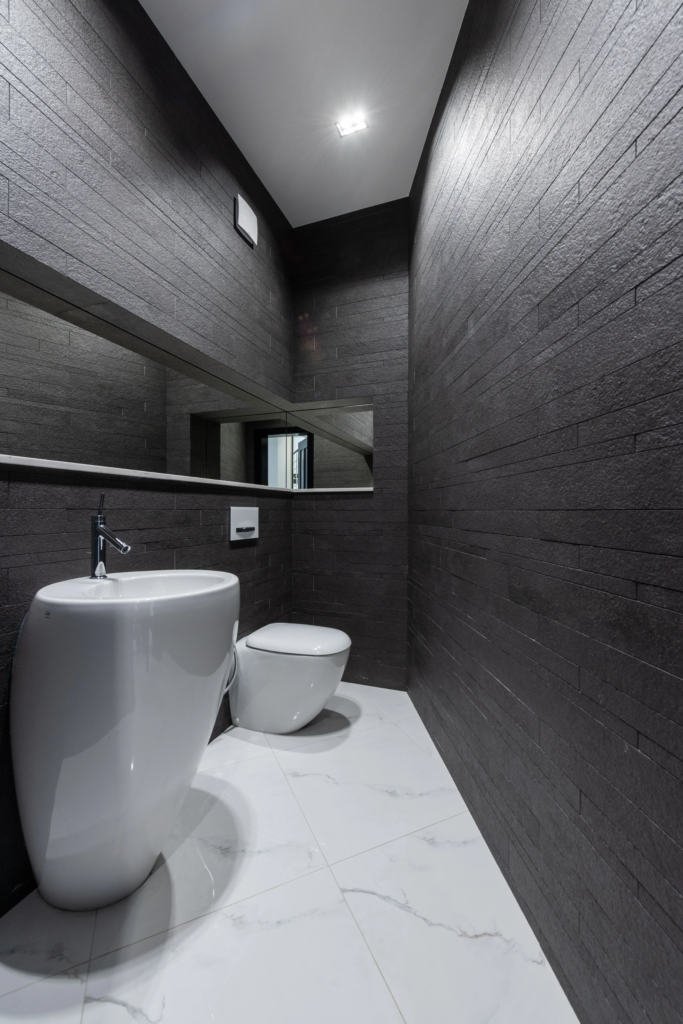
This is the safest, most enduring version of a black bathroom, and it’s safe precisely because it isn’t really a “black bathroom” — it’s a black-and-white floor with white walls and fixtures around it. A classic 2-inch or 4-inch checkerboard, laid straight rather than on a diagonal, reads as period-appropriate and grounded rather than trendy.
The reason this holds up over time is that the black is confined to the plane you look down at, not the plane you look across. Your eye takes in the pattern without the room ever feeling enclosed. It also happens to be one of the most forgiving choices for resale — buyers who’d never sign off on black walls will happily walk into a checkerboard floor.
[INTERNAL LINK: bathroom-decor-transform-your-space-into-a-stylish-sanctuary]
A Black Vanity as the Single Anchor
Instead of black walls, put the black on the one piece of furniture in the room: the vanity. A black vanity — whether it’s a stained wood cabinet, a black-painted washstand, or a matte lacquer piece — gives the room a visual anchor without touching the ceiling height or the perceived size of the walls.
This works especially well in bathrooms with white subway tile, marble, or plain painted walls, where the vanity becomes the one piece of furniture-grade detail in an otherwise simple room. Pair it with a lighter stone or quartz top so the black doesn’t run floor to counter, which starts to feel like a solid block rather than a piece of furniture.
Pro Tip: If you’re refinishing an existing vanity rather than buying new, go with a satin or eggshell black instead of high-gloss lacquer on anything other than a brand-new, perfectly smooth surface — gloss magnifies every water spot, brush mark, and toothpaste splatter, and it shows dust between cleanings far more than a matte or satin finish does.
Black Trim and Window Casings Instead of Black Walls
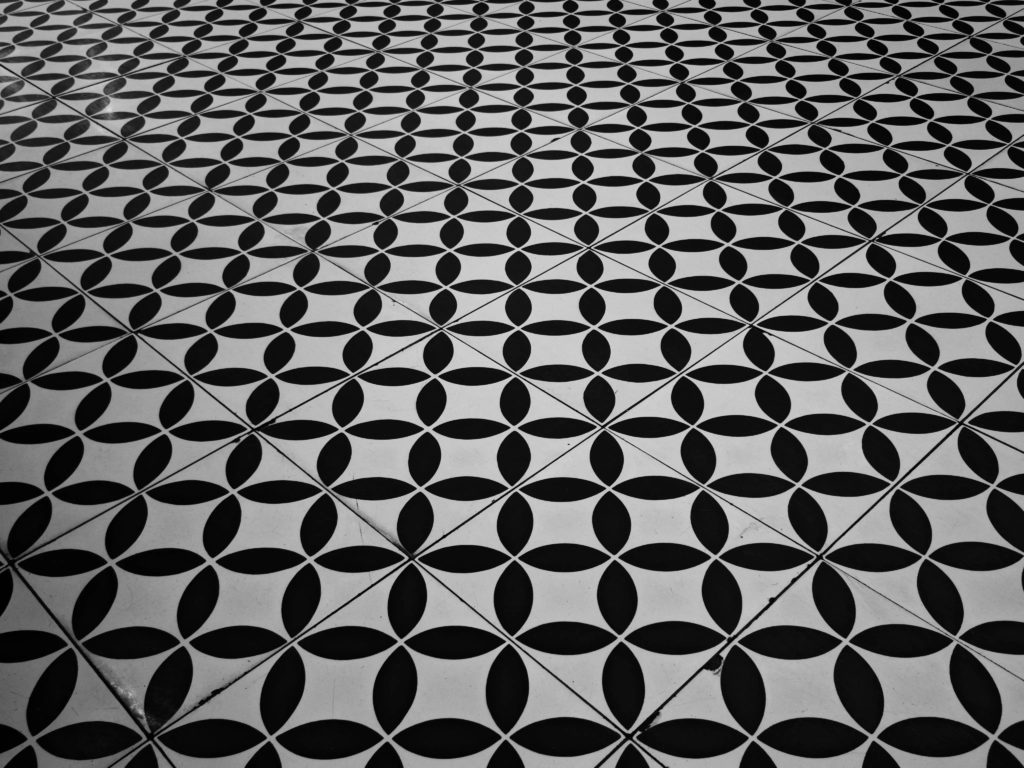
For smaller bathrooms — anything under roughly 40 square feet — full black walls are usually the wrong move, but black trim isn’t. Painting the door casing, baseboards, and window frame black while keeping the walls a soft white or warm off-white gives the room definition and a sense of architecture without eating into the light.
This is a trick borrowed directly from classic interiors, where trim has always carried more contrast than walls. It draws the eye to the bones of the room — the proportions of the window, the height of the door — rather than flattening everything into one dark box.
Matte Black Fixtures Against a Warm Cream Palette
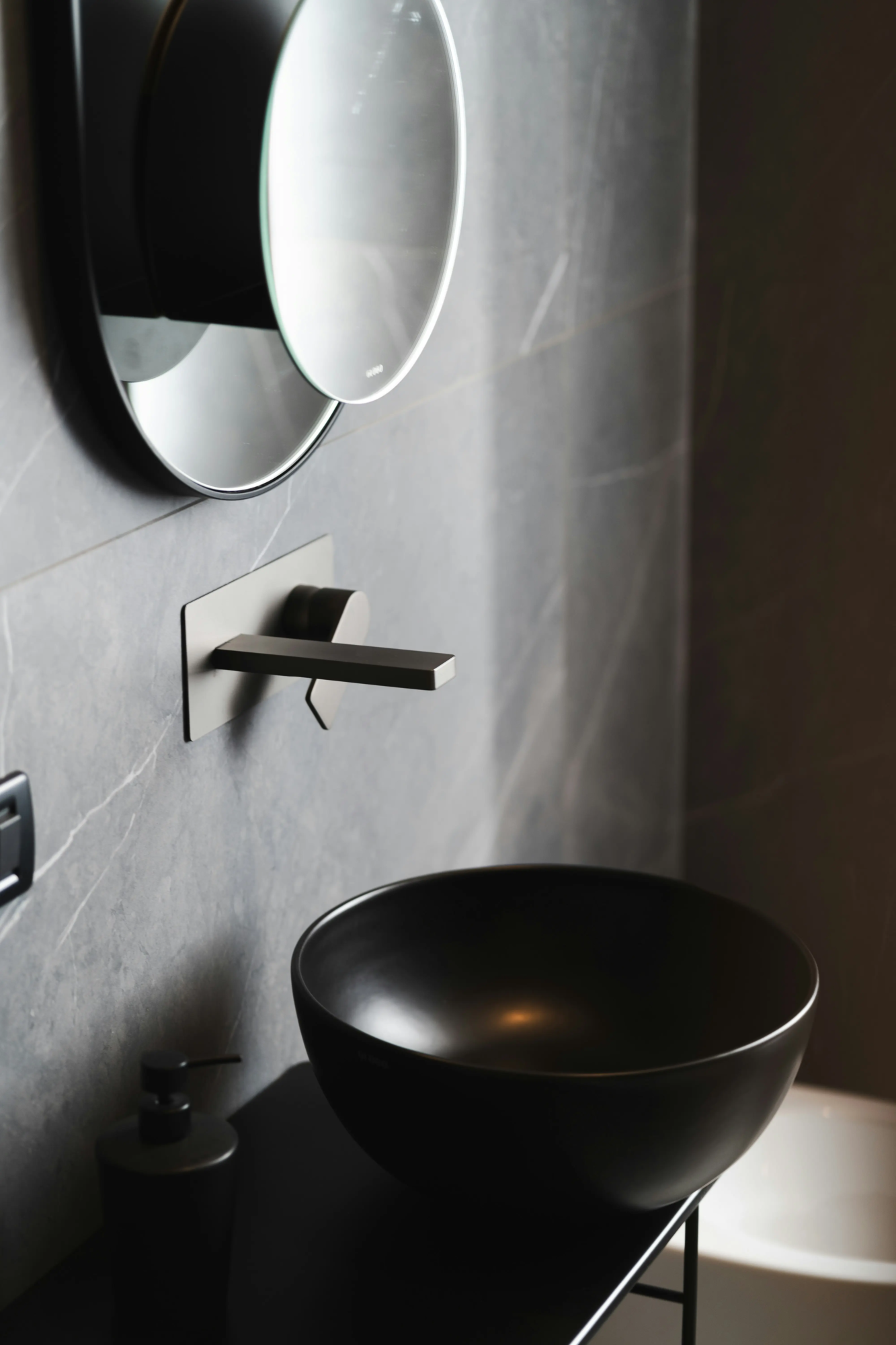
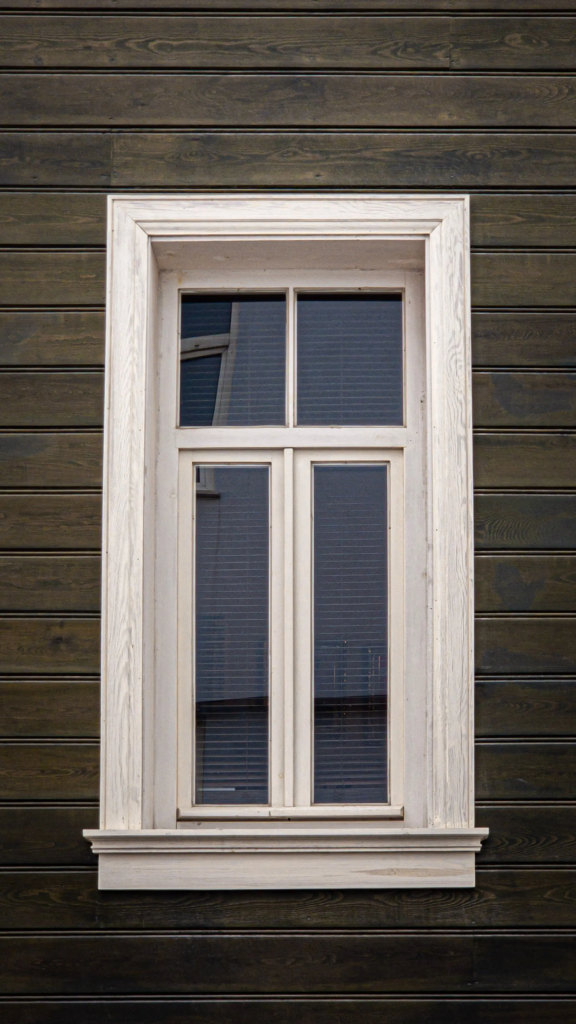
If you’re not ready to commit black to any painted surface, fixtures alone can carry the look. Matte black faucets, a black-framed mirror, black sconces, and black cabinet hardware against warm cream or ivory walls give you the aesthetic with zero risk to the room’s light levels.
The word “warm” matters here. Black fixtures against a cool, stark white can feel clinical and a little harsh. Against cream, warm white, or a soft greige, the same black hardware reads as tailored and grounded instead.
[INTERNAL LINK: living-room-wall-color-transform-your-space-with-the-perfect-shade]
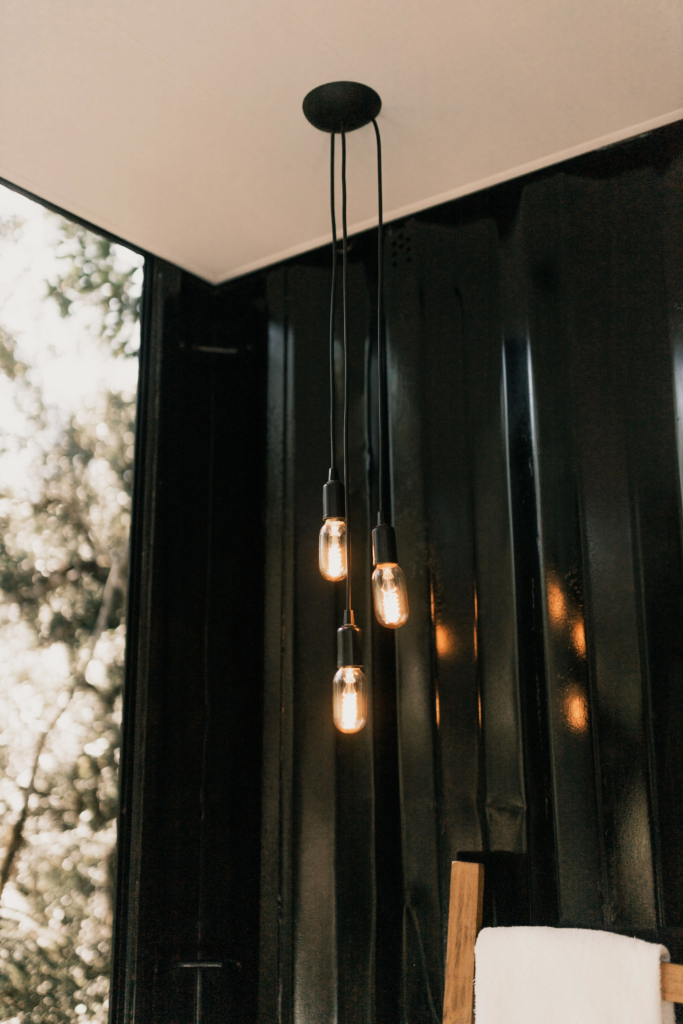
A Half-Wall of Black With Wainscoting Above
This is one of the more underused ideas on this list, and it’s a genuinely classic proportion trick: paint only the lower third or half of the wall black, up to a chair rail or the top of a wainscoting panel, and leave the upper wall light.
Splitting the wall this way does two things at once. It keeps the ceiling height feeling tall, because the eye reads the lighter upper wall as continuing upward uninterrupted, and it puts the black exactly where a bathroom takes the most abuse — near the floor, around the tub, behind the toilet — where a darker, more forgiving surface actually earns its keep.
Rather than extending black across the whole room, keep it inside the shower enclosure — a large-format black tile, black hexagon mosaic, or black subway tile on the shower walls only, with the rest of the bathroom left in lighter materials.
Glass shower doors help this idea work particularly well, because they let the black read as a contained, almost sculptural element rather than a wall that competes with the room around it. It also solves a practical problem: shower walls take the most water exposure in the room, and darker grout and tile hide mineral buildup and soap residue far better than white ever will.
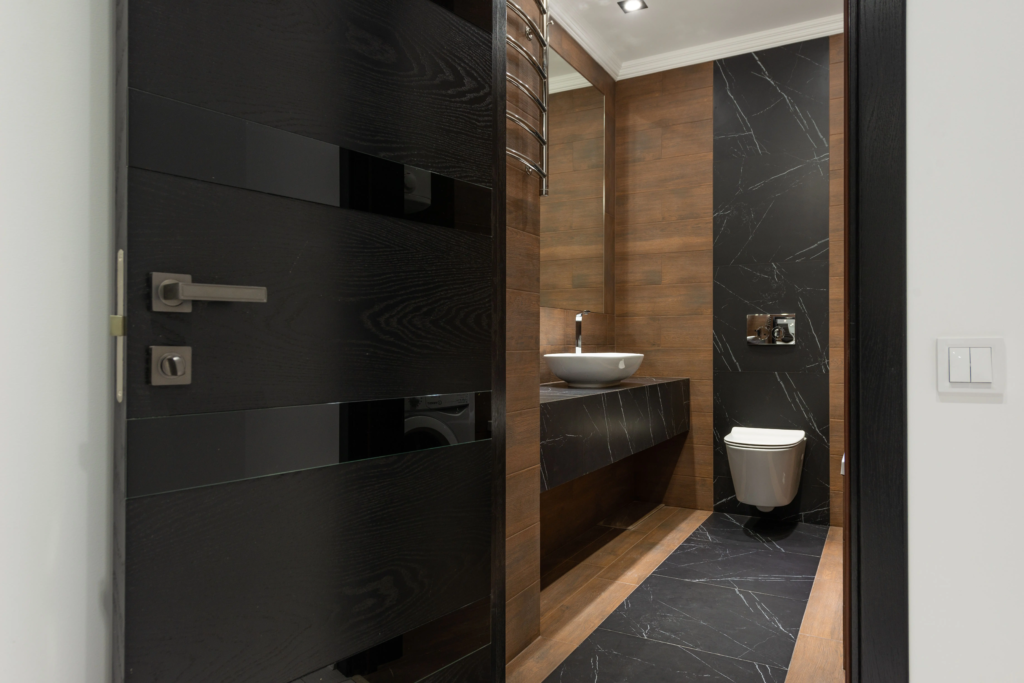
A Black Ceiling as the Fifth Wall
Painting the ceiling black instead of the walls is a counterintuitive move that tends to work better than people expect, particularly in bathrooms with strong architectural detail — beadboard, a decorative light fixture, exposed beams, or crown molding worth drawing attention to.
A black ceiling recedes visually in a way black walls don’t, because you’re not looking directly at it as you move through the room. It adds depth overhead without lowering the perceived height the way people assume, and it gives whatever fixture is hanging from it — a pendant, a flush mount, a chandelier — real presence.
[INTERNAL LINK: half-bathroom-ideas-creative-ways-to-maximize-style-and-function]
Common Mistakes to Avoid
Painting every surface the same black. Walls, ceiling, floor, and vanity in identical matte black with no material or sheen variation is the single fastest way to make a bathroom feel like a closet rather than a considered space. Vary either the sheen, the material, or which surfaces get the black.
Skipping the ventilation conversation. Black surfaces show water spots and soap scum more visibly than white ones, which means a black bathroom with a weak or nonexistent exhaust fan will look dingy fast. If you’re committing to black tile or a black vanity, make sure the room can actually dry out between uses.
Choosing lighting after the color, not before. A single centered overhead light in a black bathroom creates harsh, uneven shadows because there’s so little bounce light off the walls. Plan for layered lighting — a vanity light at face height plus a ceiling fixture — before you finalize the paint color, not after.
Pro Tip: Warm-white bulbs (around 2700K–3000K) make a real difference in a black bathroom specifically — cool daylight bulbs (4000K+) against black surfaces tend to read as sterile or clinical, while warm bulbs soften the black and keep skin tones flattering at the mirror.
Budget-Friendly Ways to Get the Look
You don’t need a full renovation to test any of this. Peel-and-stick black hexagon tile can line a shower or a small accent wall for a fraction of the cost of real tile, and it’s removable if you change your mind. A can of black cabinet paint on an existing vanity — sanded, primed, and finished properly — costs far less than replacing it and delivers most of the visual impact of the vanity idea above.
Hardware and fixture swaps are the lowest-risk entry point of all: black cabinet pulls, a black-framed mirror, and a matte black faucet can be done in an afternoon and give you a real sense of whether you like living with black in the room before you commit to paint or tile.
[INTERNAL LINK: vanity-ideas-bedroom-stylish-ways-to-create-the-perfect-beauty-corner]
FAQ
Does a black bathroom make a small space feel smaller? It can, but it depends on placement more than color. Black confined to the floor, trim, or a single wall generally doesn’t shrink a small bathroom the way floor-to-ceiling black walls do, especially if the ceiling and one full wall stay light.
What’s the best paint finish for a black bathroom wall? Satin or eggshell is usually the better call over flat or high-gloss. Flat paint scuffs and marks easily in a high-moisture room, while high-gloss shows every imperfection in the wall surface; satin holds up to occasional wiping down without exaggerating flaws.
Should the grout match black tile or contrast with it? Matching dark grout to black tile keeps the surface looking like one continuous material, which reads as more polished and makes a small shower area feel less busy. Contrasting white grout on black tile is a bolder, more graphic look but shows dirt in the grout lines faster.
Will a black bathroom hurt resale value? Confined black — trim, a vanity, a checkerboard floor, fixtures — is generally considered a safe, classic choice that doesn’t concern most buyers. Floor-to-ceiling black in every surface is more polarizing and is the kind of finish some buyers factor into their offer, since it reads as a personal style choice they’d need to undo.
Can I do a black bathroom in a room with no natural light? You can, but lean toward the contained versions on this list — trim, vanity, half-wall, or fixtures — rather than full black walls, and invest in warm, layered artificial lighting to compensate for the lack of daylight bouncing off the surfaces.
The Takeaway
You don’t have to choose between “safe white bathroom” and “committed to black everything.” The bathrooms that hold up — the ones that still look considered years after they’re finished — use black the way a good tailor uses a dark thread: in the seams, the trim, the details that give the whole thing structure, not as a blanket over everything. Pick one or two ideas from this list, match them to how much natural light your room actually gets, and you’ll end up with something that reads as a black bathroom done well, not a black bathroom done because it was trending.