Couches for the Living Room You Actually Have
Most “best couches for your living room” roundups show you nine pretty sofas and call it a day. They rarely mention that a curved velvet statement piece is a bad idea in a room with two dogs and a toddler, or that the “cozy” slipcovered sofa everyone loves online will look enormous in a 10×12 room.
The couches below are matched to a specific constraint instead — small square footage, heavy foot traffic, a rental you can’t drill into, an open floor plan with no obvious “wall” to anchor against. Find the situation closest to yours, and use that pick as your starting point rather than shopping by looks alone.
[IMAGE: A cluttered mood board with fabric swatches, a room-dimension sketch, and a couch catalog page laid side by side, as if narrowing down options against real constraints]
Start With Your Room’s Constraint, Not the Couch’s Looks
Every living room has at least one non-negotiable — square footage, a pet, a landlord, a toddler, a lack of natural light. Shopping by style first and constraint second is how a beautiful couch ends up wrong for the room within a year: it’s too deep for the walkway, the fabric shows every paw print, or it simply doesn’t fit through the stairwell.
Working backward from the constraint narrows the field fast. Once you know your room needs a sofa under 78 inches wide, or a fabric that hides dog hair, you’re choosing between five realistic options instead of five hundred.
Pro Tip: Before you shop, write down your room’s actual hard constraints — width, depth, doorway clearance, and any dealbreakers like pets or kids — on a sticky note and keep it on your phone while browsing. It’s easy to fall for a couch online and rationalize away a constraint you’ll regret later.

9 Couches for 9 Different Living Room Situations
1. The Small Apartment Living Room
A track-arm loveseat under 65 inches wide, paired with a slim accent chair, seats nearly as many people as a full three-seater without eating the walkway. Squared-off arms (rather than rolled ones) also shave a few extra inches of visual bulk.
2. The High-Traffic Family Room
A sectional in a tightly woven performance fabric — the kind originally developed for outdoor use — holds up to daily use far better than a loose-weave linen, without looking like it belongs on a patio. Look for a weave count high enough that you can’t easily see individual fibers when you look closely.
[IMAGE: A family room sectional in a dense grey performance weave, kids’ toys scattered nearby, low coffee table with rounded edges]
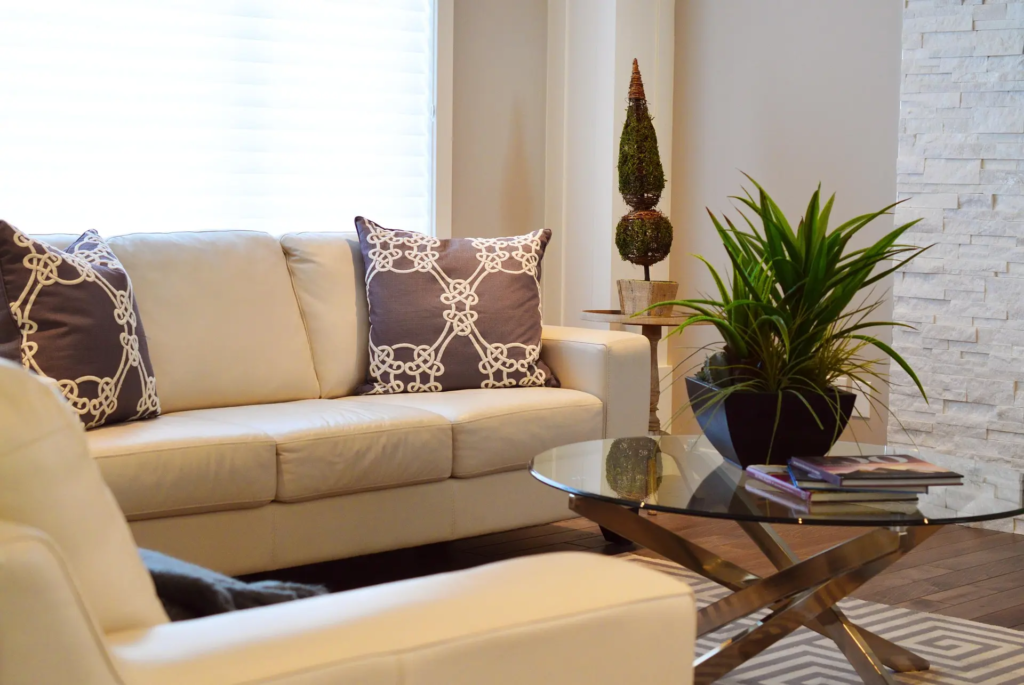
3. The Pet-Owner’s Living Room
Medium-to-dark tones in a tight, low-pile weave hide shed hair and the occasional scratch far better than pale bouclé or velvet. If you’re set on a lighter white couch for your living room, removable, machine-washable cushion covers make it far more livable with pets than fixed upholstery.
4. The Rental With No Wall to Anchor Against
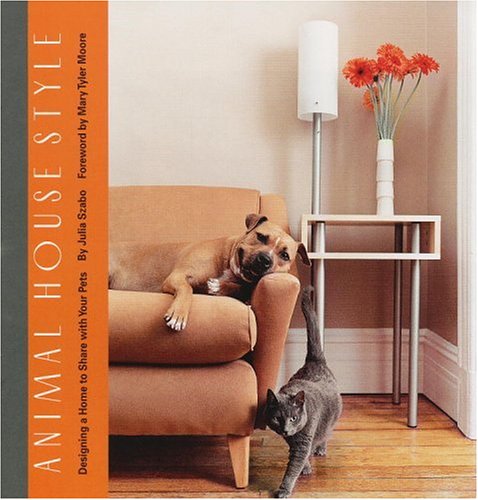
Open, awkward layouts common in rentals often lack one obvious “sofa wall.” A modular sofa solves this because you can configure it to face any direction — angled toward a window, floating in the room, or wrapped around a corner — without committing to a single fixed placement you might need to undo at your next lease renewal.

- BABY SAFETY – We know how curious children can be. When little ones climb on furniture there is a potential for a tip-ov…
- EARTHQUAKE RESISTANT – Tall pieces of furniture like bookcases are easy to fall when the ground is rolling and shaking. …
- EASY TO INSTALL – Installing the anti-tip furniture straps to secure dressers and other large furniture takes only a few…
5. The Open-Concept Living and Dining Combo
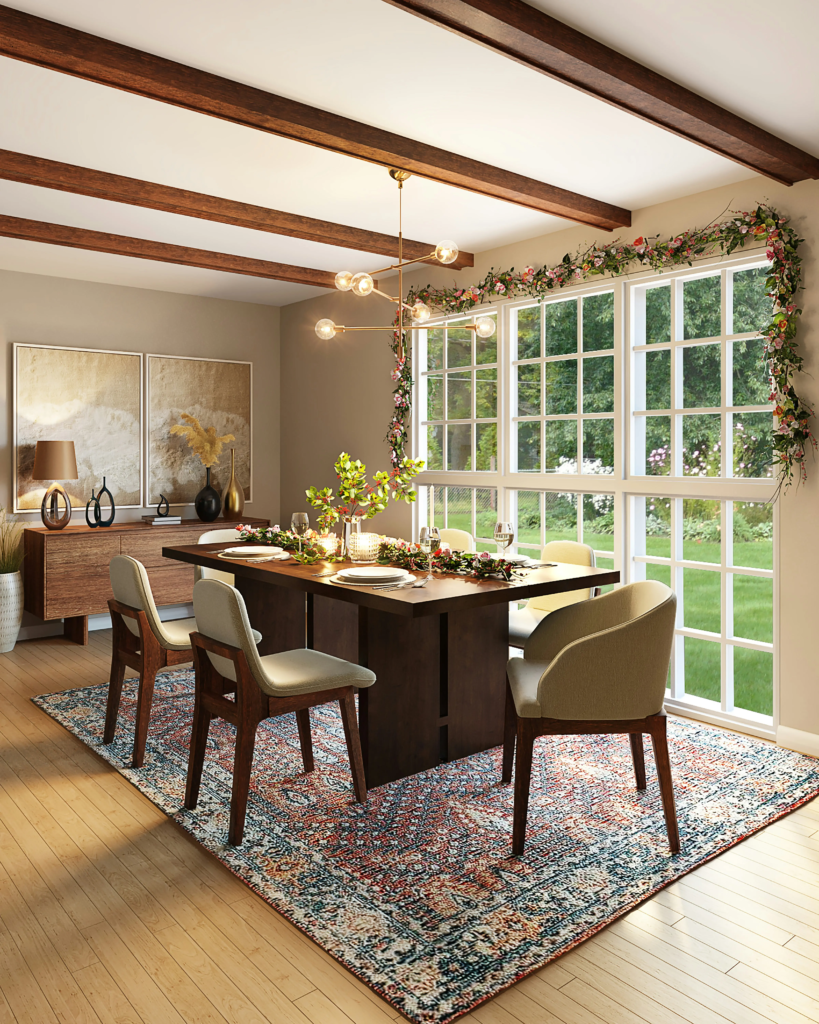
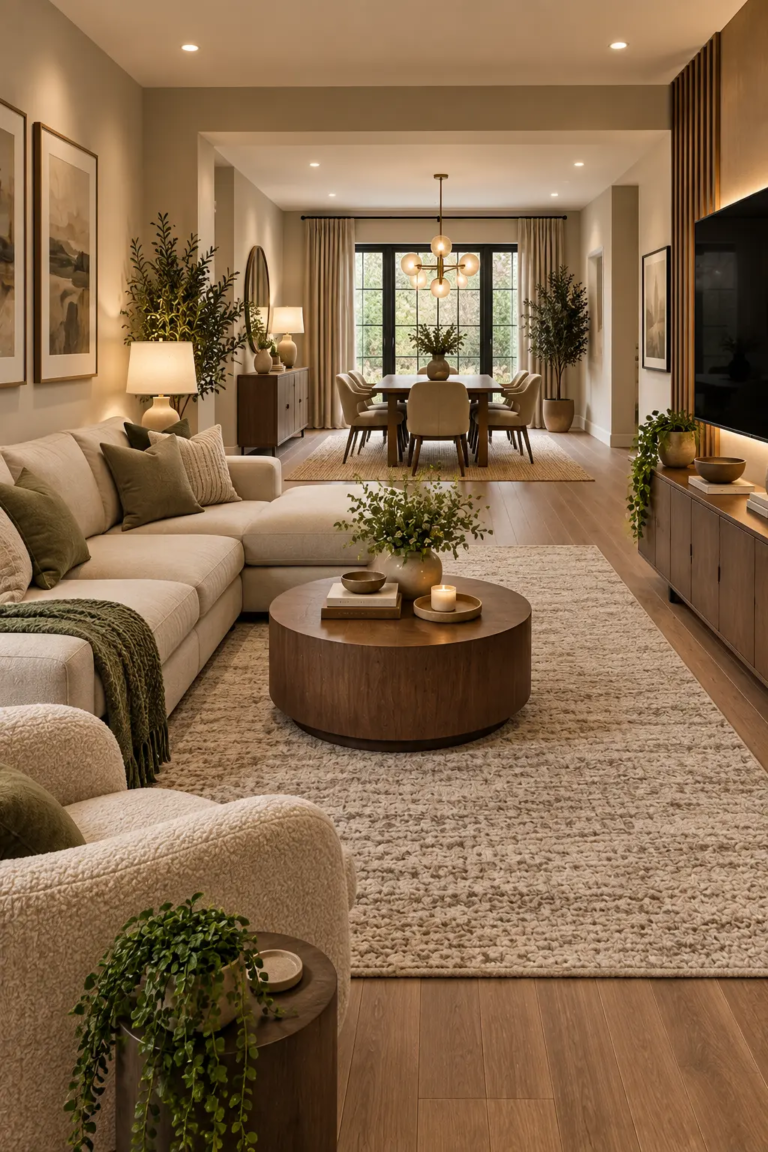
When the living room bleeds into the dining area with no wall between them, a sofa placed back-to-back with a console table (or simply floated a few feet from the true wall) does double duty as a room divider. A slightly curved or kidney-shaped frame softens what would otherwise be a hard visual line splitting the space in two.

- Polyester Blend
- Part of the Designs2Go Collection
- Available in Multiple Finishes
6. The Narrow or Awkward-Shaped Room
In a long, narrow living room, push the sofa perpendicular to the longest wall instead of flat against it. This breaks up the tunnel effect and creates a defined seating pocket — a low-back sofa works especially well here since it won’t block sightlines to the rest of the room.
Pro Tip: In a narrow room, measure the width behind the sofa before committing to perpendicular placement — you need at least 30 inches of clearance for it to function as an actual walkway rather than a squeeze.
7. The Frequent-Host Living Room
If you regularly have more people over than your permanent seating fits, a sectional with a movable ottoman or a modular piece that can split into extra seats gives you flexible capacity without permanently living in “party mode.” Look at living room aesthetic ideas that build in a second seating zone, like a bench or stackable stools, rather than one oversized sofa trying to do all the work.
8. The Multi-Use Living Room (Also a Home Office or Guest Room)
A sleeper sofa or a daybed-style frame with a firm, supportive cushion earns its keep in a room that has to function as more than one thing. Skip anything with deep, plush cushions that sink — they’re comfortable for lounging but make working at a laptop, or sleeping a guest, noticeably harder.
[IMAGE: A daybed-style sofa in a living room doubling as a home office, with a small desk tucked beside it]
9. The Statement-Piece Living Room
If your room already has good bones — decent light, a clear focal wall, no major constraints — a curved or velvet camelback sofa in a jewel tone can be the piece that elevates the whole space. This only works when everything else in the room (walls, rug, curtains) stays fairly restrained, so the sofa doesn’t have to compete for attention.
[IMAGE: A deep emerald velvet curved sofa as the sole statement piece in an otherwise neutral, well-lit living room]
Common Mistakes When Matching a Couch to Your Room
Measuring the sofa but not the delivery path. Doorways, stairwells, and elevators are the most common reason large sofas get returned. Measure them before you buy, not after delivery day.
Choosing fabric based on the listing photo instead of touch. Photos flatten texture. A “soft” bouclé or velvet can still be more delicate than it looks — always request a fabric swatch or check the care label before committing, especially for high-traffic rooms.
Ignoring your ceiling height. A high-backed sofa in a room with 8-foot ceilings can make the whole space feel shorter. Lower-profile frames generally read better in rooms without extra vertical breathing room.
Pro Tip: If you can’t get a fabric swatch in person, order the smallest available sample size rather than trusting a screen — most fabrics photograph a shade or two lighter or warmer than they actually are.
Budget-Friendly Adaptations
You don’t need a full furniture budget to solve most of these constraints. A slipcover turns almost any secondhand frame into a performance-fabric-adjacent option for pet or kid households, at a fraction of the cost of buying new in a specialty weave. For the flexible-configuration needs of a rental or open layout, two matching loveseats often cost less combined than one large modular sectional, while still letting you rearrange the room as needed.
[IMAGE: A secondhand wood-frame sofa styled with a neutral slipcover in a modest, budget-conscious living room]
If you’re building the rest of the room around a budget-friendly couch, an elegant living room design doesn’t require an expensive sofa — it just requires the pieces around it (lighting, a good rug, curtains) to be a little more intentional than the couch itself.
Pro Tip: When shopping secondhand, check the frame joints (corner blocks, not just staples) before worrying about the fabric — a solid frame is worth reupholstering later, but a weak one isn’t worth the deal even at a steep discount.
Frequently Asked Questions
How do I know if a sectional or a regular sofa is right for my living room? If your room is at least 14 feet wide and you regularly need extra lounging space, a sectional makes sense. In smaller or more formal rooms, a standard sofa plus one or two chairs is usually more flexible.
What’s the most durable couch fabric for a household with kids and pets? Tightly woven performance fabrics, often originally designed for outdoor furniture, resist stains and scratches far better than linen or velvet while still feeling reasonably soft to sit on.
Can I place a couch in the middle of a room instead of against a wall? Yes — in open floor plans, a sofa floated a few feet from the wall (or used as a soft room divider) often works better than forcing it flush against a wall that doesn’t actually define the space.
How wide should a couch be for a small living room? As a general guide, look for sofas under 78 inches wide in rooms under 150 square feet, and leave at least 30 inches of walking clearance around it.
Should I buy a couch to match my current decor or replace the decor around a new couch? If your current pieces are neutral, build around the couch. If you already love your rug, art, or wall color, choose a couch in a complementary tone instead of forcing everything else to change.
The best of these nine couches isn’t the one that photographs best — it’s the one that actually solves the problem your living room has. Start with your room’s real constraints, narrow the list from there, and the style decision becomes the easy part.