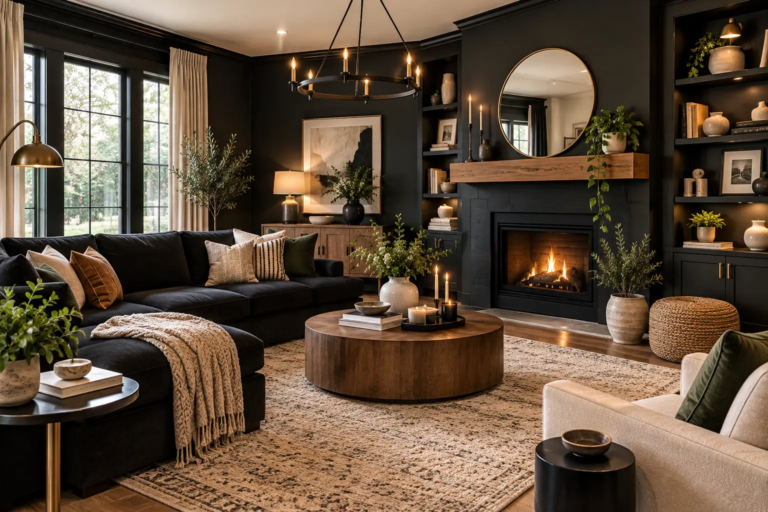
Boho living room decor has a reputation problem it mostly earned: search the term and you’ll find rooms so packed with macrame, mismatched throw pillows, and rattan everything that the eye has nowhere to rest. That’s not boho done well — that’s boho done without a system. The style is genuinely built on layering and eclectic mixing, which is exactly why it needs more structure behind the scenes than a cleaner style like minimalism, not less.
The rooms that actually work share a hidden logic: they layer deliberately, repeat a small set of materials and tones, and leave enough negative space for all that texture to read as rich instead of chaotic. That’s the version worth building toward.
The Boho Formula: One Base, Three Layers, No More
Think of a well-built boho room in three parts. The base is a neutral foundation — walls, large upholstery, flooring — that stays calm so the room has somewhere to land visually. The layers are your texture and pattern: rugs, textiles, wood tones, and greenery, each contributing a distinct material rather than repeating the same one. And the edit is what you leave out — the discipline to stop adding once each layer has done its job, rather than continuing until every surface is covered. Most boho rooms that feel overwhelming skipped the edit step entirely.
Pro Tip: Before adding a new piece to an already-layered boho room, cover it with a plain sheet or blanket for a day and see if you miss the room’s balance. If the room looks better without it, that’s usually a sign the layer count is already at its limit.
Start With a Neutral Base You Won’t Get Tired Of
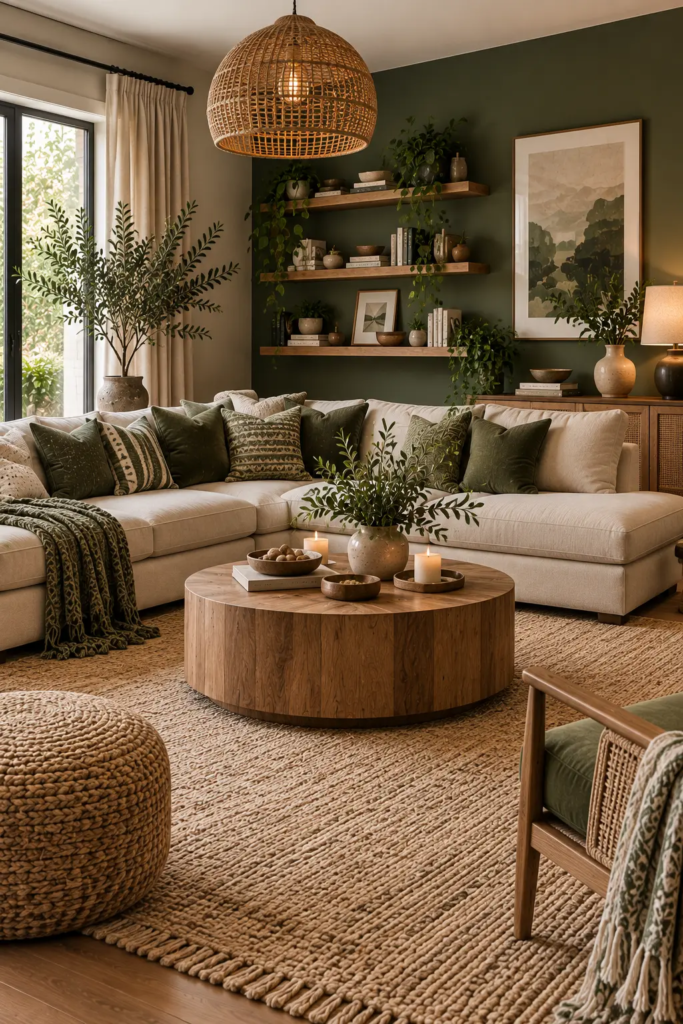
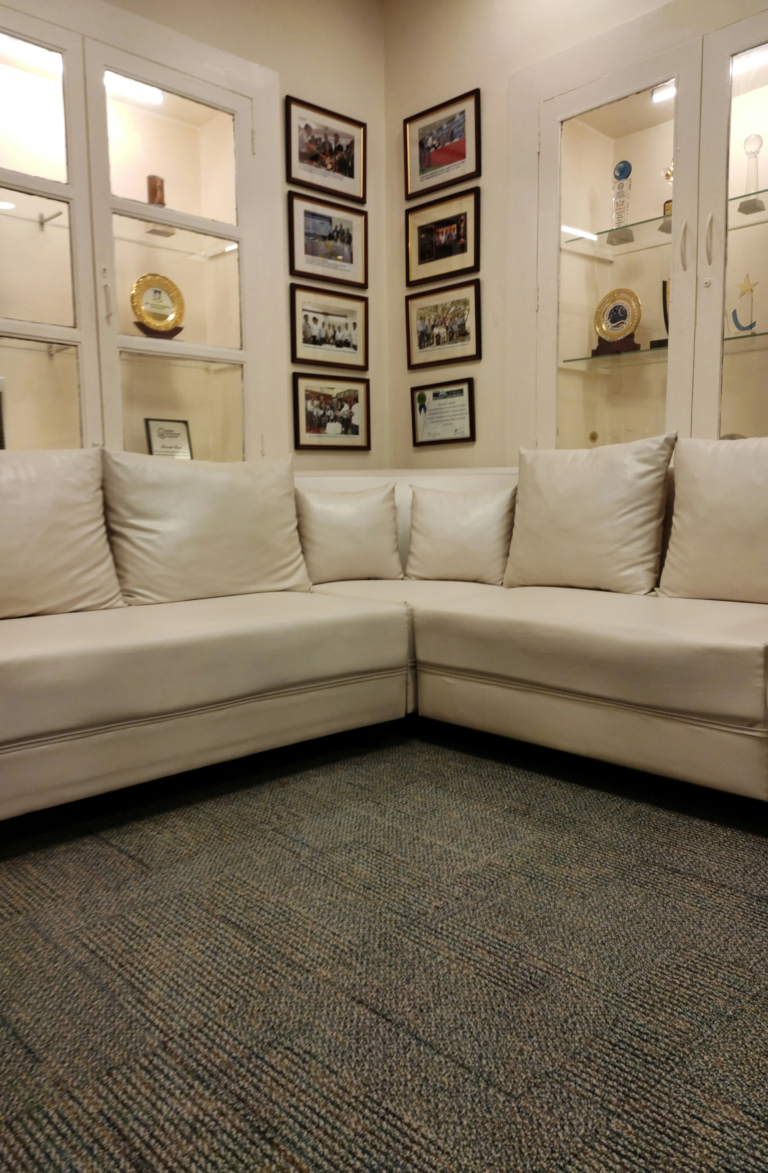
Your largest surfaces — sofa, walls, and flooring — should be the least trend-sensitive elements in the room, because they’re the most expensive and time-consuming to change later. A cream, oatmeal, or warm greige sofa gives every other layer something calm to sit against, while a heavily patterned sofa competes with the rugs and textiles you’ll want to add on top of it. This is the opposite instinct from what boho mood boards suggest, but it’s what makes the eclectic layers on top actually readable instead of competing for attention.
https://images.unsplash.com
Choose One Dominant Texture Story Before Adding Anything Else
Rattan, jute, macrame, woven wood, distressed leather — boho draws from all of them, but a room that uses all of them at once starts to feel like a props closet rather than a home. Pick one texture family to lead (natural woven fiber is the most common and versatile starting point) and let the others play supporting roles in smaller doses. A rattan pendant light, a jute rug, and a woven basket can share a room; adding heavy macrame wall art and distressed leather poufs on top of that same room usually tips it into clutter.
Layer Rugs the Boho Way Without Making the Floor Busy
Rug layering is one of boho’s signature moves, but it only works with a clear hierarchy: one larger, simpler rug on the bottom (a flatweave in a muted geometric or solid tone) and one smaller, more textural rug on top (a vintage-style or shag piece), not two competing patterns of similar scale. The bottom rug should extend under the front legs of your seating the way any properly sized rug would; the top rug is a smaller accent, usually centered under a coffee table, doing decorative rather than structural work.
Pro Tip: Keep the top rug’s pattern scale noticeably smaller or larger than the bottom rug’s — two patterns of similar size and busyness will visually merge into noise from across the room, even if the colors technically coordinate.
Boho decor famously mixes materials and eras, which gives people permission to combine wood finishes without much thought — and it’s one of the fastest ways to make a room look unplanned rather than eclectic. The workaround isn’t to match every wood tone; it’s to pick two, not four or five, and repeat each of them across at least two pieces. A honey-toned rattan chair and a similarly warm oak coffee table read as a pair; add a grey-washed console and a black-stained shelf into the same room and the wood tones start fighting for dominance instead of supporting each other.
https://pixabay.com
Let Plants Do the Color Work Instead of Patterned Textiles
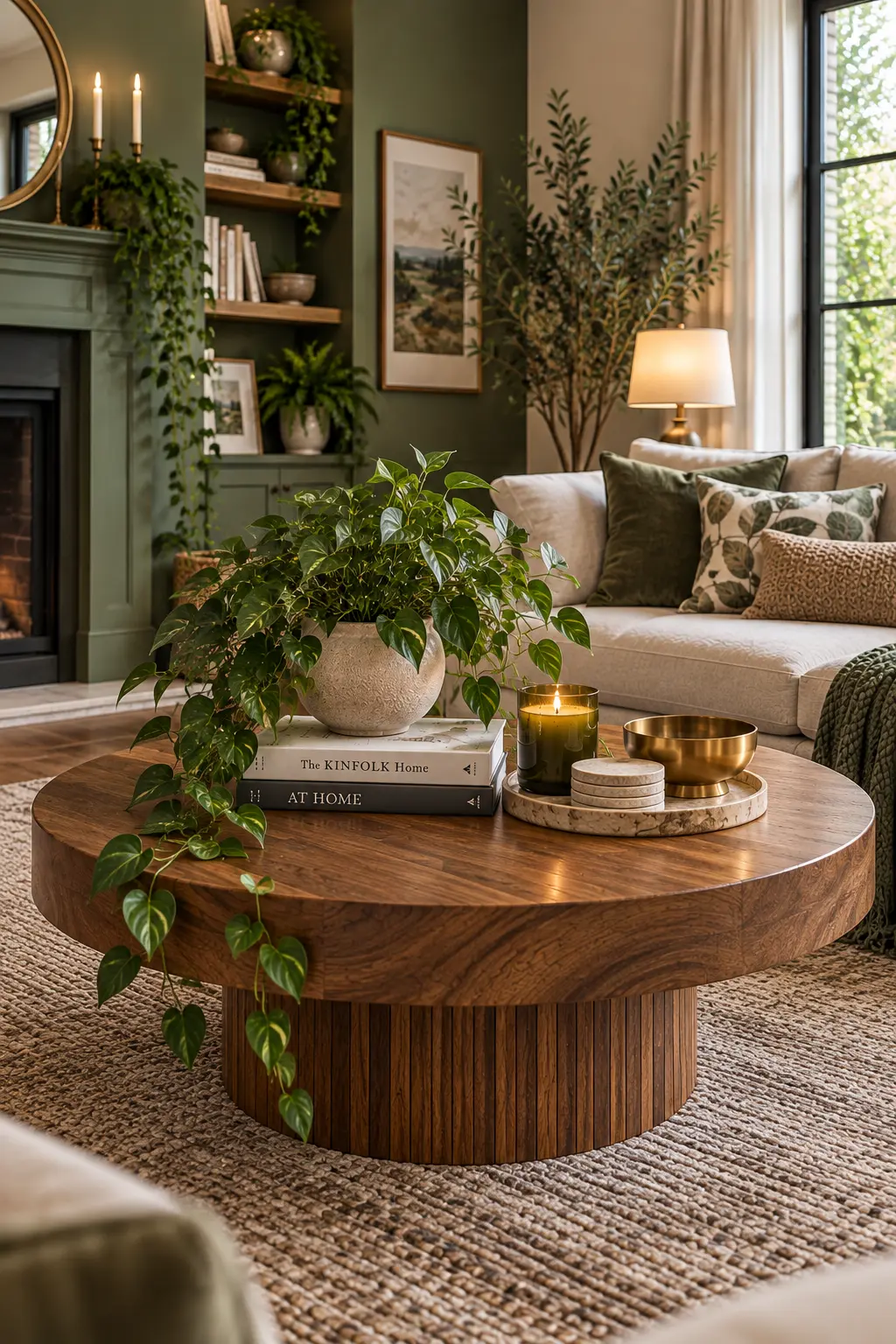
Boho rooms lean on pattern for color, but pattern is also the fastest way to tip a room into visual overload. Live plants offer a lower-risk alternative: a trailing pothos, a fiddle-leaf fig, or a cluster of smaller plants on a plant stand bring in green without adding another competing print to a room that likely already has several. Plants also solve a real spatial problem boho rooms often have — awkward corners and empty vertical space — better than another piece of wall art would.
https://pixabay.com
Use One Statement Vintage Piece, Not Five
A single well-chosen vintage or vintage-style piece — a carved wood mirror, an overdyed vintage rug, a brass floor lamp with real age to it — does more for a boho room’s authenticity than five smaller “boho-style” accessories bought new and all at once. This is partly about visual weight (one larger piece reads as a focal point where five small ones read as clutter) and partly about believability: a room with one genuinely aged piece looks collected over time, while a room full of new items styled to look old rarely fully lands that effect.
https://pixabay.com
Balance Pattern With Solid-Color Anchors
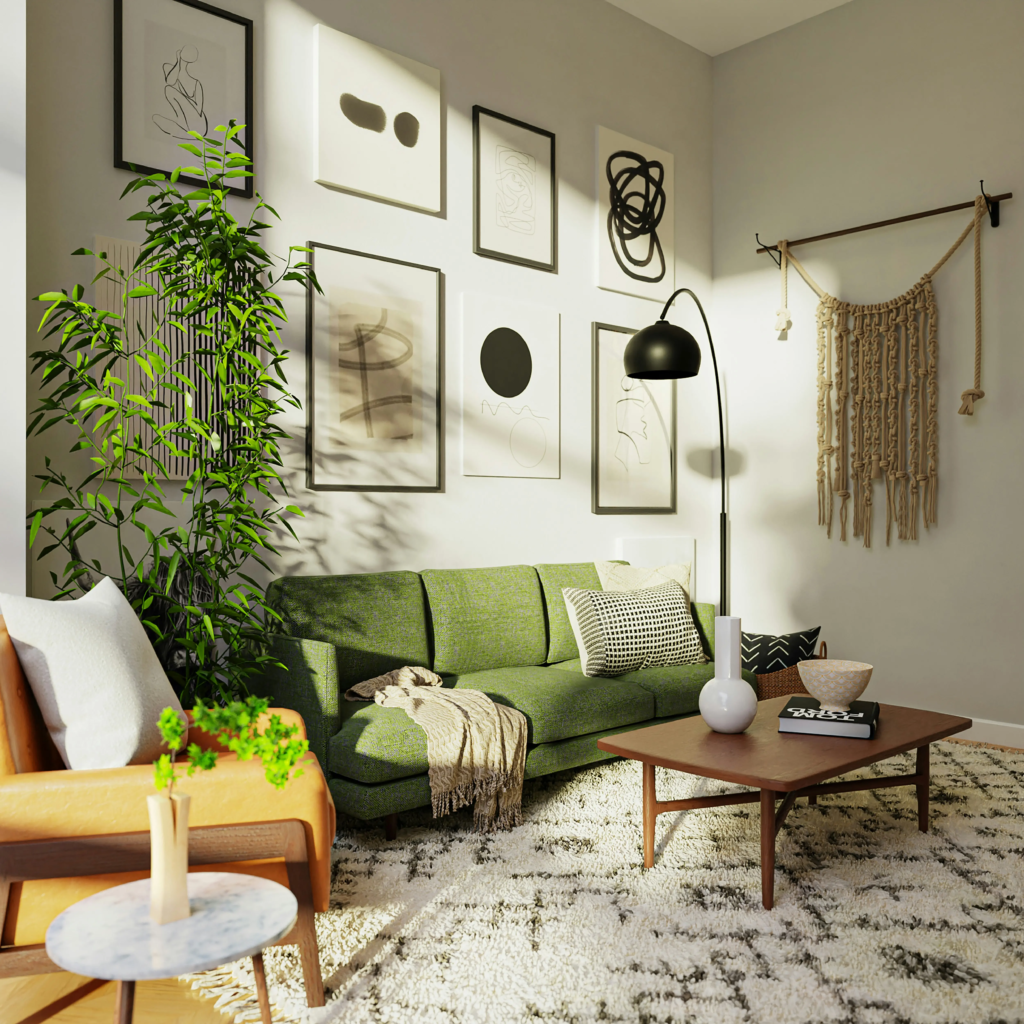
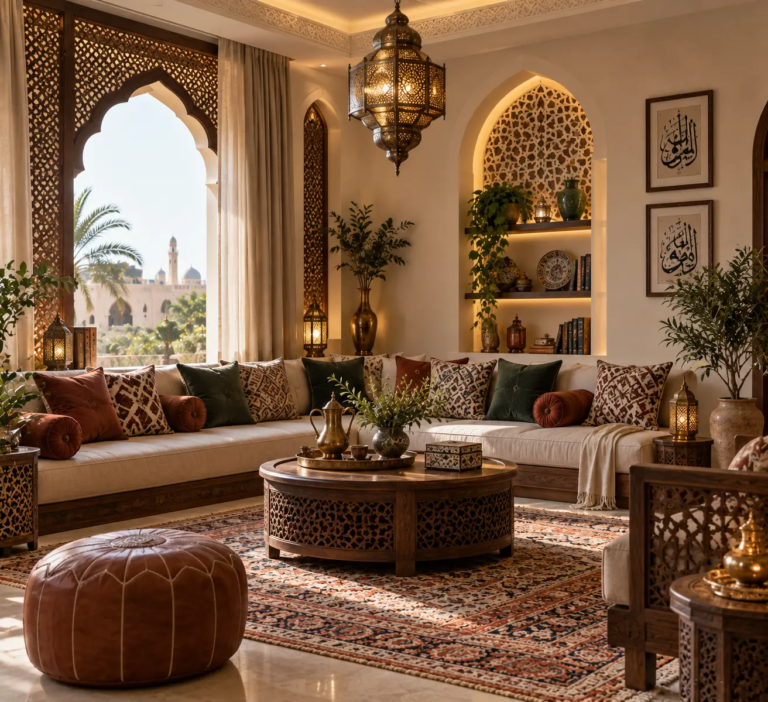
Every patterned textile in a boho room needs a solid-color surface nearby to rest against, or the eye never gets a break. If your throw pillows, rug, and wall hanging are all patterned, add a solid-colored throw blanket or solid accent chair to interrupt the sequence. The ratio that tends to work is roughly two solid surfaces for every one heavily patterned piece — walls and sofa solid, one patterned rug, one patterned pillow set, with everything else left calm.
https://plus.unsplash.com
Common Mistakes to Avoid
The most frequent mistake is treating “more layers” as always better — boho rewards curated abundance, not unlimited abundance, and a room without any calm surfaces left will read as cluttered no matter how nice each individual piece is. A second mistake is buying an entire boho look from one source at one time, which tends to produce a showroom sameness that works against the style’s collected-over-time feel. Third, skipping the neutral base in favor of pattern everywhere — walls, sofa, and rug all patterned at once — removes the resting point the rest of the room needs to read as intentional.
Pro Tip: If a boho room is starting to feel busy, the fastest fix usually isn’t removing an item — it’s swapping one patterned textile for a solid one in the same color family, which keeps the room’s personality while restoring a resting point for the eye.
Budget-Friendly Boho Living Room Decor
On a lower budget (under $150), focus on layering what you already own differently rather than buying new — rearranging existing textiles by the one-dominant-texture-family rule above often solves more of the clutter problem than new purchases would. At a mid budget ($150–$500), a properly layered rug pair or one larger plant in a good planter tends to deliver the most visible shift. At a higher budget ($500+), put the money into the one statement vintage piece rather than several smaller new accessories — a genuine vintage rug or a solid wood console will outlast several trend-driven purchases and anchors the whole room more effectively than the same budget spread thin.
[IMAGE: Three-tier budget flat-lay — rearranged existing textiles, then a layered rug pair with a large plant, then a single vintage wood console]
FAQ
How do I keep boho living room decor from looking messy? Limit yourself to one dominant texture family and two wood tones, and make sure at least half the room’s surfaces (walls, main sofa, largest rug) stay solid or low-pattern. Clutter usually comes from too many textures and patterns competing at the same visual weight, not from having too many individual objects.
Can boho work in a small living room? Yes, but scale down the layering — one rug instead of two, one accent chair instead of two, and keep the wall art to one or two larger pieces rather than a full gallery wall. Small rooms need the “edit” step even more than large ones, since there’s less visual space to absorb extra layers.
Does boho living room decor work with a grey or white sofa, or does it need to be a bold color? A neutral sofa in cream, oatmeal, or light grey is actually the easier starting point, since it gives your patterned textiles and vintage pieces room to stand out. A boldly colored sofa can work too, but it becomes one more layer competing for attention rather than a calm base for the others.
How many plants does a boho living room actually need? One or two larger plants usually do more for the room than five or six small ones scattered across surfaces, since a larger specimen reads as an intentional design element rather than an afterthought. If you want more greenery, group smaller plants together on one plant stand rather than spreading them individually around the room.
Is boho living room decor expensive to do well? Not necessarily — a lot of the “curated” feel comes from restraint and thoughtful layering rather than expensive individual pieces, and secondhand or vintage sourcing (which fits the style naturally) tends to cost less than buying a full new set from one retailer. The place worth spending more is the one statement piece, since it does the most visible work in the room.
The Real Takeaway
Boho living room decor isn’t about how much you layer — it’s about layering with a system: one calm base, a limited set of materials repeated on purpose, and the discipline to stop before every surface is covered. Pick whichever piece of that system your current room is missing most (usually the edit, if it already feels busy, or the layers, if it feels flat) and build from there rather than adding everything at once.
Before choosing furniture or colors, the most useful thing you can do in a shared or multi-purpose room is give the study corner a visual boundary, even a small one, so it reads as a distinct zone rather than just “the side of the room where the desk happens to be.” In a room with…
An Arabic style living room gets flattened into a caricature more often than most design styles — a few tasseled cushions, a hookah on a side table, and a rug with the “right” pattern, dropped into an otherwise generic room. That’s a theme, not a style, and it reads as costume the moment anyone spends…
Most living room mirror advice stops at “hang one across from a window to bounce light around the room,” which is true but incomplete. A mirror doesn’t just reflect light — it reflects whatever’s in front of it, and that’s the part most guides skip. Hang a beautiful mirror across from a cluttered bookshelf, a…
Most boho dining rooms fail the same way: a rattan chair, a macrame wall hanging, a printed runner, and a jute rug all land in one room and read less “collected over time” and more “everything from the sale rack at once.” The pieces aren’t wrong. Boho is a style built on layering, and layering…
Black Living Room Decor That Doesn’t Feel Like a Cave The photos that come up when you search black living room decor almost always show the same thing: a bright, south-facing room with floor-to-ceiling windows, where black furniture and black walls read as moody and intentional because there’s so much daylight bouncing around to balance…
Most “best couches for your living room” roundups show you nine pretty sofas and call it a day. They rarely mention that a curved velvet statement piece is a bad idea in a room with two dogs and a toddler, or that the “cozy” slipcovered sofa everyone loves online will look enormous in a 10×12…