Most mirror wall decor advice treats mirrors as a finishing touch, added once the room already works. But a mirror can change how a room functions, not just how it looks, by redirecting light and sightlines you already have. That’s especially useful in a living room that feels dim, boxy, or a little flat no matter what else you try.
These 7 mirror wall decor ideas are built around specific problems a mirror can solve, whether that’s a lack of light, an oddly shaped corner, or a wall that’s felt empty for months. The goal isn’t just picking a pretty mirror; it’s picking the right placement, size, and shape for what your room needs.
Start With the Problem the Mirror Needs to Solve
Before choosing a mirror, figure out what’s actually bothering you about the room. A dark room needs a mirror positioned to catch and bounce existing light. A cramped-feeling room needs one that extends a sightline. A blank wall just needs scale and presence. These call for different placements, and treating “mirror wall decor” as one generic move is why so many mirrors end up looking like an afterthought instead of a fix.
Walk the room at the time of day you use it most and notice where the light comes from and where it stops. That’s usually the clearest signal for where a mirror will actually do work.
Pro Tip: Stand where you usually sit and check what a mirror on a given wall would actually reflect. Facing a blank wall or the back of a bookshelf does almost nothing for light or spaciousness — it needs to face a window or an interesting part of the room to earn its spot.
Position It Across From a Window, Not Beside It
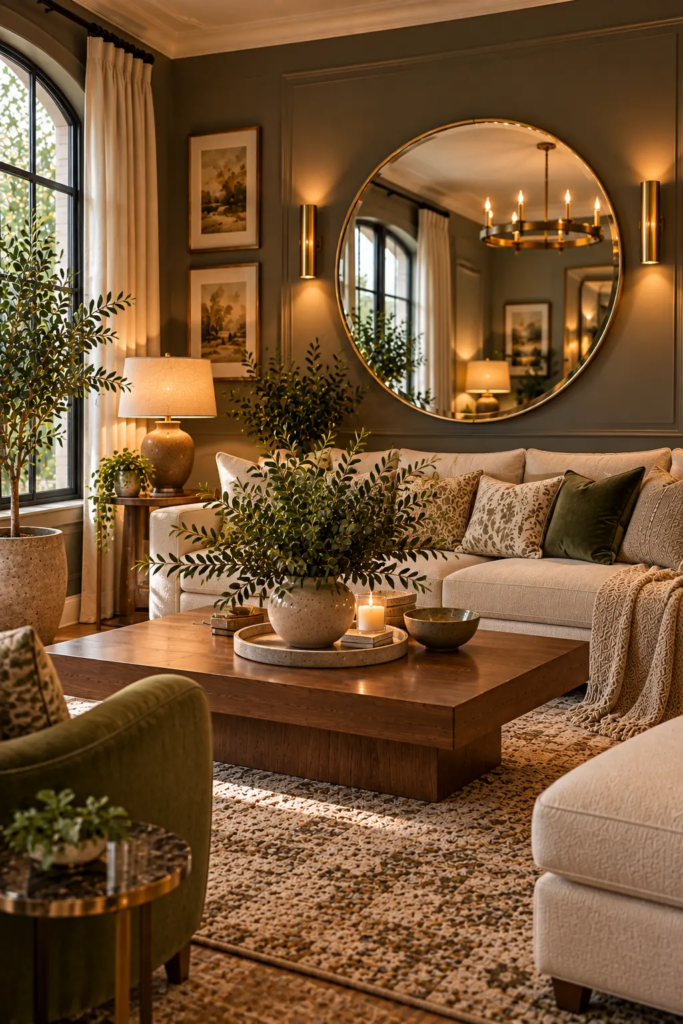
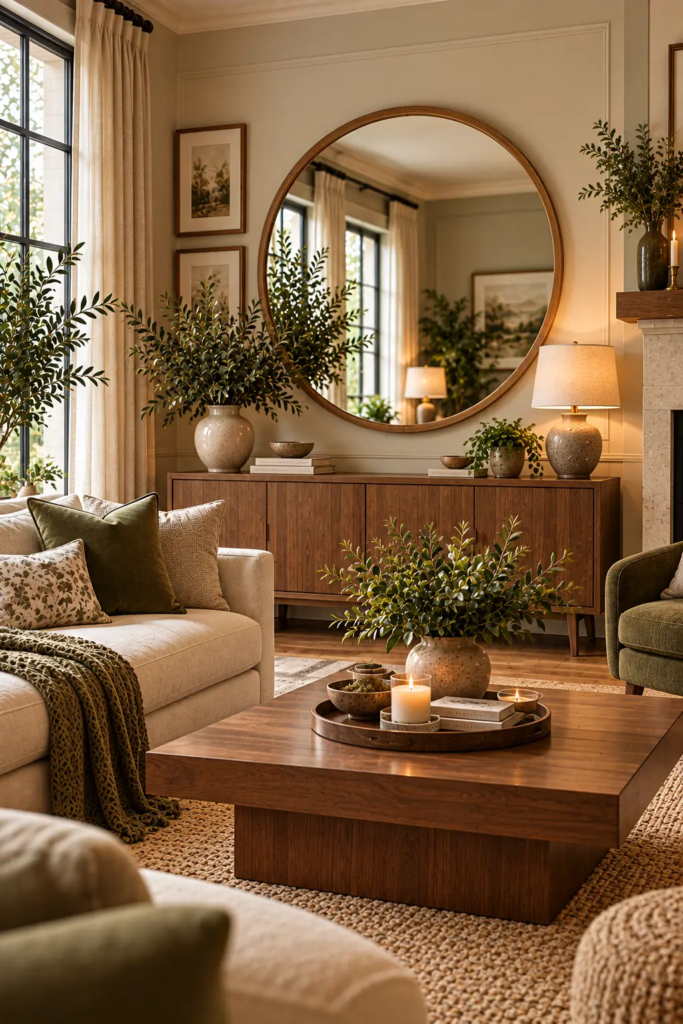
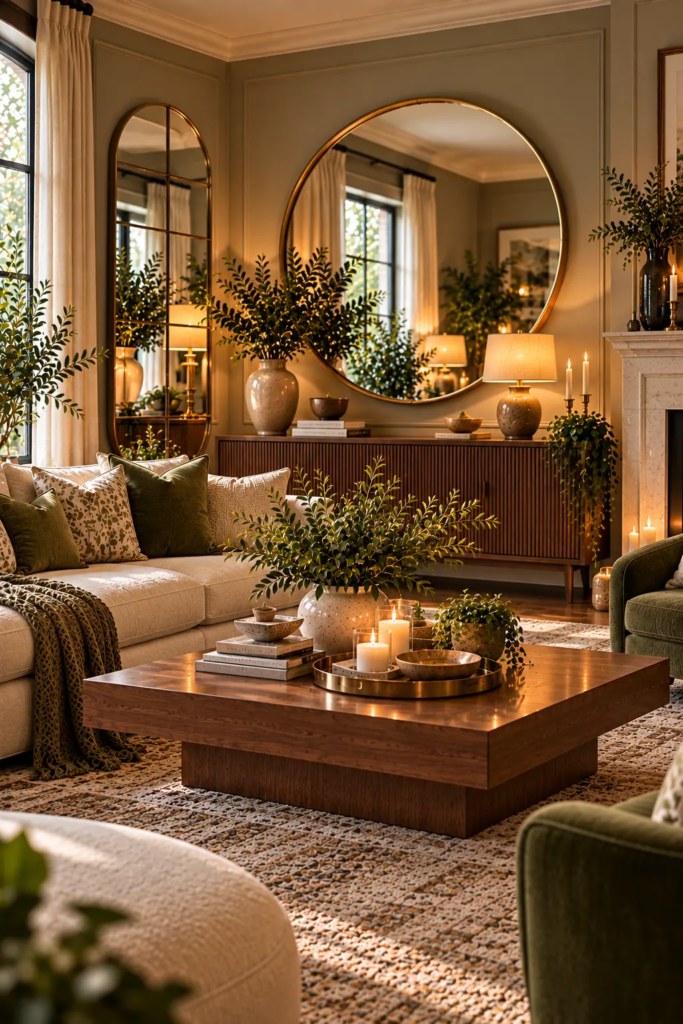
The single most effective placement for brightening a room is a mirror hung directly across from, or angled toward, a window, so it catches daylight and throws it back into the room instead of absorbing it against an adjacent wall. A mirror beside a window mostly reflects the wall next to it and does far less for overall light.
If the wall across from your window isn’t practical for a large piece, an angled placement on an adjacent wall still helps, as long as it stays within the window’s direct light path.
https://cdn.pixabay.com
Size It to the Furniture Below, Not the Wall
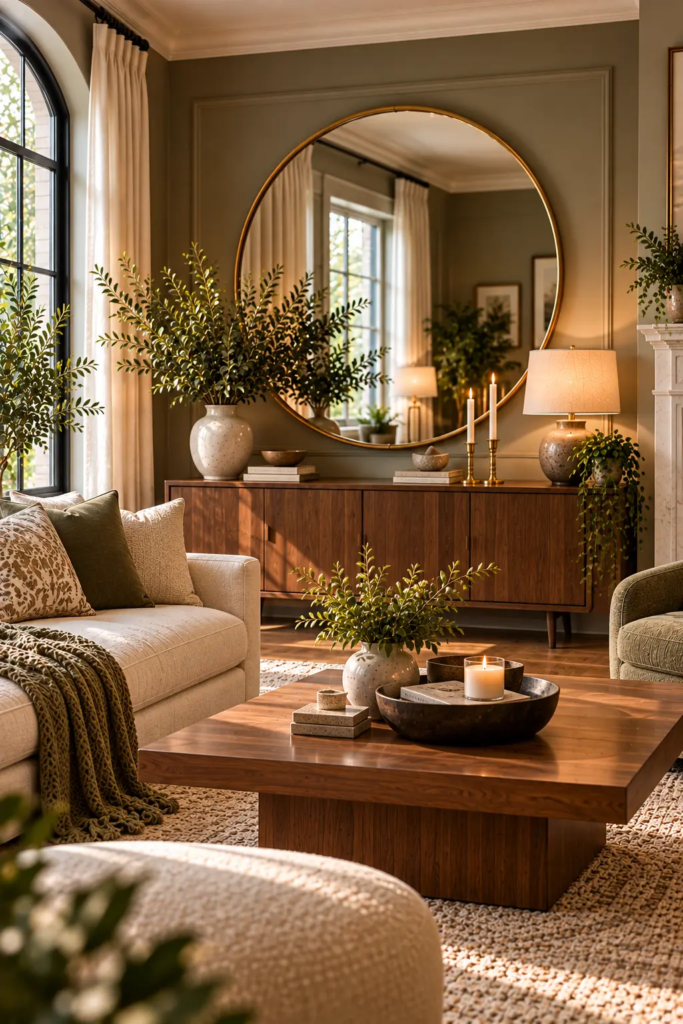
A mirror that’s too small for the piece of furniture beneath it, like a narrow mirror over a wide console or sofa, ends up looking like an accessory lost on a big wall. As a general guideline, a mirror should run about two-thirds to three-quarters the width of the furniture below it, whether that’s a console table, a sideboard, or the back of a sofa.
Height matters just as much. Hang the mirror so its center sits at roughly eye level, typically 60 to 65 inches from the floor, rather than centering it purely on the wall, which can look too high above shorter furniture. If your room already has a defined color scheme, this guide to choosing a living room wall color is worth checking before committing to a frame finish, since wall tone affects how a frame reads.
Pro Tip: Measure the visible reflective surface, not the outer frame dimensions most retailers list. A mirror advertised as “40 inches” often means the frame’s outer edge, so the actual glass, and the light it reflects, is noticeably smaller than the number suggests.
Choose One Statement Mirror or a Grouped Gallery, Not Both
A single large mirror and a cluster of several smaller ones both work, but mixing scales without a plan, like one big mirror plus a couple of unrelated small ones scattered elsewhere, tends to look unplanned. Decide upfront which approach fits your wall and commit to it.
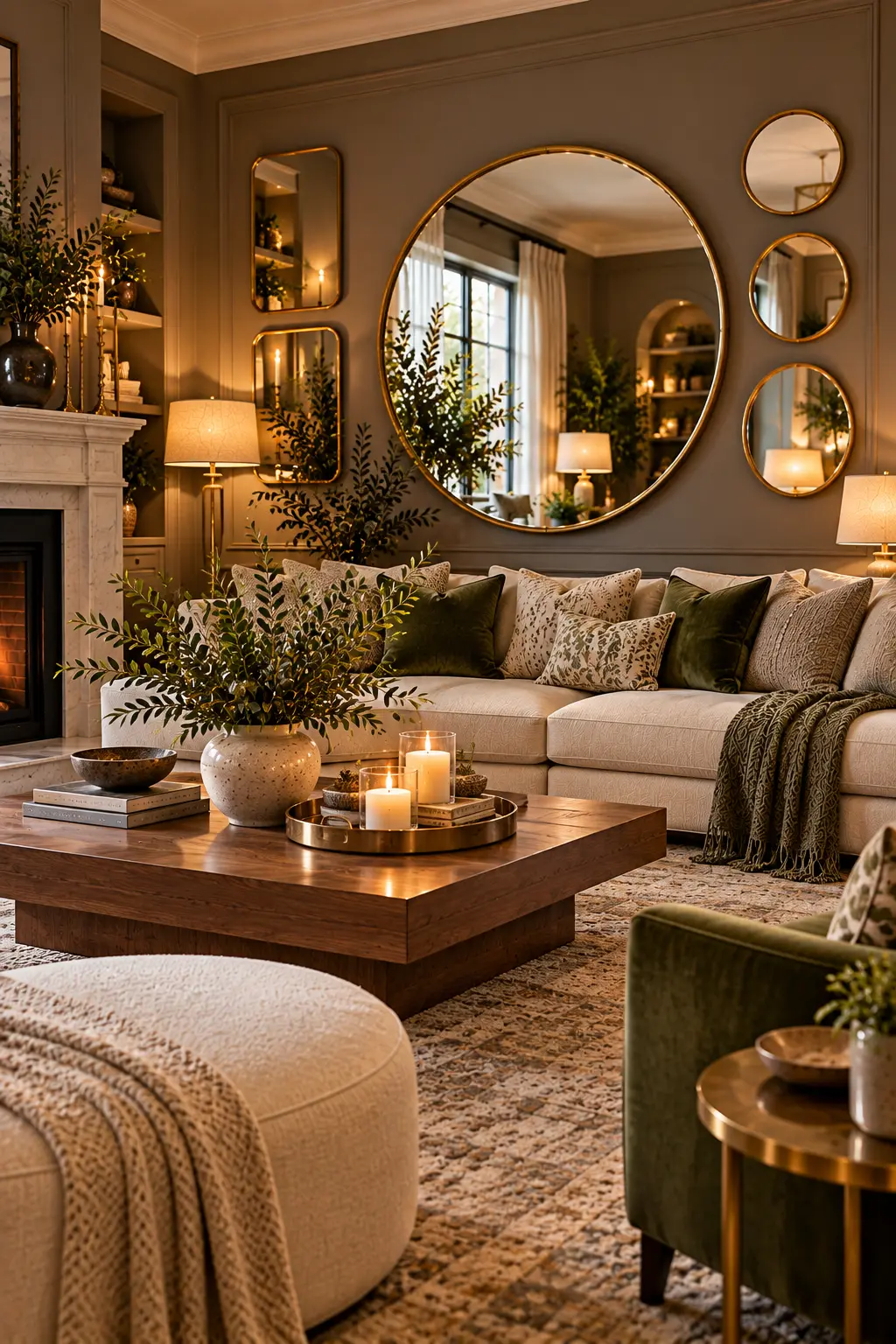
A single oversized mirror works best on a wall with enough clear space to breathe, ideally at least 6 inches of visible wall around the frame. A grouped arrangement of three to five smaller mirrors, similar in frame finish but varied in shape, suits a wall too narrow for one large piece, and adds more texture than a single mirror can alone.
Fix a Dark or Awkward Corner Specifically
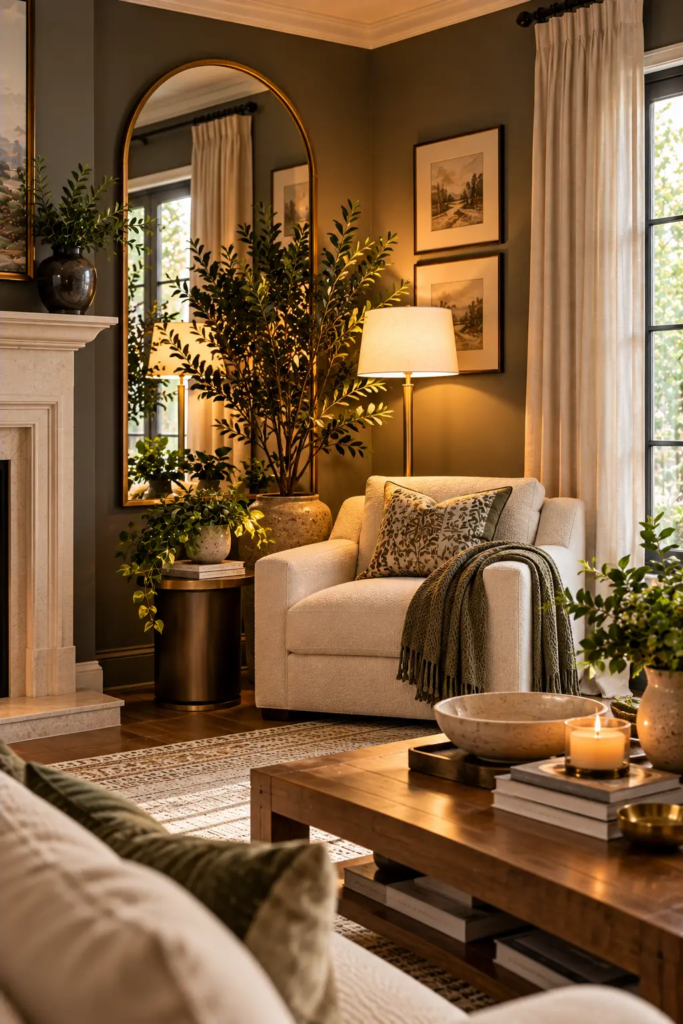
Corners are often the darkest, most overlooked part of a living room, especially ones that don’t get direct light from a window or overhead fixture. A mirror angled into a corner, rather than hung flat against one wall, catches light from two directions at once and can make an awkward corner feel more resolved. For more on turning a difficult corner into a working part of the room, this guide on defining a corner before you decorate it covers the layout logic in more depth.
A floor mirror leaned into a corner, rather than wall-mounted, is often the easier fix, since it skips finding a stud in an awkward angle and can be repositioned later.
Match the Frame to the Room’s Existing Materials
The frame matters more than most people expect, since it’s the one part of the mirror that isn’t reflecting anything and just sits as its own decor object. A frame in the same metal finish as your other hardware, brass with brass lamp bases or black with black window frames, ties the mirror into the room rather than letting it feel unrelated.
Frameless mirrors tend to disappear into a wall visually, which suits you if you want the light effect without another decorative element. A substantial wood or metal frame, by contrast, functions as art in its own right and can anchor an otherwise bare wall. If your walls lean toward a lighter palette, these white wall living room ideas show how a frame can add warmth without introducing color.
Pro Tip: For a mirror over 30 pounds, use a French cleat or a heavy-mirror hanging kit rated for the weight, rather than a standard picture hook, even if its packaging lists a high rating. A mirror’s weight is concentrated and rigid, which puts more shear stress on a single point than most hooks are built to handle over time.
Layer In a Second Reflective Surface for More Impact
A single wall mirror does real work, but pairing it with one additional reflective element, like a glass-top coffee table or a mirrored side table, compounds the light-bouncing effect without adding another large mirror to the wall. This works especially well in an open-plan layout, where light needs to travel further to reach every corner of the combined space.
Keep it to one additional piece rather than several, since too many reflective surfaces in one room can start to feel cold rather than bright. If your living room leans toward a more textured, layered look, these boho living room decor ideas show how to balance reflective pieces against warmer, tactile ones.
Common Mistakes to Avoid
Hanging a mirror facing a blank wall or the back of furniture. It won’t do meaningful work if it isn’t reflecting a window or a point of interest.
Choosing a mirror too small for the furniture below it. It reads as an afterthought instead of an intentional pairing.
Mixing a large statement mirror with unrelated small ones. Pick one approach and commit to it.
Using a standard picture hook for a heavy mirror. A preventable way for it to eventually come loose.
Overusing reflective surfaces. More than one or two in a room can start to feel cold rather than bright.
Budget-Friendly Ways to Adapt These Ideas
Low budget: Reposition a mirror you already own to face a window instead of a blank wall, and add a small mirrored tray as a second reflective surface.
Mid budget: Buy a properly sized mirror for your console or sofa, two-thirds to three-quarters the furniture’s width, hung with a rated heavy-mirror kit.
Higher budget: Invest in an oversized statement mirror with a substantial frame matching your existing hardware, positioned across from your main window.
FAQ
Where should I place a mirror to make a living room look bigger? Across from or at an angle to a window is the most effective spot, since it reflects daylight into the room rather than just adding another decorative object. A mirror that only reflects a blank wall does far less for the sense of space.
What size mirror should go over a sofa or console table? Aim for a mirror about two-thirds to three-quarters the width of the furniture below it, centered around eye level, roughly 60 to 65 inches from the floor. A mirror too narrow for the piece beneath it looks disconnected from it.
Is it better to use one large mirror or a group of smaller ones? Both work, but they suit different walls. A single large mirror needs enough clear space to breathe, while a group of three to five smaller mirrors suits a narrower wall that can’t fit one big piece.
Do mirrors actually make a room feel brighter, or is that a myth? They genuinely can, but only when positioned to catch and redirect an existing light source, like a window. One that doesn’t face any meaningful light won’t add much brightness, regardless of size.
How do I safely hang a heavy mirror without damaging the wall? Use a French cleat or a hanging kit rated for the mirror’s weight, and anchor into a stud where possible. Standard picture hooks are often rated by weight but aren’t built for the concentrated, rigid weight a mirror puts on a single point.
The Takeaway
A mirror can do more for a living room than almost any other single piece of decor, but only if it’s placed to solve an actual problem, whether that’s a dark corner, a bare wall, or a room that feels boxed in. Get the placement, size, and frame right, and these 7 mirror wall decor ideas turn a mirror from a finishing touch into something that changes how the whole space feels. For a deeper dive into placement across different layouts, this guide on living room mirror placement is a useful next read.
The living room is often considered the heart of the home. It is where families gather, guests are entertained, and everyday moments turn into lasting memories. Because of this, choosing the right sofa is one of the most important decisions when designing a comfortable and attractive living room. Whether you prefer contemporary aesthetics, timeless elegance,…
White walls get blamed for a lot of living rooms that feel flat, cold, or generic — but the actual problem is rarely the color itself. It’s usually one of two things: a white with the wrong undertone for the room’s light, or a room that’s relying on the wall color alone to do all…
Most “Italian dining room” inspiration photos are staged for one specific moment: a long table set for twelve, candles lit, a holiday-worthy spread. It’s a beautiful photo and a completely unrealistic room. The truth is most people eating in a dining room styled this way use it for a Tuesday dinner with two kids and…
A gray couch is the safest sofa purchase most people make, and that’s exactly why so many gray couch living rooms end up looking the same: neutral walls, a gray sofa, a gray rug, and a room that photographs fine but feels a little flat to actually sit in. Gray was supposed to be the…
A small dining room doesn’t have to feel cramped or uninspiring. In fact, with a few thoughtful design choices, even the tiniest dining area can become one of the most beautiful and functional spaces in your home. Whether you live in a cozy apartment, a townhouse, or simply have limited square footage, there are countless…
Black Living Room Decor That Doesn’t Feel Like a Cave The photos that come up when you search black living room decor almost always show the same thing: a bright, south-facing room with floor-to-ceiling windows, where black furniture and black walls read as moody and intentional because there’s so much daylight bouncing around to balance…